ACLU and advocates oppose bill that would criminalize targeted arrest alerts; sponsor says amendment narrows scope
March 18, 2026 | 2026 Legislature Arizona, Arizona
This article was created by AI summarizing key points discussed. AI makes mistakes, so for full details and context, please refer to the video of the full meeting. Please report any errors so we can fix them. Report an error »
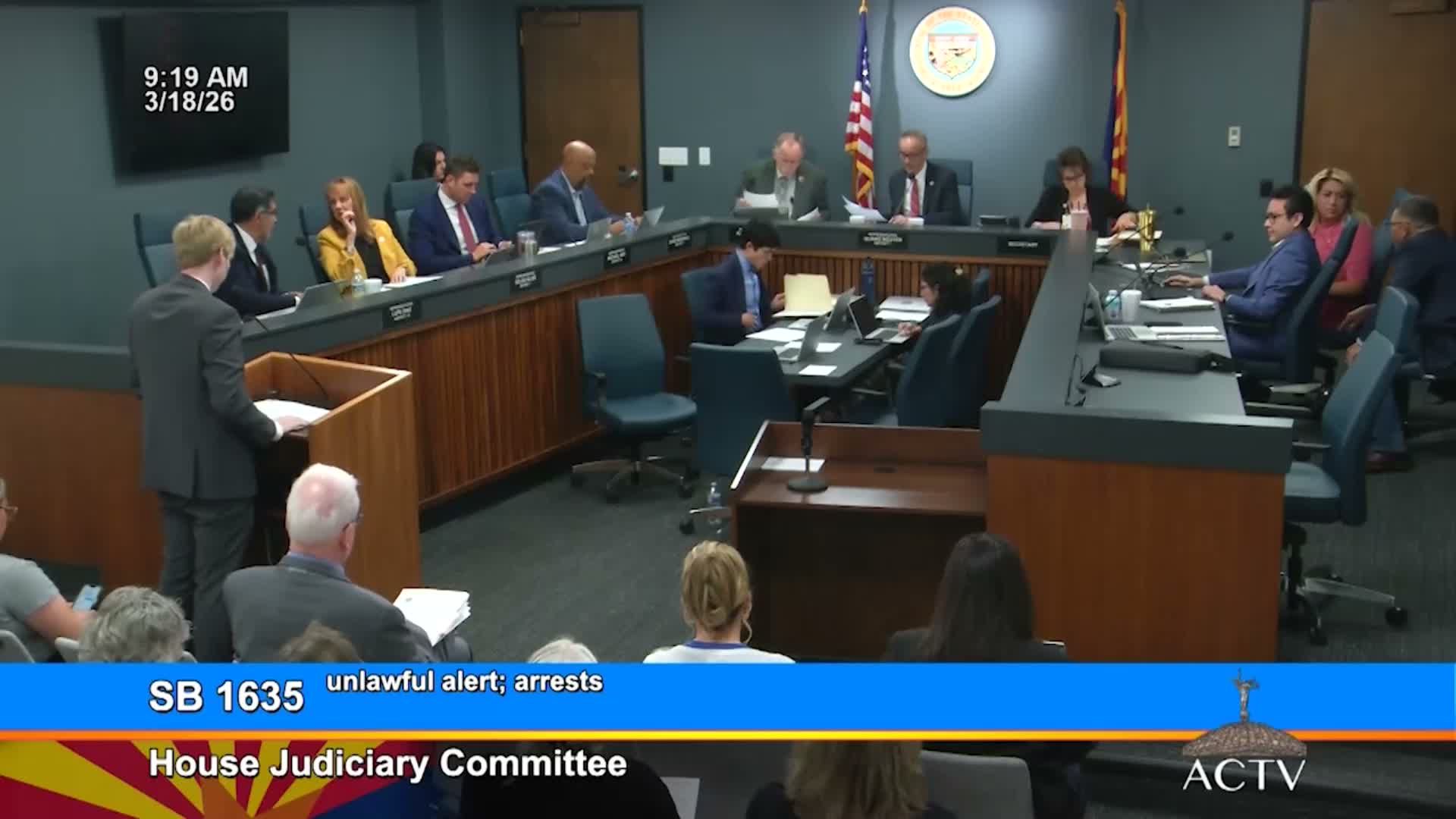
Senate Bill 16 35, heard March 17, would create a standalone offense for warning a specific person of an imminent arrest when the speaker knows police are present to effect the arrest. The sponsor told the committee the bill targets conduct that helps people evade arrest, not general statements about law‑enforcement presence.
Harrison Redmond of the ACLU of Arizona told the committee the bill is “an anti civil liberties bill” that criminalizes communication and risks chilling protected advocacy such as know‑your‑rights trainings. "This bill is neither narrowly tailored nor does it target violent conduct or obstruction," Redmond said, arguing existing obstruction, harboring and smuggling statutes already address violent or obstructive conduct.
The sponsor and several members said amendments narrowed the scope to avoid criminalizing broad community alerts; the sponsor characterized the amendment as targeted at communications that knowingly warn a specific individual who is being arrested at that location. The sponsor also noted exemptions for legal advice to clients.
Public testimony included residents who said they would warn neighbors out of concern for safety; others noted real cases they said showed ICE and other federal detentions can be unpredictable and dangerous. Committee members debated whether the bill would duplicate existing law and whether it would overreach into protected speech. The ACLU warned that the bill risks sweeping in social‑media posts and bystander warnings that are constitutionally protected.
The committee adopted the amendment and returned SB 16 35 with a due‑pass recommendation (recorded 6 ayes, 3 nays). The transcript captures the competing frames: sponsor emphasizing narrow targeting of imminent arrest warnings and opponents emphasizing First Amendment risks.
What happens next: The bill will continue through the legislative process; critics say any text that regulates communication about law‑enforcement activity should be carefully reviewed for First Amendment vulnerabilities.
Harrison Redmond of the ACLU of Arizona told the committee the bill is “an anti civil liberties bill” that criminalizes communication and risks chilling protected advocacy such as know‑your‑rights trainings. "This bill is neither narrowly tailored nor does it target violent conduct or obstruction," Redmond said, arguing existing obstruction, harboring and smuggling statutes already address violent or obstructive conduct.
The sponsor and several members said amendments narrowed the scope to avoid criminalizing broad community alerts; the sponsor characterized the amendment as targeted at communications that knowingly warn a specific individual who is being arrested at that location. The sponsor also noted exemptions for legal advice to clients.
Public testimony included residents who said they would warn neighbors out of concern for safety; others noted real cases they said showed ICE and other federal detentions can be unpredictable and dangerous. Committee members debated whether the bill would duplicate existing law and whether it would overreach into protected speech. The ACLU warned that the bill risks sweeping in social‑media posts and bystander warnings that are constitutionally protected.
The committee adopted the amendment and returned SB 16 35 with a due‑pass recommendation (recorded 6 ayes, 3 nays). The transcript captures the competing frames: sponsor emphasizing narrow targeting of imminent arrest warnings and opponents emphasizing First Amendment risks.
What happens next: The bill will continue through the legislative process; critics say any text that regulates communication about law‑enforcement activity should be carefully reviewed for First Amendment vulnerabilities.
View the Full Meeting & All Its Details
This article offers just a summary. Unlock complete video, transcripts, and insights as a Founder Member.
✓
Watch full, unedited meeting videos
✓
Search every word spoken in unlimited transcripts
✓
AI summaries & real-time alerts (all government levels)
✓
Permanent access to expanding government content
30-day money-back guarantee
