Arizona House passes middle‑housing bill after heated debate; emergency clause fails
March 18, 2026 | 2026 Legislature Arizona, Arizona
This article was created by AI summarizing key points discussed. AI makes mistakes, so for full details and context, please refer to the video of the full meeting. Please report any errors so we can fix them. Report an error »
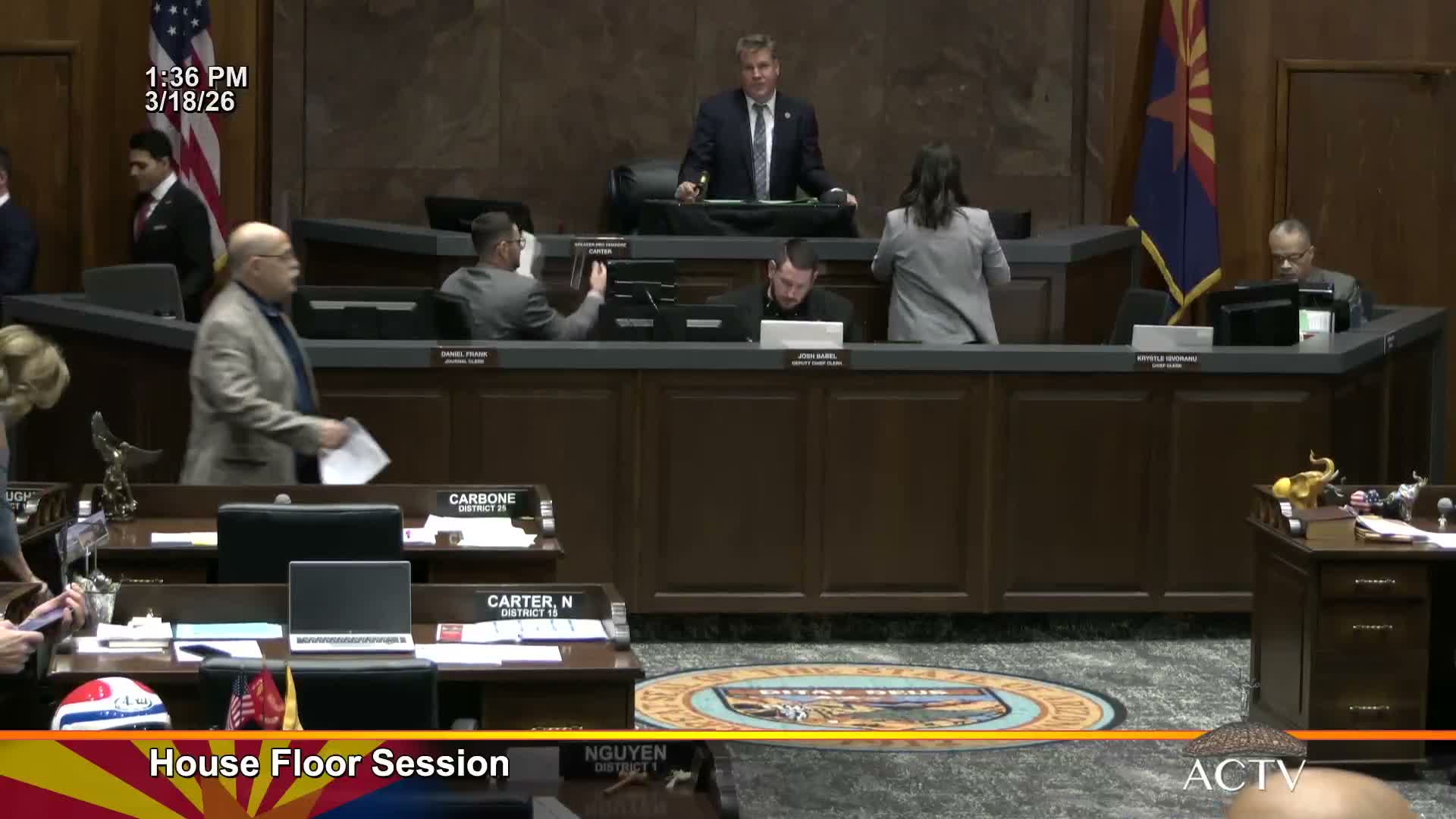
The Arizona House of Representatives passed House Bill 2,375 — legislation addressing middle housing rules — on March 18, 2026, after extended floor debate and explanation‑of‑vote statements from both supporters and opponents. The House recorded 31 ayes, 24 nays and 5 not voting; members also voted on an emergency clause but the measure failed to reach the two‑thirds threshold required to make the bill effective immediately.
Representative Liguori, explaining her no vote, said lawmakers must “separate fact from fear” and expressed concerns about how the measure could affect historic neighborhoods and lead to community disruption. “What middle housing does is it helps incrementally expand access for everyday people,” she said while describing competing pressures; she concluded, “I support my historic neighbors and my historic neighborhoods, but I’m voting no on this bill today.”
Representative Grama, who urged passage, framed the bill as restoring local control and protecting older neighborhoods while permitting cities options to respond to housing needs. “This bill says that we’re going to respect these historic neighborhoods,” Grama said, adding that local governments would not be forced to adopt particular rules but would have additional options.
Representative Sandoval opposed the bill on equity grounds, arguing that carving exceptions for some areas could “reinforce a legacy of racial and economic segregation” and shift the burden of growth onto historically disadvantaged neighborhoods. Sandoval said the bill “goes beyond preservation and instead creates a loophole that allows exclusion to continue.”
Other lawmakers who spoke in explanation of vote remarks described pressure from constituents on both sides of the issue and emphasized the difficulty of balancing housing access with neighborhood preservation. Representative Kuppur and Representative Ryan described receiving strong constituent outreach that shaped their voting decisions.
The clerk recorded the final tally as 31 ayes, 24 nays and 5 not voting. The House journal notes that while the bill passed, it did not receive the votes necessary to enact the emergency clause requiring a two‑thirds majority. The clerk was instructed to record the action and the measure was made available to the Senate.
What’s next: The bill will be transmitted to the Arizona Senate for consideration. Because the emergency clause failed, the effective date will follow the statute’s normal timelines if the Senate and enactment process complete without a subsequent emergency clause.
Representative Liguori, explaining her no vote, said lawmakers must “separate fact from fear” and expressed concerns about how the measure could affect historic neighborhoods and lead to community disruption. “What middle housing does is it helps incrementally expand access for everyday people,” she said while describing competing pressures; she concluded, “I support my historic neighbors and my historic neighborhoods, but I’m voting no on this bill today.”
Representative Grama, who urged passage, framed the bill as restoring local control and protecting older neighborhoods while permitting cities options to respond to housing needs. “This bill says that we’re going to respect these historic neighborhoods,” Grama said, adding that local governments would not be forced to adopt particular rules but would have additional options.
Representative Sandoval opposed the bill on equity grounds, arguing that carving exceptions for some areas could “reinforce a legacy of racial and economic segregation” and shift the burden of growth onto historically disadvantaged neighborhoods. Sandoval said the bill “goes beyond preservation and instead creates a loophole that allows exclusion to continue.”
Other lawmakers who spoke in explanation of vote remarks described pressure from constituents on both sides of the issue and emphasized the difficulty of balancing housing access with neighborhood preservation. Representative Kuppur and Representative Ryan described receiving strong constituent outreach that shaped their voting decisions.
The clerk recorded the final tally as 31 ayes, 24 nays and 5 not voting. The House journal notes that while the bill passed, it did not receive the votes necessary to enact the emergency clause requiring a two‑thirds majority. The clerk was instructed to record the action and the measure was made available to the Senate.
What’s next: The bill will be transmitted to the Arizona Senate for consideration. Because the emergency clause failed, the effective date will follow the statute’s normal timelines if the Senate and enactment process complete without a subsequent emergency clause.
View the Full Meeting & All Its Details
This article offers just a summary. Unlock complete video, transcripts, and insights as a Founder Member.
✓
Watch full, unedited meeting videos
✓
Search every word spoken in unlimited transcripts
✓
AI summaries & real-time alerts (all government levels)
✓
Permanent access to expanding government content
30-day money-back guarantee
