Central Arizona Shelter Services outlines shelter and supportive‑housing models to Arizona Senate committee
March 18, 2026 | 2026 Legislature Arizona, Arizona
This article was created by AI summarizing key points discussed. AI makes mistakes, so for full details and context, please refer to the video of the full meeting. Please report any errors so we can fix them. Report an error »
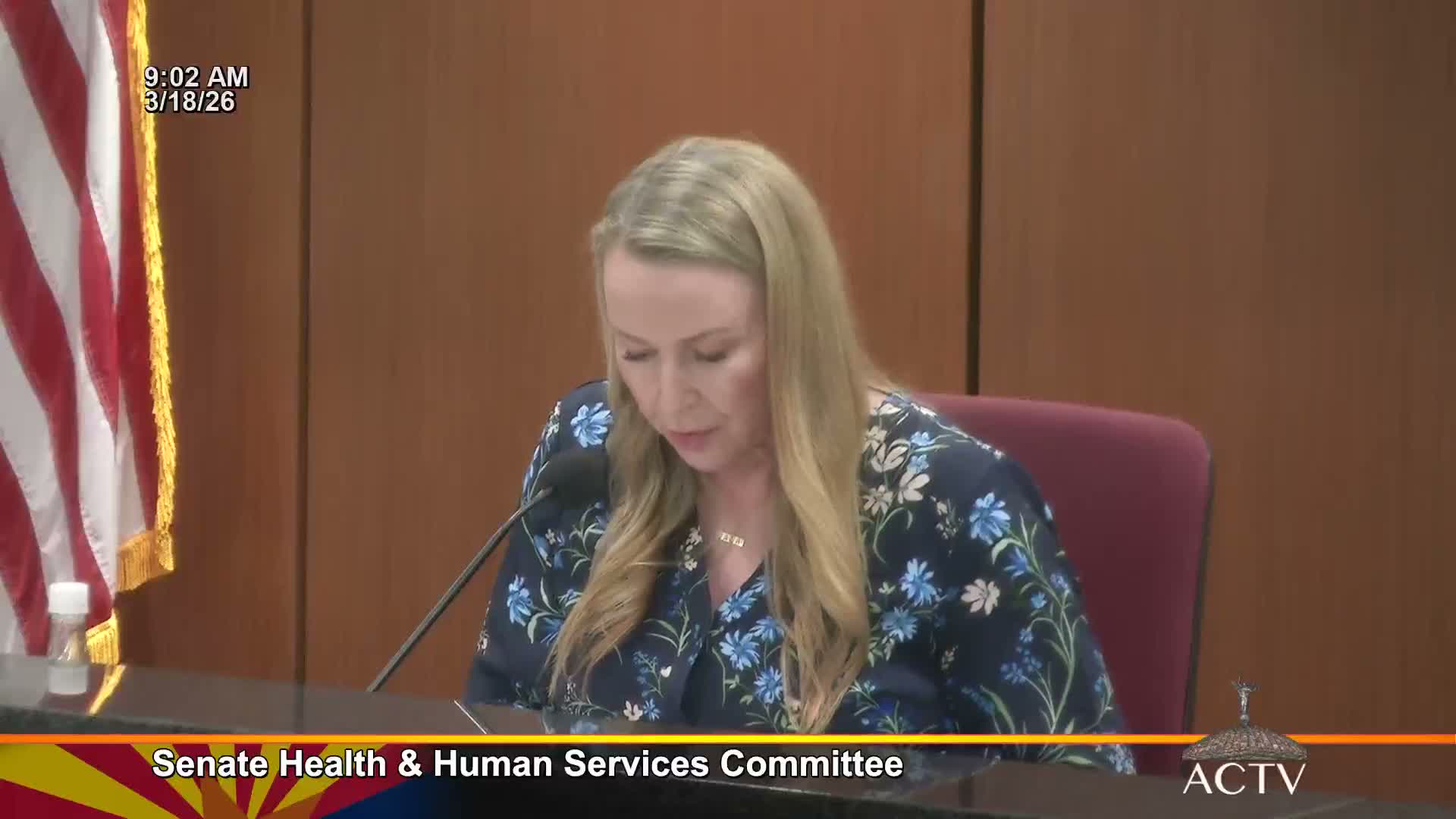
Nathan Smith, introduced to the Senate Health and Human Services Committee as the CEO of Central Arizona Shelter Services (CAST), gave a 10‑minute presentation on the nonprofit’s shelter and housing programs and on state homelessness trends.
Smith said Maricopa County point‑in‑time counts show older‑adult homelessness rose from 389 in April 2020 to about 1,268 by mid‑2024, and that point‑in‑time counts are typically known to undercount true need. “We talk about the fact that people who are older and experiencing homelessness is one of the fastest‑rising subpopulations,” he said.
CAST operates a 600‑bed low‑barrier congregate shelter for single adults, a converted apartment program and a 30‑unit family shelter that offers two‑week crisis units plus 26 coordinated‑entry family units, Smith said. He described the Haven, a converted motel with mostly single units for residents 55 and older, and said CAST provides tailored assessments (including Montreal Cognitive Assessment and fall‑risk screening) and outpatient behavioral health services.
Smith said the organization emphasizes rapid transitions to permanent housing. “It’s no surprise that we’re placing between 50–60% of the people there into permanent housing,” he said, describing case management and partnerships with local health and training institutions.
Committee members asked about CAST’s partnerships. In response to a question about collaborations with mutual‑aid groups and service providers, Smith listed partners including Circle the City, local banks that provide financial‑literacy services, food providers and the Institute for Digital Inclusion Acceleration, which provides iPads and training for older adults.
A resident asked about Saint Joseph the Worker; Smith said the program has reduced onsite workforce operations and CAST links clients to other workforce development programs on the campus, such as those run by St. Vincent de Paul.
The committee recessed after thanking Smith for the presentation.
Smith said Maricopa County point‑in‑time counts show older‑adult homelessness rose from 389 in April 2020 to about 1,268 by mid‑2024, and that point‑in‑time counts are typically known to undercount true need. “We talk about the fact that people who are older and experiencing homelessness is one of the fastest‑rising subpopulations,” he said.
CAST operates a 600‑bed low‑barrier congregate shelter for single adults, a converted apartment program and a 30‑unit family shelter that offers two‑week crisis units plus 26 coordinated‑entry family units, Smith said. He described the Haven, a converted motel with mostly single units for residents 55 and older, and said CAST provides tailored assessments (including Montreal Cognitive Assessment and fall‑risk screening) and outpatient behavioral health services.
Smith said the organization emphasizes rapid transitions to permanent housing. “It’s no surprise that we’re placing between 50–60% of the people there into permanent housing,” he said, describing case management and partnerships with local health and training institutions.
Committee members asked about CAST’s partnerships. In response to a question about collaborations with mutual‑aid groups and service providers, Smith listed partners including Circle the City, local banks that provide financial‑literacy services, food providers and the Institute for Digital Inclusion Acceleration, which provides iPads and training for older adults.
A resident asked about Saint Joseph the Worker; Smith said the program has reduced onsite workforce operations and CAST links clients to other workforce development programs on the campus, such as those run by St. Vincent de Paul.
The committee recessed after thanking Smith for the presentation.
View the Full Meeting & All Its Details
This article offers just a summary. Unlock complete video, transcripts, and insights as a Founder Member.
✓
Watch full, unedited meeting videos
✓
Search every word spoken in unlimited transcripts
✓
AI summaries & real-time alerts (all government levels)
✓
Permanent access to expanding government content
30-day money-back guarantee
