Committee advances HB22‑48, the 'Arizona Medical Freedom Act,' after debate on infection control
March 18, 2026 | 2026 Legislature Arizona, Arizona
This article was created by AI summarizing key points discussed. AI makes mistakes, so for full details and context, please refer to the video of the full meeting. Please report any errors so we can fix them. Report an error »
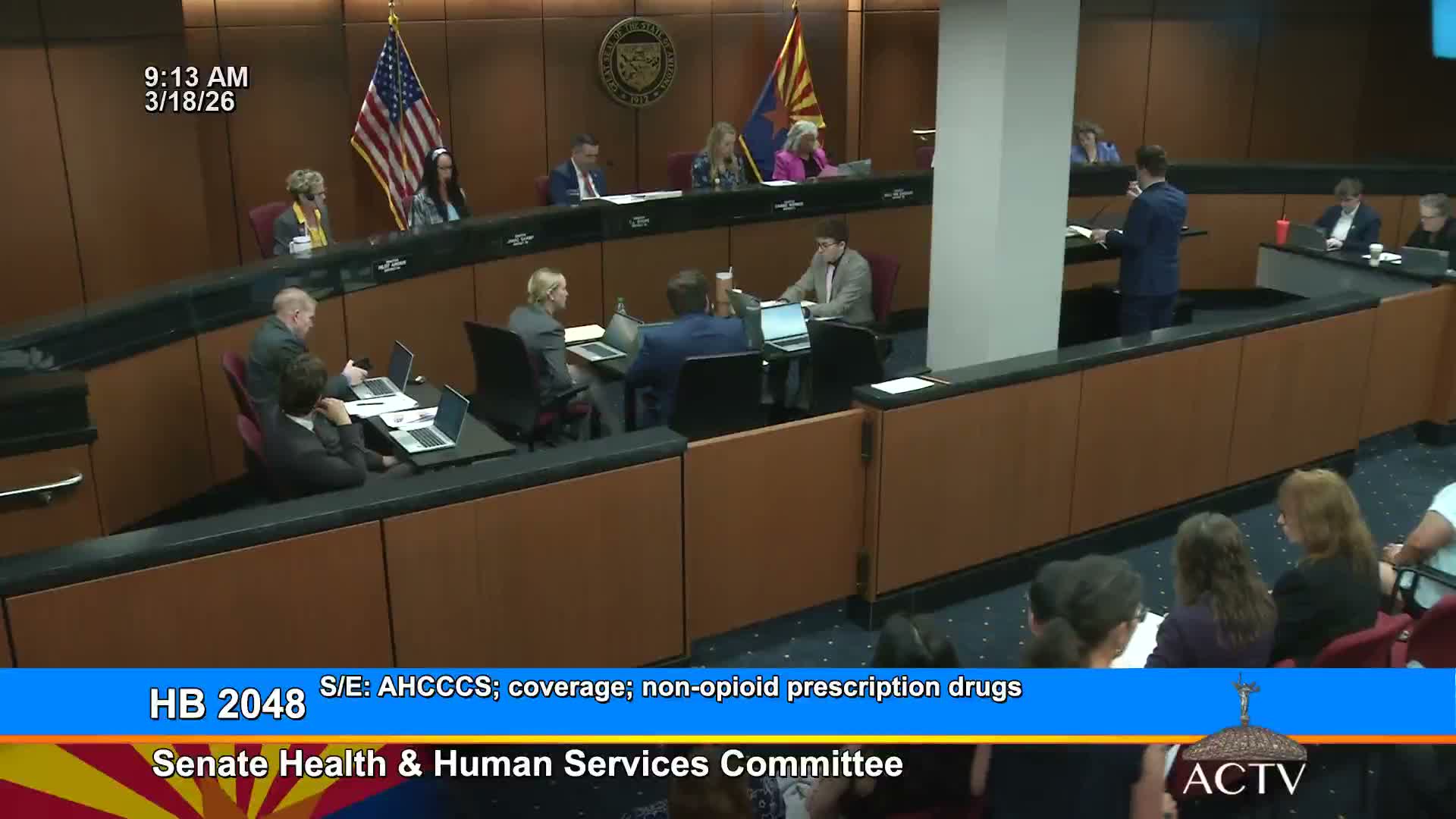
The Senate Health and Human Services Committee gave House Bill 22‑48 — described by sponsors as the "Arizona Medical Freedom Act" — a do‑pass recommendation as amended after a divided 4–3 vote.
The bill, as explained to the committee, would bar businesses, ticket issuers, schools and government entities from denying services, access, employment or benefits based on whether a person has received or used a medical intervention. It would also generally prohibit employers from requiring a medical intervention as a condition of employment, with a limited exception for positions that require travel to foreign jurisdictions where such an intervention is required for entry.
Representative Lisa Fink, who identified herself as the sponsor, told the committee the bill protects bodily autonomy and prevents discrimination based on medical choices: “This bill ensures that Arizonans are not forced to choose between their bodily autonomy and their ability to work, learn, travel, or participate in public life,” she said.
Public testimony was sharply divided. Dr. Colleen Huber, a physician who testified in favor, invoked historical protections for informed consent and argued mandates during the COVID‑19 era violated medical ethics. In opposition, Ashley Chambers warned the bill was too broad and would limit employers’ ability to prevent communicable disease transmission in workplaces and other settings.
The chair’s four‑page Warner amendment, adopted in committee, created an exception that permits schools to restrict admission or access during an outbreak when a student has not provided proof of required immunizations; it also allows limitations for persons with specified infections or infestations in certain circumstances.
During roll call the committee recorded four ayes and three nos; one member who asked to explain a no vote said the bill “weakens herd immunity” and removes tools that prevent disease transmission in high‑risk settings. The committee’s action sends the amended bill to the next legislative step with a do‑pass recommendation.
The committee record shows the amendment was adopted and the motion to advance passed; implementation or broader legal effects will depend on floor action and any further amendment.
The bill, as explained to the committee, would bar businesses, ticket issuers, schools and government entities from denying services, access, employment or benefits based on whether a person has received or used a medical intervention. It would also generally prohibit employers from requiring a medical intervention as a condition of employment, with a limited exception for positions that require travel to foreign jurisdictions where such an intervention is required for entry.
Representative Lisa Fink, who identified herself as the sponsor, told the committee the bill protects bodily autonomy and prevents discrimination based on medical choices: “This bill ensures that Arizonans are not forced to choose between their bodily autonomy and their ability to work, learn, travel, or participate in public life,” she said.
Public testimony was sharply divided. Dr. Colleen Huber, a physician who testified in favor, invoked historical protections for informed consent and argued mandates during the COVID‑19 era violated medical ethics. In opposition, Ashley Chambers warned the bill was too broad and would limit employers’ ability to prevent communicable disease transmission in workplaces and other settings.
The chair’s four‑page Warner amendment, adopted in committee, created an exception that permits schools to restrict admission or access during an outbreak when a student has not provided proof of required immunizations; it also allows limitations for persons with specified infections or infestations in certain circumstances.
During roll call the committee recorded four ayes and three nos; one member who asked to explain a no vote said the bill “weakens herd immunity” and removes tools that prevent disease transmission in high‑risk settings. The committee’s action sends the amended bill to the next legislative step with a do‑pass recommendation.
The committee record shows the amendment was adopted and the motion to advance passed; implementation or broader legal effects will depend on floor action and any further amendment.
Don't Miss a Word: See the Full Meeting!
Go beyond summaries. Unlock every video, transcript, and key insight with a Founder Membership.
✓
Get instant access to full meeting videos
✓
Search and clip any phrase from complete transcripts
✓
Receive AI-powered summaries & custom alerts
✓
Enjoy lifetime, unrestricted access to government data
30-day money-back guarantee
