Committee advances amended HB20‑48 to ease access to new non‑opioid pain drugs after split vote
March 18, 2026 | 2026 Legislature Arizona, Arizona
This article was created by AI summarizing key points discussed. AI makes mistakes, so for full details and context, please refer to the video of the full meeting. Please report any errors so we can fix them. Report an error »
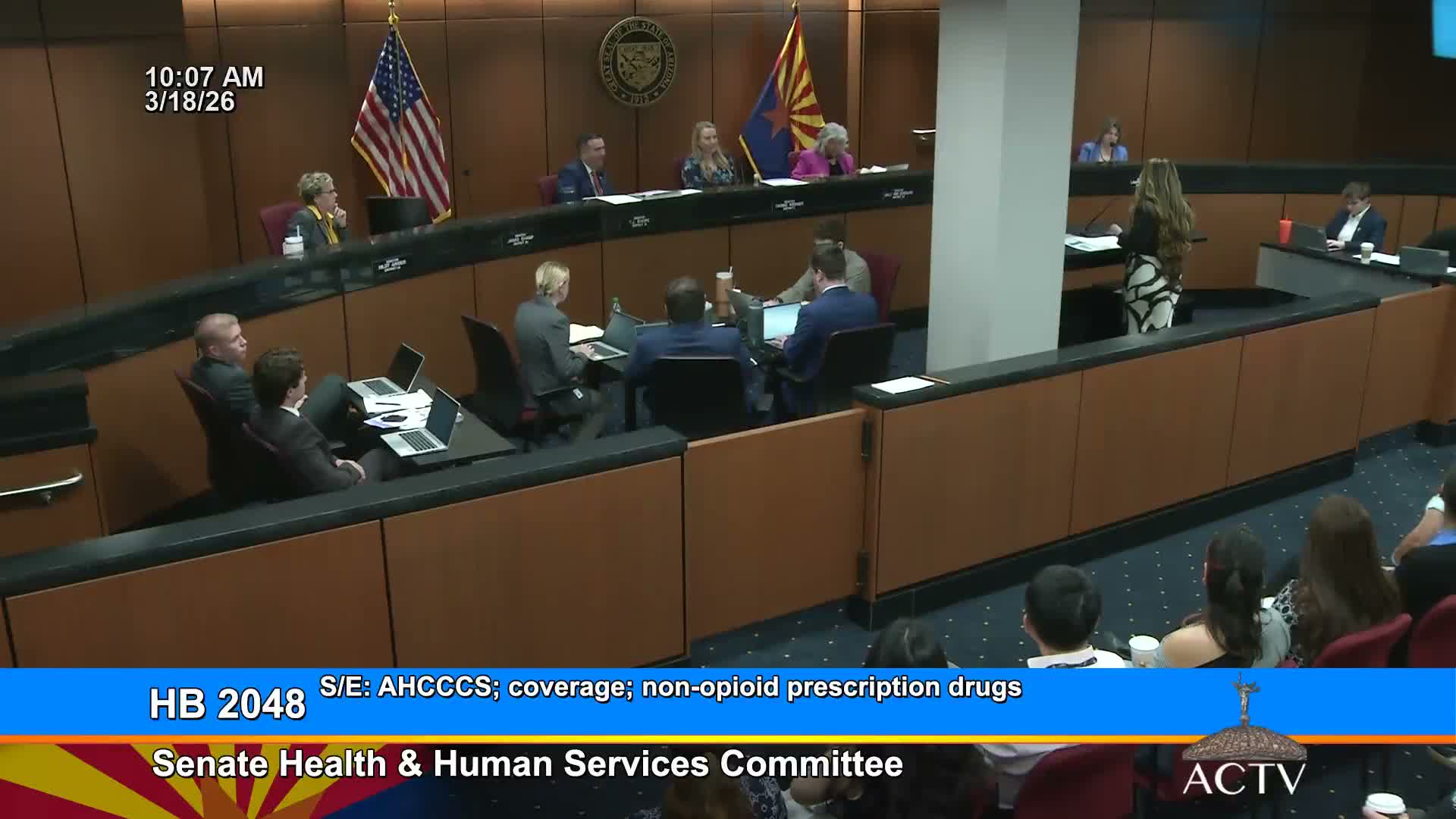
A strike‑everything amendment to House Bill 20‑48 that would prohibit AHCCCS from imposing utilization controls (such as prior authorization or step therapy) on clinically appropriate FDA‑approved non‑opioid prescription drugs more restrictive than controls imposed on clinically appropriate opioids passed the committee by a 4–3 vote.
Proponents — including a Vertex representative and patients who offered personal testimony about opioid harms — argued that the amendment would allow prompt access to new non‑opioid therapies and help curb opioid addiction. “If there’s something else out there that can be given in the beginning...it will save a lot of misery, time and money,” one proponent said.
AHCCCS staff and health‑plan representatives opposed the striker amendment, saying the change would bypass the Access P&T (pharmacy and therapeutics) process that evaluates clinical effectiveness and cost‑effectiveness. An AHCCCS legislative liaison said the agency already covers multiple non‑opioid options without prior authorization and that the new medicine cited (referred to in testimony as Jernavix/Journavix) has a substantially higher cost per course (presented testimony ranged $200–$360 after rebates) than alternatives that typically cost about $10.
Health‑plan testimony warned the statutory change could remove checks that protect cost‑effectiveness and appropriate clinical review, and urged improvement of the P&T process rather than a statutory bypass.
Committee members split along lines reflecting those concerns and personal testimony; the committee recorded 4 ayes and 3 nos and issued a do‑pass recommendation as amended. The amendment includes a two‑year sunset on the prohibition, according to proponents who said more similar drugs are entering the pipeline.
Proponents — including a Vertex representative and patients who offered personal testimony about opioid harms — argued that the amendment would allow prompt access to new non‑opioid therapies and help curb opioid addiction. “If there’s something else out there that can be given in the beginning...it will save a lot of misery, time and money,” one proponent said.
AHCCCS staff and health‑plan representatives opposed the striker amendment, saying the change would bypass the Access P&T (pharmacy and therapeutics) process that evaluates clinical effectiveness and cost‑effectiveness. An AHCCCS legislative liaison said the agency already covers multiple non‑opioid options without prior authorization and that the new medicine cited (referred to in testimony as Jernavix/Journavix) has a substantially higher cost per course (presented testimony ranged $200–$360 after rebates) than alternatives that typically cost about $10.
Health‑plan testimony warned the statutory change could remove checks that protect cost‑effectiveness and appropriate clinical review, and urged improvement of the P&T process rather than a statutory bypass.
Committee members split along lines reflecting those concerns and personal testimony; the committee recorded 4 ayes and 3 nos and issued a do‑pass recommendation as amended. The amendment includes a two‑year sunset on the prohibition, according to proponents who said more similar drugs are entering the pipeline.
View the Full Meeting & All Its Details
This article offers just a summary. Unlock complete video, transcripts, and insights as a Founder Member.
✓
Watch full, unedited meeting videos
✓
Search every word spoken in unlimited transcripts
✓
AI summaries & real-time alerts (all government levels)
✓
Permanent access to expanding government content
30-day money-back guarantee
