Assembly hears urgent calls for more staff, grants as Chiquita Canyon continues underground fire
March 18, 2026 | California State Assembly, House, Legislative, California
This article was created by AI summarizing key points discussed. AI makes mistakes, so for full details and context, please refer to the video of the full meeting. Please report any errors so we can fix them. Report an error »
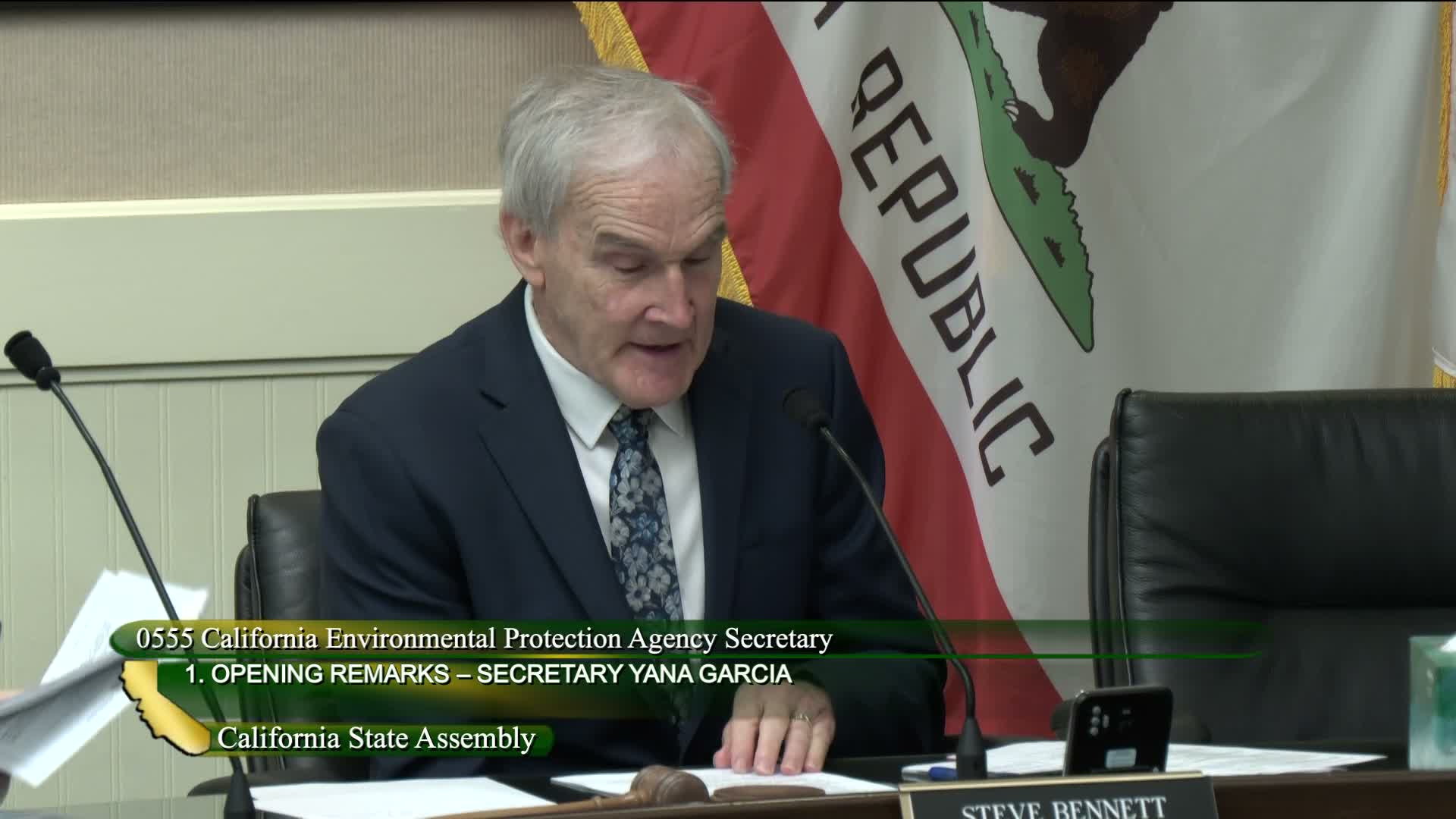
The subcommittee devoted substantial time to a budget change proposal that would add staffing and grants to respond to emerging "set events" at California landfills, including the long‑running Chiquita Canyon incident.
Brandy Hunt, deputy secretary for fiscal policy at CalEPA, outlined the request: $5,100,000 and 12 positions across CalEPA and board, department and office partners to strengthen detection, rapid response, technical assessment and state coordination. "Set events are an emerging environmental issue that can disrupt landfill operations," Hunt said, describing secondary community harms such as illegal dumping and diminished disposal capacity.
Assemblymember Thiago, representing the affected community, described Chiquita Canyon as "90 acres of burning trash underground" and said residents report nosebleeds, nausea and other health harms. Thiago pressed CalEPA and DTSC for more immediate protective actions and questioned whether the proposed resources would be sufficient given multiple active set events around the state.
CalEPA's Alana Matthews (deputy secretary for law enforcement and general counsel) responded that the current response has diverted many staff and that the proposed positions are intended to restore diverted personnel and add technical experts (geological engineers, slope‑stability specialists) to sustain response and future detection. CalRecycle's Mark DeBie said the $1,000,000 local assistance portion would initially prioritize Los Angeles and Riverside counties' local enforcement agencies and later extend funds to other LEAs to improve monitoring and preparedness.
Members asked technical questions about causes and patterns of set events. DTSC's Dan Berg and CalRecycle staff said causes vary and often remain unclear after investigation; the agencies are studying lithium‑ion batteries as a potential contributor given their rising prevalence in the waste stream. Operational issues such as over‑drawing landfill gas—introducing oxygen—and cover failures were also discussed as mechanisms that can drive heating events.
CalRecycle estimated six months for scoping and another year for formal rulemaking on new landfill regulations. The panel emphasized urgency, with members urging consideration of stronger enforcement levers to make holding operators accountable a more certain and costly alternative than inaction.
The subcommittee reserved judgment pending more detail and follow‑up questions to agency witnesses on how grant funds would be allocated and how state enforcement could be accelerated.
Brandy Hunt, deputy secretary for fiscal policy at CalEPA, outlined the request: $5,100,000 and 12 positions across CalEPA and board, department and office partners to strengthen detection, rapid response, technical assessment and state coordination. "Set events are an emerging environmental issue that can disrupt landfill operations," Hunt said, describing secondary community harms such as illegal dumping and diminished disposal capacity.
Assemblymember Thiago, representing the affected community, described Chiquita Canyon as "90 acres of burning trash underground" and said residents report nosebleeds, nausea and other health harms. Thiago pressed CalEPA and DTSC for more immediate protective actions and questioned whether the proposed resources would be sufficient given multiple active set events around the state.
CalEPA's Alana Matthews (deputy secretary for law enforcement and general counsel) responded that the current response has diverted many staff and that the proposed positions are intended to restore diverted personnel and add technical experts (geological engineers, slope‑stability specialists) to sustain response and future detection. CalRecycle's Mark DeBie said the $1,000,000 local assistance portion would initially prioritize Los Angeles and Riverside counties' local enforcement agencies and later extend funds to other LEAs to improve monitoring and preparedness.
Members asked technical questions about causes and patterns of set events. DTSC's Dan Berg and CalRecycle staff said causes vary and often remain unclear after investigation; the agencies are studying lithium‑ion batteries as a potential contributor given their rising prevalence in the waste stream. Operational issues such as over‑drawing landfill gas—introducing oxygen—and cover failures were also discussed as mechanisms that can drive heating events.
CalRecycle estimated six months for scoping and another year for formal rulemaking on new landfill regulations. The panel emphasized urgency, with members urging consideration of stronger enforcement levers to make holding operators accountable a more certain and costly alternative than inaction.
The subcommittee reserved judgment pending more detail and follow‑up questions to agency witnesses on how grant funds would be allocated and how state enforcement could be accelerated.
Don't Miss a Word: See the Full Meeting!
Go beyond summaries. Unlock every video, transcript, and key insight with a Founder Membership.
✓
Get instant access to full meeting videos
✓
Search and clip any phrase from complete transcripts
✓
Receive AI-powered summaries & custom alerts
✓
Enjoy lifetime, unrestricted access to government data
30-day money-back guarantee
