Senator Grove’s bill would let refineries petition to narrow fence‑line monitoring where evidence shows pollutants aren’t emitted
March 18, 2026 | California State Senate, Senate, Legislative, California
This article was created by AI summarizing key points discussed. AI makes mistakes, so for full details and context, please refer to the video of the full meeting. Please report any errors so we can fix them. Report an error »
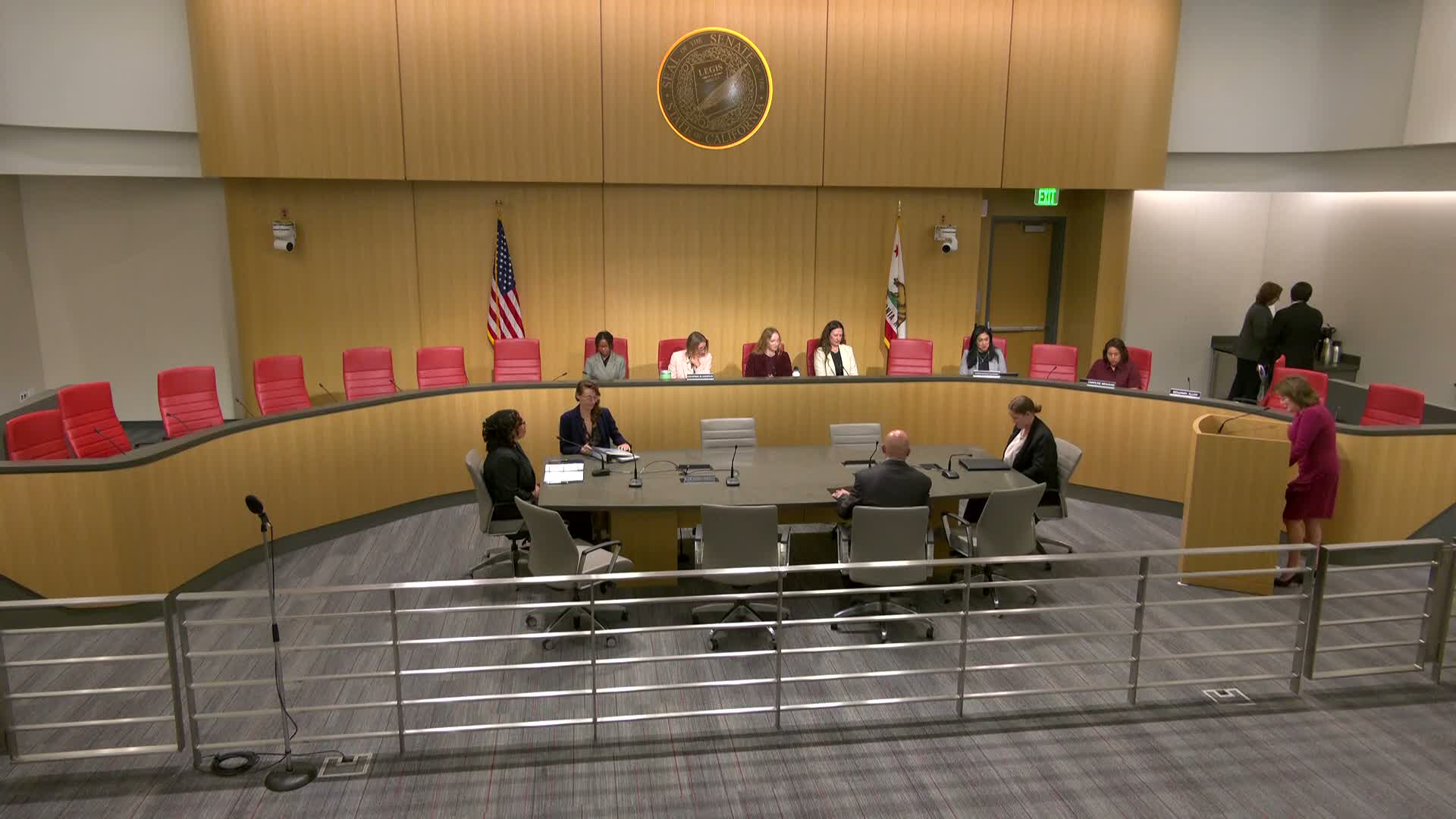
Senator Grove introduced SB 1039 to create a formal process by which refineries may ask local air districts to exclude particular pollutants from fence‑line monitoring when substantial evidence shows those pollutants are not emitted by the facility.
The author and refinery witnesses said some small or specialty refineries are required to monitor for constituents they do not produce, imposing capital and operating costs that can be disproportionate to outputs. Cyrus Mojibi, president of San Joaquin Refining, said litigation had forced his facility to install multiple monitors and longer monitoring paths that raised costs from a projected $300,000 to over $2,000,000 in capital and roughly $200,000 per year in maintenance. He and industry groups said that layering requirements could drive in‑state refining capacity out of California, shifting production overseas.
Opponents — including local air districts (CAPCOA), Earthjustice and environmental justice networks — argued that air districts already have processes and authority to tailor monitoring and that codifying a fixed statutory process risks undermining local discretion, cutting communities out of the process and creating implementation delays that could harm public health.
The chair recommended passage with the author continuing to work with districts; after committee amendments and discussion the committee moved SB 1039 as amended to Senate Appropriations with a recorded 4‑0 vote.
The author and refinery witnesses said some small or specialty refineries are required to monitor for constituents they do not produce, imposing capital and operating costs that can be disproportionate to outputs. Cyrus Mojibi, president of San Joaquin Refining, said litigation had forced his facility to install multiple monitors and longer monitoring paths that raised costs from a projected $300,000 to over $2,000,000 in capital and roughly $200,000 per year in maintenance. He and industry groups said that layering requirements could drive in‑state refining capacity out of California, shifting production overseas.
Opponents — including local air districts (CAPCOA), Earthjustice and environmental justice networks — argued that air districts already have processes and authority to tailor monitoring and that codifying a fixed statutory process risks undermining local discretion, cutting communities out of the process and creating implementation delays that could harm public health.
The chair recommended passage with the author continuing to work with districts; after committee amendments and discussion the committee moved SB 1039 as amended to Senate Appropriations with a recorded 4‑0 vote.
View the Full Meeting & All Its Details
This article offers just a summary. Unlock complete video, transcripts, and insights as a Founder Member.
✓
Watch full, unedited meeting videos
✓
Search every word spoken in unlimited transcripts
✓
AI summaries & real-time alerts (all government levels)
✓
Permanent access to expanding government content
30-day money-back guarantee
