LAO urges lawmakers to close a prison as CDCR udget outpaces falling population
March 18, 2026 | California State Assembly, House, Legislative, California
This article was created by AI summarizing key points discussed. AI makes mistakes, so for full details and context, please refer to the video of the full meeting. Please report any errors so we can fix them. Report an error »
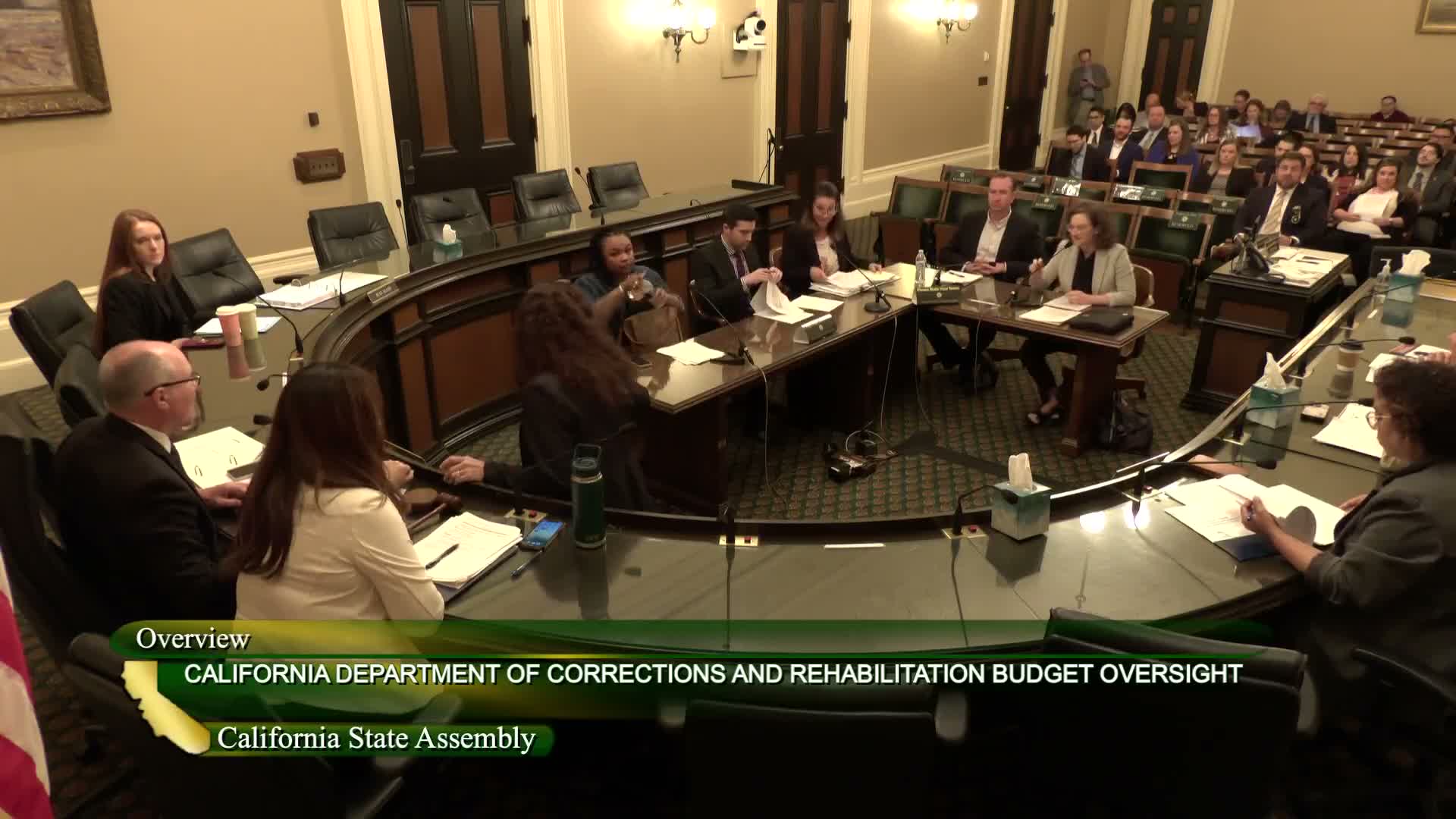
The Assembly Budget Subcommittee on Accountability and Oversight heard from the Legislative Analyst's Office that California's prison and parole populations have fallen sharply over two decades, yet total corrections spending has not declined proportionately. "We find that under the administration's projections, by 2030 CDCR will have several thousand empty beds in operation," said Caitlin O'Neil of the Legislative Analyst's Office, recommending the legislature direct CDCR to close a prison to align capacity with expected population and to help shore up out‑year budgets.
O'Neil told the committee that closing or deactivating facilities avoids costly infrastructure upgrades at sites that would no longer be needed and identified the Correctional Training Facility in Soledad as among the stronger candidates for closure, urging the committee not to approve infrastructure projects at prisons likely to be deactivated. She also flagged a transparency problem: when CDCR has begun deactivations in the past, the administration declined to confirm details and instead pointed to the May budget revision. "That limits the legislature's oversight of potentially significant operational changes," she said, and recommended statutory reporting requirements so the legislature is notified when capacity reductions occur.
Jeff Macomber, Secretary of the California Department of Corrections and Rehabilitation, acknowledged the department's budget pressures such as lump‑sum retiree payments, workers' compensation and growing medical and transportation costs, and described tradeoffs tied to closures. "When we close a prison I send about a hundred people to every other prison in the state," Macomber said, arguing that closures alone do not immediately reduce obligations because staff typically transfer and people are moved among institutions. He also emphasized rehabilitation successes, telling members that college programs have produced measurable declines in recidivism.
Assembly members pressed the Department of Finance and CDCR for more transparency about vacancy savings and unallocated budget assumptions. Anthony Franzoa of the Department of Finance said the administration has not proposed specific closures at this time and cautioned against prematurely naming institutions, citing statute and concerns about confusion for staff, families and local economies; he said some deactivations at Avenal and Solano will be announced in the May revision.
Why it matters: Lawmakers are weighing where to allocate limited general fund dollars for 2026–27. LAO's recommendation to close a prison and to require notice when CDCR reduces capacity would shift the timing and visibility of billions in potential savings and affect decisions about capital projects and program investments.
The committee asked CDCR and DOF to produce further data — including detailed counts of single‑cell targets, an updated space utilization assessment and breakdowns of spending that CDCR classifies as rehabilitative — and the secretary said the department will provide a 20‑year capital plan within about 60 days to frame long‑term infrastructure needs. The hearing closed with a commitment from staff to continue oversight as the May revision and budget process proceed.
O'Neil told the committee that closing or deactivating facilities avoids costly infrastructure upgrades at sites that would no longer be needed and identified the Correctional Training Facility in Soledad as among the stronger candidates for closure, urging the committee not to approve infrastructure projects at prisons likely to be deactivated. She also flagged a transparency problem: when CDCR has begun deactivations in the past, the administration declined to confirm details and instead pointed to the May budget revision. "That limits the legislature's oversight of potentially significant operational changes," she said, and recommended statutory reporting requirements so the legislature is notified when capacity reductions occur.
Jeff Macomber, Secretary of the California Department of Corrections and Rehabilitation, acknowledged the department's budget pressures such as lump‑sum retiree payments, workers' compensation and growing medical and transportation costs, and described tradeoffs tied to closures. "When we close a prison I send about a hundred people to every other prison in the state," Macomber said, arguing that closures alone do not immediately reduce obligations because staff typically transfer and people are moved among institutions. He also emphasized rehabilitation successes, telling members that college programs have produced measurable declines in recidivism.
Assembly members pressed the Department of Finance and CDCR for more transparency about vacancy savings and unallocated budget assumptions. Anthony Franzoa of the Department of Finance said the administration has not proposed specific closures at this time and cautioned against prematurely naming institutions, citing statute and concerns about confusion for staff, families and local economies; he said some deactivations at Avenal and Solano will be announced in the May revision.
Why it matters: Lawmakers are weighing where to allocate limited general fund dollars for 2026–27. LAO's recommendation to close a prison and to require notice when CDCR reduces capacity would shift the timing and visibility of billions in potential savings and affect decisions about capital projects and program investments.
The committee asked CDCR and DOF to produce further data — including detailed counts of single‑cell targets, an updated space utilization assessment and breakdowns of spending that CDCR classifies as rehabilitative — and the secretary said the department will provide a 20‑year capital plan within about 60 days to frame long‑term infrastructure needs. The hearing closed with a commitment from staff to continue oversight as the May revision and budget process proceed.
View the Full Meeting & All Its Details
This article offers just a summary. Unlock complete video, transcripts, and insights as a Founder Member.
✓
Watch full, unedited meeting videos
✓
Search every word spoken in unlimited transcripts
✓
AI summaries & real-time alerts (all government levels)
✓
Permanent access to expanding government content
30-day money-back guarantee
