Advocates at Assembly hearing urge prison closures, elder release and reinvestment in community programs
March 18, 2026 | California State Assembly, House, Legislative, California
This article was created by AI summarizing key points discussed. AI makes mistakes, so for full details and context, please refer to the video of the full meeting. Please report any errors so we can fix them. Report an error »
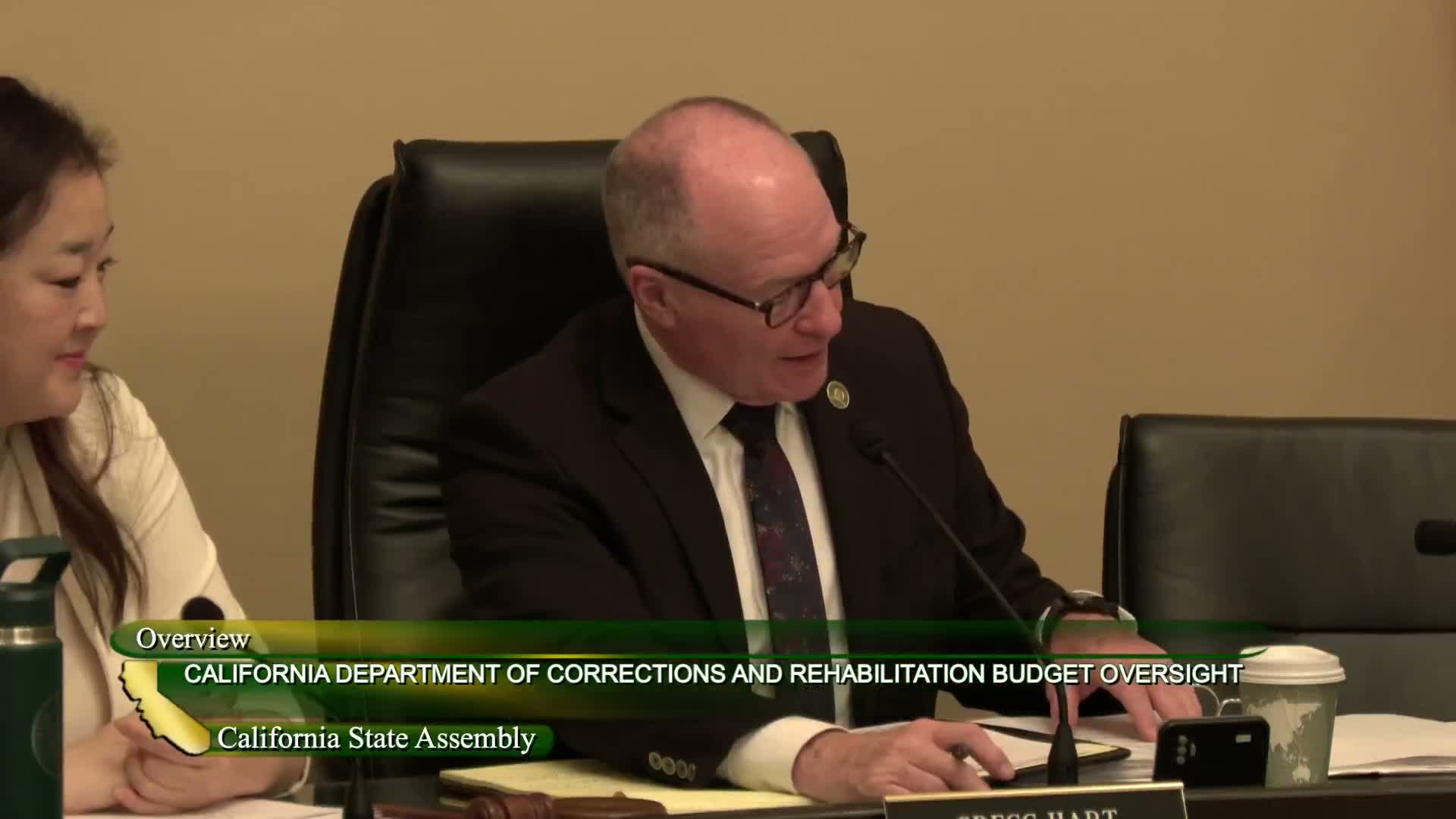
Multiple public commenters and advocacy organizations used the subcommittee forum to press lawmakers to accelerate prison closures, expand elder and medically vulnerable release mechanisms, and reinvest savings in community‑based services.
Amber Rose Howard, executive director of Californians United for a Responsible Budget (CURB), told the committee that despite reductions in prison population the CDCR budget has largely remained steady. "Maintaining excess prison capacity has real trade‑offs," she said, citing deferred maintenance estimates of about $2.5 billion and the claim that just 5% of CDCR's budget goes toward rehabilitation. She urged the legislature to close additional facilities and redirect savings to housing, substance‑use treatment and community reentry.
Public commenters echoed those themes. Janice O'Malley of AFSCME urged scrutiny of the BCG contract and of outsourcing recruitment work that could be done by state civil service hires. Courtney Hanson of the California Coalition for Women Prisoners and other witnesses highlighted systemic sexual abuse allegations inside women's prisons and urged releases for elders and medically fragile people. Speakers also pointed to data in a recently released SB 108 report and to per‑person health costs that rise sharply with age.
Why it matters: Advocates framed closures and releases as both a fiscal and a human rights issue — releasing medically vulnerable people and closing unneeded facilities could reduce high medical spending and avoid future settlements tied to staff misconduct, they argued. Several speakers requested clearer legislative action to expand elder parole, compassionate and medical release pathways.
The committee heard requests to align savings from closures with reinvestments in reentry and community services and to ensure oversight of conditions in women's prisons while the legislature considers budget and policy steps.
Amber Rose Howard, executive director of Californians United for a Responsible Budget (CURB), told the committee that despite reductions in prison population the CDCR budget has largely remained steady. "Maintaining excess prison capacity has real trade‑offs," she said, citing deferred maintenance estimates of about $2.5 billion and the claim that just 5% of CDCR's budget goes toward rehabilitation. She urged the legislature to close additional facilities and redirect savings to housing, substance‑use treatment and community reentry.
Public commenters echoed those themes. Janice O'Malley of AFSCME urged scrutiny of the BCG contract and of outsourcing recruitment work that could be done by state civil service hires. Courtney Hanson of the California Coalition for Women Prisoners and other witnesses highlighted systemic sexual abuse allegations inside women's prisons and urged releases for elders and medically fragile people. Speakers also pointed to data in a recently released SB 108 report and to per‑person health costs that rise sharply with age.
Why it matters: Advocates framed closures and releases as both a fiscal and a human rights issue — releasing medically vulnerable people and closing unneeded facilities could reduce high medical spending and avoid future settlements tied to staff misconduct, they argued. Several speakers requested clearer legislative action to expand elder parole, compassionate and medical release pathways.
The committee heard requests to align savings from closures with reinvestments in reentry and community services and to ensure oversight of conditions in women's prisons while the legislature considers budget and policy steps.
View the Full Meeting & All Its Details
This article offers just a summary. Unlock complete video, transcripts, and insights as a Founder Member.
✓
Watch full, unedited meeting videos
✓
Search every word spoken in unlimited transcripts
✓
AI summaries & real-time alerts (all government levels)
✓
Permanent access to expanding government content
30-day money-back guarantee
