Rep. Zach Fields seeks constitutional definition of “person” to curb corporate political power
March 18, 2026 | 2026 Legislature Alaska, Alaska
This article was created by AI summarizing key points discussed. AI makes mistakes, so for full details and context, please refer to the video of the full meeting. Please report any errors so we can fix them. Report an error »
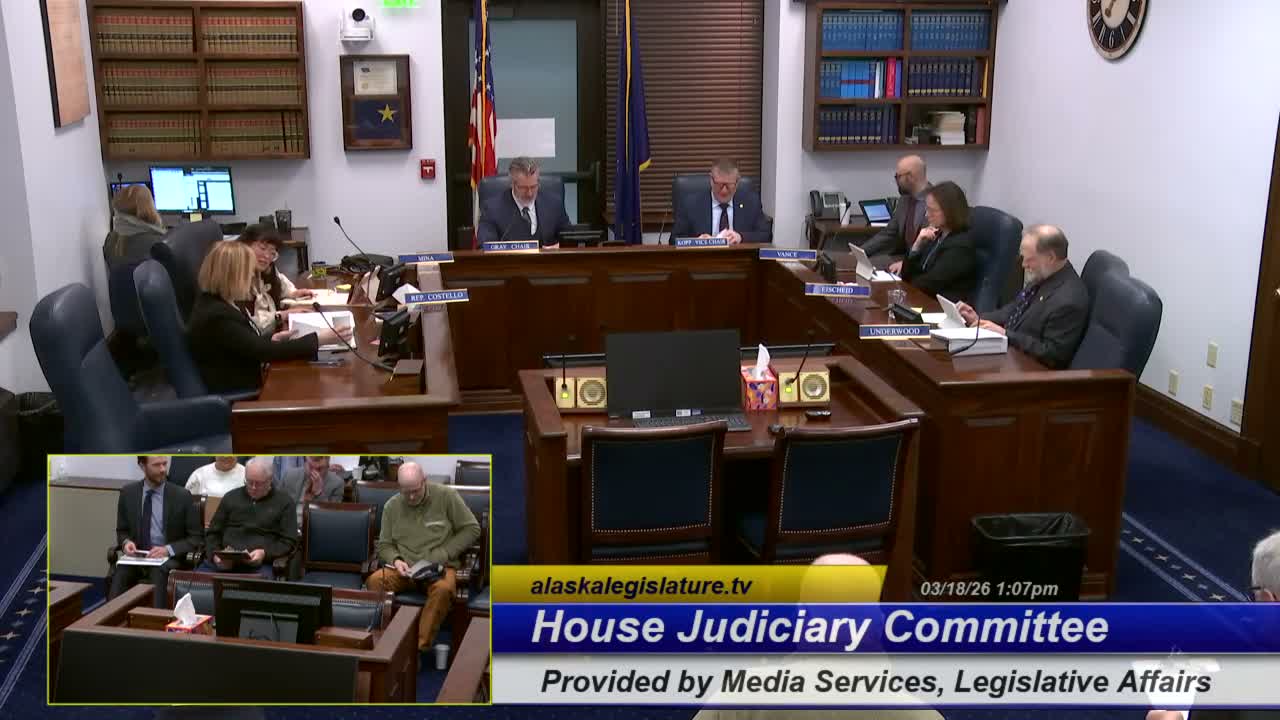
Rep. Zach Fields, sponsor of House Joint Resolution 31, told the House Judiciary Committee on March 18 that the measure would amend the Alaska Constitution to clarify that “persons” are “natural persons, i.e., living, breathing people, not corporations,” and to add provisions limiting contributions and expenditures in state and local elections.
Fields said judicial decisions such as Buckley v. Valeo and Citizens United have reinterpreted constitutional language to expand corporate political power, producing “a tsunami of spending” and “well over $1,000,000,000 in dark money groups.” He argued HJR 31 would restore the framers’ intent and allow Alaska voters and the Legislature to regulate campaign finance.
The sponsor presented a sectional analysis outlining changes to several articles of the Alaska Constitution that would (1) define persons as natural persons, (2) add a section listing rights that belong to natural people, and (3) add provisions limiting contributions and expenditures made to influence elections. Staff said proposed amendments would be placed before voters at the next general election if advanced.
Committee members pressed Fields on scope and legal risk. Representative Vance and others asked whether the resolution should be narrowed to avoid unintended consequences for labor unions, nonprofits, out‑of‑state donors or future developments such as artificial intelligence. Fields repeatedly said he would support narrowing the text to sections dealing only with the definition of natural persons if the committee preferred.
Chair Gray read aloud a legal memorandum summary indicating HJR 31 raises First Amendment issues. Gray summarized counsel’s position that “political campaign contributions and expenditures fall within the protections of the First Amendment” and that courts could treat some parts of the resolution as novel legal questions, citing Montana precedent as an example.
Kevin Morford, president of Anchorage‑based nonprofit Alaska Move to Amend, urged passage and framed the measure as shifting corporate protections into the statutory, rather than constitutional, realm so legislatures could adjust rules over time. Morford said the resolution would not abolish federal constitutional rights for corporations (which fall under the Supremacy Clause) but would remove any additional state‑constitutional protections.
Public commenters gave mixed views. Sharman Haley, who has lobbied for limits on corporate and PAC spending, said HJR 31 would close a “backdoor” for unregulated spending and urged the committee to advance the resolution. Another caller, Mike Koons, said he opposed the measure and characterized it as an attempt to suppress speech; his testimony included sharply critical language about the resolution’s backers.
The committee set an amendment deadline for HJR 31 of Wednesday, March 25, 2026 at 11:59 p.m., and later set the measure aside for further consideration. The committee did not vote on the resolution during this hearing.
Next steps: sponsors and staff will accept amendments through March 25 and return the measure to committee for further action.
Fields said judicial decisions such as Buckley v. Valeo and Citizens United have reinterpreted constitutional language to expand corporate political power, producing “a tsunami of spending” and “well over $1,000,000,000 in dark money groups.” He argued HJR 31 would restore the framers’ intent and allow Alaska voters and the Legislature to regulate campaign finance.
The sponsor presented a sectional analysis outlining changes to several articles of the Alaska Constitution that would (1) define persons as natural persons, (2) add a section listing rights that belong to natural people, and (3) add provisions limiting contributions and expenditures made to influence elections. Staff said proposed amendments would be placed before voters at the next general election if advanced.
Committee members pressed Fields on scope and legal risk. Representative Vance and others asked whether the resolution should be narrowed to avoid unintended consequences for labor unions, nonprofits, out‑of‑state donors or future developments such as artificial intelligence. Fields repeatedly said he would support narrowing the text to sections dealing only with the definition of natural persons if the committee preferred.
Chair Gray read aloud a legal memorandum summary indicating HJR 31 raises First Amendment issues. Gray summarized counsel’s position that “political campaign contributions and expenditures fall within the protections of the First Amendment” and that courts could treat some parts of the resolution as novel legal questions, citing Montana precedent as an example.
Kevin Morford, president of Anchorage‑based nonprofit Alaska Move to Amend, urged passage and framed the measure as shifting corporate protections into the statutory, rather than constitutional, realm so legislatures could adjust rules over time. Morford said the resolution would not abolish federal constitutional rights for corporations (which fall under the Supremacy Clause) but would remove any additional state‑constitutional protections.
Public commenters gave mixed views. Sharman Haley, who has lobbied for limits on corporate and PAC spending, said HJR 31 would close a “backdoor” for unregulated spending and urged the committee to advance the resolution. Another caller, Mike Koons, said he opposed the measure and characterized it as an attempt to suppress speech; his testimony included sharply critical language about the resolution’s backers.
The committee set an amendment deadline for HJR 31 of Wednesday, March 25, 2026 at 11:59 p.m., and later set the measure aside for further consideration. The committee did not vote on the resolution during this hearing.
Next steps: sponsors and staff will accept amendments through March 25 and return the measure to committee for further action.
Don't Miss a Word: See the Full Meeting!
Go beyond summaries. Unlock every video, transcript, and key insight with a Founder Membership.
✓
Get instant access to full meeting videos
✓
Search and clip any phrase from complete transcripts
✓
Receive AI-powered summaries & custom alerts
✓
Enjoy lifetime, unrestricted access to government data
30-day money-back guarantee
