Lawmakers hear hours of testimony on Protect Act, with advocates urging ban on local cooperation with ICE
March 18, 2026 | 2026 Legislature MA, Massachusetts
This article was created by AI summarizing key points discussed. AI makes mistakes, so for full details and context, please refer to the video of the full meeting. Please report any errors so we can fix them. Report an error »
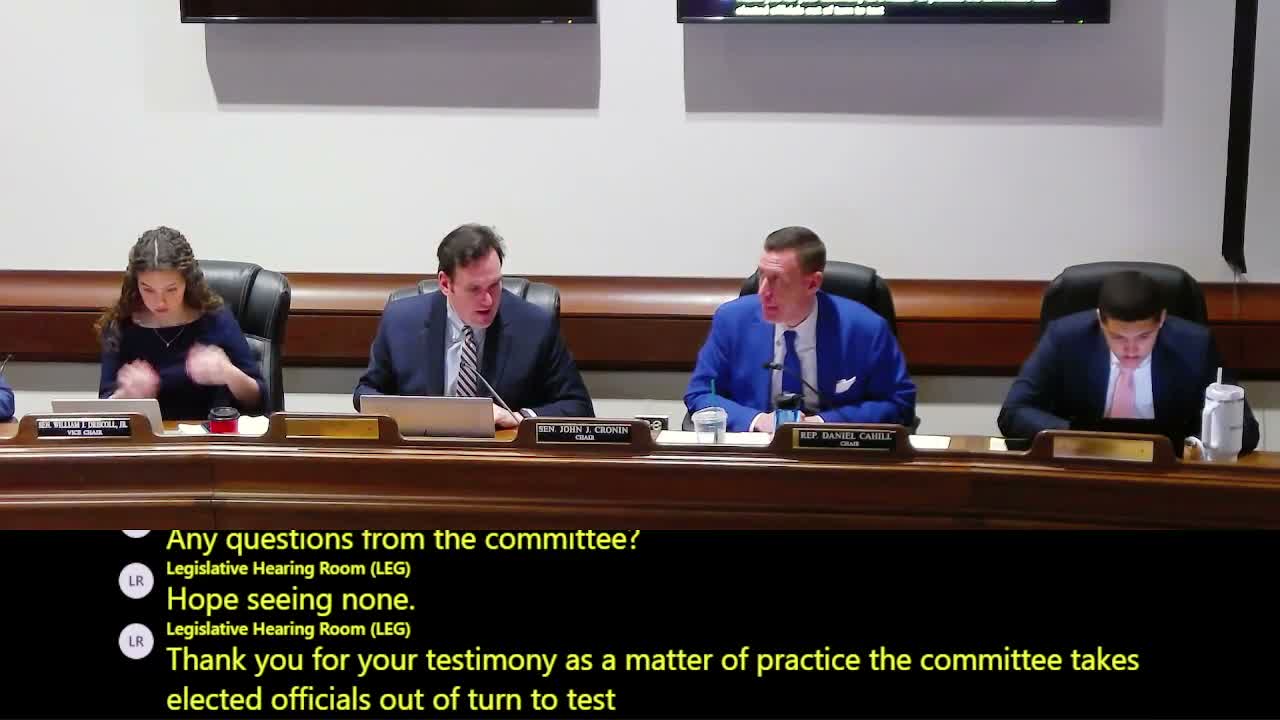
State lawmakers spent much of a March 19 public hearing hearing testimony for the Protect Act (H.5158), a bill that would sharply limit state and local cooperation with federal civil immigration enforcement, including curbing 287(g)-style agreements and restricting operational assistance to ICE.
Supporters — including union leaders, health-care workers, teachers and members of the Black and Latino Legislative Caucus — said recent ICE activity has chilled reporting, medical care and school attendance and that statutory protections are needed. "The Protect Act does that by establishing common sense firewalls between state systems and federal civil immigration enforcement," said Dan Hoffer, political and legislative director at SEIU, who urged the committee to strengthen the bill and pass it.
Health professionals described a new climate of fear in hospitals and clinics. "Locations like that should be places to learn and heal, not places of fear," said Dr. Avik Chatterjee, a primary-care physician and pediatrician at Boston University School of Medicine. Pediatric infectious‑disease specialist Dr. Julia Koehler said parents avoiding care harms children’s health and development.
Advocates asked lawmakers to ban 287(g) agreements, remove language that would limit the bill’s reach (the word “primary” in some prohibitions), and enshrine courthouse protections. "We must stand up to cruel mass deportation policies," said Max Page, president of the Massachusetts Teachers Association, who said the bill will protect students and educators.
County sheriffs who testified — including Patrick Kaelin of Hampshire County and William Gerke, special sheriff and COO for Essex County — described the operational mechanics of detention, detainers and notifications to ICE and urged clarity on judicial detainers versus informal "requests to notify." Kaelin told the committee that sheriffs generally cooperate with law‑enforcement information requests but said the sheriff's office has a constitutional duty to balance public safety and that the systems are varied. As Gerke summarized a jail snapshot, he said, "We have a 125 ICE detainers," and walked lawmakers through the types of charges attached to many of those cases.
Opponents argued the bill could hinder necessary coordination and create safety risks. Henry Barbaro of the Massachusetts Coalition for Immigration Reform said restricting communication with federal officers could shift enforcement into workplaces and neighborhoods. "Public safety must come first," he told the committee.
Several speakers representing hospitals, immigrant advocacy groups and district attorneys said federal agencies have been unwilling to appear before the committee and urged the legislature to set state policy. District Attorney Marion Ryan said courthouse arrests by federal agents have created safety problems and interruptions to prosecutions and asked the committee for a favorable report.
The hearing produced no vote on H.5158 itself. Late in the session, the committee voted by voice to include testimony from a March 4 forum into the record for today’s hearing; lawmakers adjourned the session without taking final action on the bill. The committee said further drafting and negotiation would continue.
What’s next: The committee will use the submitted testimony and continue to refine statutory language, with sponsors and advocates asking for clarifying changes such as removing narrow exemptions and specifying courthouse and ‘‘sensitive‑location’’ safeguards.
Supporters — including union leaders, health-care workers, teachers and members of the Black and Latino Legislative Caucus — said recent ICE activity has chilled reporting, medical care and school attendance and that statutory protections are needed. "The Protect Act does that by establishing common sense firewalls between state systems and federal civil immigration enforcement," said Dan Hoffer, political and legislative director at SEIU, who urged the committee to strengthen the bill and pass it.
Health professionals described a new climate of fear in hospitals and clinics. "Locations like that should be places to learn and heal, not places of fear," said Dr. Avik Chatterjee, a primary-care physician and pediatrician at Boston University School of Medicine. Pediatric infectious‑disease specialist Dr. Julia Koehler said parents avoiding care harms children’s health and development.
Advocates asked lawmakers to ban 287(g) agreements, remove language that would limit the bill’s reach (the word “primary” in some prohibitions), and enshrine courthouse protections. "We must stand up to cruel mass deportation policies," said Max Page, president of the Massachusetts Teachers Association, who said the bill will protect students and educators.
County sheriffs who testified — including Patrick Kaelin of Hampshire County and William Gerke, special sheriff and COO for Essex County — described the operational mechanics of detention, detainers and notifications to ICE and urged clarity on judicial detainers versus informal "requests to notify." Kaelin told the committee that sheriffs generally cooperate with law‑enforcement information requests but said the sheriff's office has a constitutional duty to balance public safety and that the systems are varied. As Gerke summarized a jail snapshot, he said, "We have a 125 ICE detainers," and walked lawmakers through the types of charges attached to many of those cases.
Opponents argued the bill could hinder necessary coordination and create safety risks. Henry Barbaro of the Massachusetts Coalition for Immigration Reform said restricting communication with federal officers could shift enforcement into workplaces and neighborhoods. "Public safety must come first," he told the committee.
Several speakers representing hospitals, immigrant advocacy groups and district attorneys said federal agencies have been unwilling to appear before the committee and urged the legislature to set state policy. District Attorney Marion Ryan said courthouse arrests by federal agents have created safety problems and interruptions to prosecutions and asked the committee for a favorable report.
The hearing produced no vote on H.5158 itself. Late in the session, the committee voted by voice to include testimony from a March 4 forum into the record for today’s hearing; lawmakers adjourned the session without taking final action on the bill. The committee said further drafting and negotiation would continue.
What’s next: The committee will use the submitted testimony and continue to refine statutory language, with sponsors and advocates asking for clarifying changes such as removing narrow exemptions and specifying courthouse and ‘‘sensitive‑location’’ safeguards.
View the Full Meeting & All Its Details
This article offers just a summary. Unlock complete video, transcripts, and insights as a Founder Member.
✓
Watch full, unedited meeting videos
✓
Search every word spoken in unlimited transcripts
✓
AI summaries & real-time alerts (all government levels)
✓
Permanent access to expanding government content
30-day money-back guarantee
