Department of Revenue raises spring forecast as oil and mining push unrestricted revenue up by roughly $545M for FY26
March 16, 2026 | 2026 Legislature Alaska, Alaska
This article was created by AI summarizing key points discussed. AI makes mistakes, so for full details and context, please refer to the video of the full meeting. Please report any errors so we can fix them. Report an error »
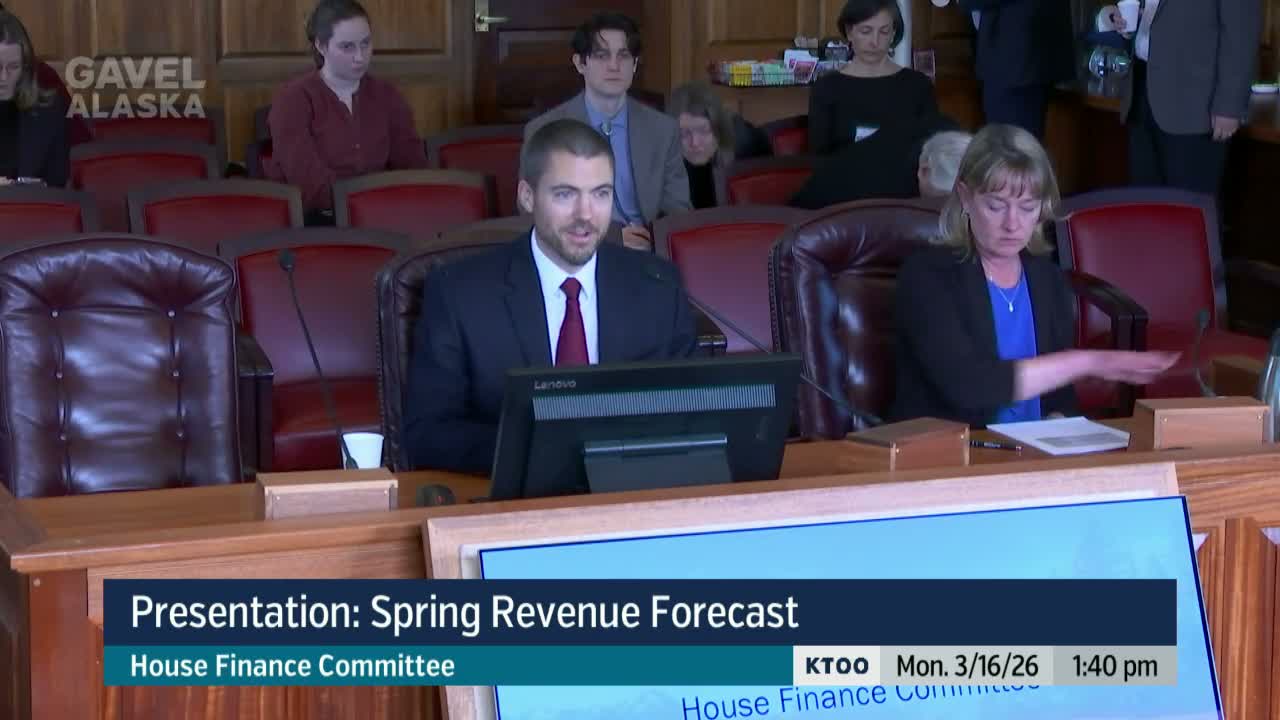
The House Finance Committee on March 16 heard the Department of Revenuespring 2026 unrestricted revenue forecast, which raised the estimated general-fund takings by roughly $544.7 million for fiscal year 2026 and about $510 million for fiscal year 2027.
Dan Stickel, chief economist for the Department of Revenue, told the committee the forecast raises the FY26 oil-price projection to about $75.26 per barrel (an increase of $9.77 per barrel) and lifts the FY27 oil-price assumption by about $13 per barrel to roughly $75. The department also increased production assumptions by about 2,100 barrels per day for FY26 and 700 barrels per day for FY27.
Stickel broke the FY26 forecast increase into components: about $105 million from additional non-petroleum corporate income tax collections (including large December 2025 payments the department considers one-time), roughly $370 million tied to higher production tax and unrestricted royalty receipts that are especially sensitive to oil prices, about $20 million from oil-and-gas corporate income tax, and approximately $30 million from higher oil-and-gas property tax collections—chiefly a reassessment of the Trans Alaska Pipeline System.
Investment revenue remains the largest component of unrestricted revenue under the departments percent-of-market-value (POMV) methodology. Stickel said the forecast assumes a 7.3% annual return for the Permanent Fund and a POMV transfer a little over $3.8 billion in FY26, growing across the 10-year horizon.
Mining receipts were flagged as another significant upward contributor: record precious-metal prices led the department to forecast more than $200 million in mining-related revenue for FY27, including about $189 million of unrestricted revenue, roughly $100 million from the states mining license tax, nearly $80 million in corporate income taxes from mining companies, and about $30 million of state royalty receipts.
The economists translated market uncertainty into dollars: using option-implied percentiles, Stickel said there is a 10% chance markets price crude above $200 per barrel and a 10% chance prices fall to $30 per barrel in the near term. For the remainder of the fiscal year, he calculated that a $1 change in the March-through-June average oil price would move unrestricted revenue by about $15 million.
Committee members pressed the department on timing and accounting. Chair Co-chair Josephson asked when a severance-tax boost from recent price moves would appear; Stickel said production-month receipts are due the following month (so March production returns would arrive in April) and that accrual accounting means March through June production months would be counted in FY26 even if payments post in later months. Members also discussed the distinction between accrual-based forecasts, cash management and OMBs appropriation decisions; Stickel deferred cash-allocation questions to treasury/OMB while offering to provide monthly cash-flow detail.
On confidentiality and pre-release distribution, Stickel said the department provides internal administration updates and that some revenue outlook information was known in February, but the oil-price forecast itself was finalized the Wednesday before publication and treated confidentially within the department.
Stickel repeatedly cautioned that the current oil-price volatility is extreme: he said the implied volatility measures are among the highest on record outside the COVID shock, making the forecast unusually uncertain. That caution prompted lawmakers to press whether it is prudent to rely on the revised forecast when considering large appropriations and supplemental requests ahead of additional May updates.
The committee did not take any votes on budget items at the sessions end; Stickel and Acting Commissioner Janelle Earls left committee members with appendix slides and the offer to return with more detail if invited. The committee recessed briefly and resumed with bill business at 3:00 p.m.
Dan Stickel, chief economist for the Department of Revenue, told the committee the forecast raises the FY26 oil-price projection to about $75.26 per barrel (an increase of $9.77 per barrel) and lifts the FY27 oil-price assumption by about $13 per barrel to roughly $75. The department also increased production assumptions by about 2,100 barrels per day for FY26 and 700 barrels per day for FY27.
Stickel broke the FY26 forecast increase into components: about $105 million from additional non-petroleum corporate income tax collections (including large December 2025 payments the department considers one-time), roughly $370 million tied to higher production tax and unrestricted royalty receipts that are especially sensitive to oil prices, about $20 million from oil-and-gas corporate income tax, and approximately $30 million from higher oil-and-gas property tax collections—chiefly a reassessment of the Trans Alaska Pipeline System.
Investment revenue remains the largest component of unrestricted revenue under the departments percent-of-market-value (POMV) methodology. Stickel said the forecast assumes a 7.3% annual return for the Permanent Fund and a POMV transfer a little over $3.8 billion in FY26, growing across the 10-year horizon.
Mining receipts were flagged as another significant upward contributor: record precious-metal prices led the department to forecast more than $200 million in mining-related revenue for FY27, including about $189 million of unrestricted revenue, roughly $100 million from the states mining license tax, nearly $80 million in corporate income taxes from mining companies, and about $30 million of state royalty receipts.
The economists translated market uncertainty into dollars: using option-implied percentiles, Stickel said there is a 10% chance markets price crude above $200 per barrel and a 10% chance prices fall to $30 per barrel in the near term. For the remainder of the fiscal year, he calculated that a $1 change in the March-through-June average oil price would move unrestricted revenue by about $15 million.
Committee members pressed the department on timing and accounting. Chair Co-chair Josephson asked when a severance-tax boost from recent price moves would appear; Stickel said production-month receipts are due the following month (so March production returns would arrive in April) and that accrual accounting means March through June production months would be counted in FY26 even if payments post in later months. Members also discussed the distinction between accrual-based forecasts, cash management and OMBs appropriation decisions; Stickel deferred cash-allocation questions to treasury/OMB while offering to provide monthly cash-flow detail.
On confidentiality and pre-release distribution, Stickel said the department provides internal administration updates and that some revenue outlook information was known in February, but the oil-price forecast itself was finalized the Wednesday before publication and treated confidentially within the department.
Stickel repeatedly cautioned that the current oil-price volatility is extreme: he said the implied volatility measures are among the highest on record outside the COVID shock, making the forecast unusually uncertain. That caution prompted lawmakers to press whether it is prudent to rely on the revised forecast when considering large appropriations and supplemental requests ahead of additional May updates.
The committee did not take any votes on budget items at the sessions end; Stickel and Acting Commissioner Janelle Earls left committee members with appendix slides and the offer to return with more detail if invited. The committee recessed briefly and resumed with bill business at 3:00 p.m.
Don't Miss a Word: See the Full Meeting!
Go beyond summaries. Unlock every video, transcript, and key insight with a Founder Membership.
✓
Get instant access to full meeting videos
✓
Search and clip any phrase from complete transcripts
✓
Receive AI-powered summaries & custom alerts
✓
Enjoy lifetime, unrestricted access to government data
30-day money-back guarantee
