Senators say $75 oil forecast could boost savings but urge cautious FY27 spending
March 17, 2026 | 2026 Legislature Alaska, Alaska
This article was created by AI summarizing key points discussed. AI makes mistakes, so for full details and context, please refer to the video of the full meeting. Please report any errors so we can fix them. Report an error »
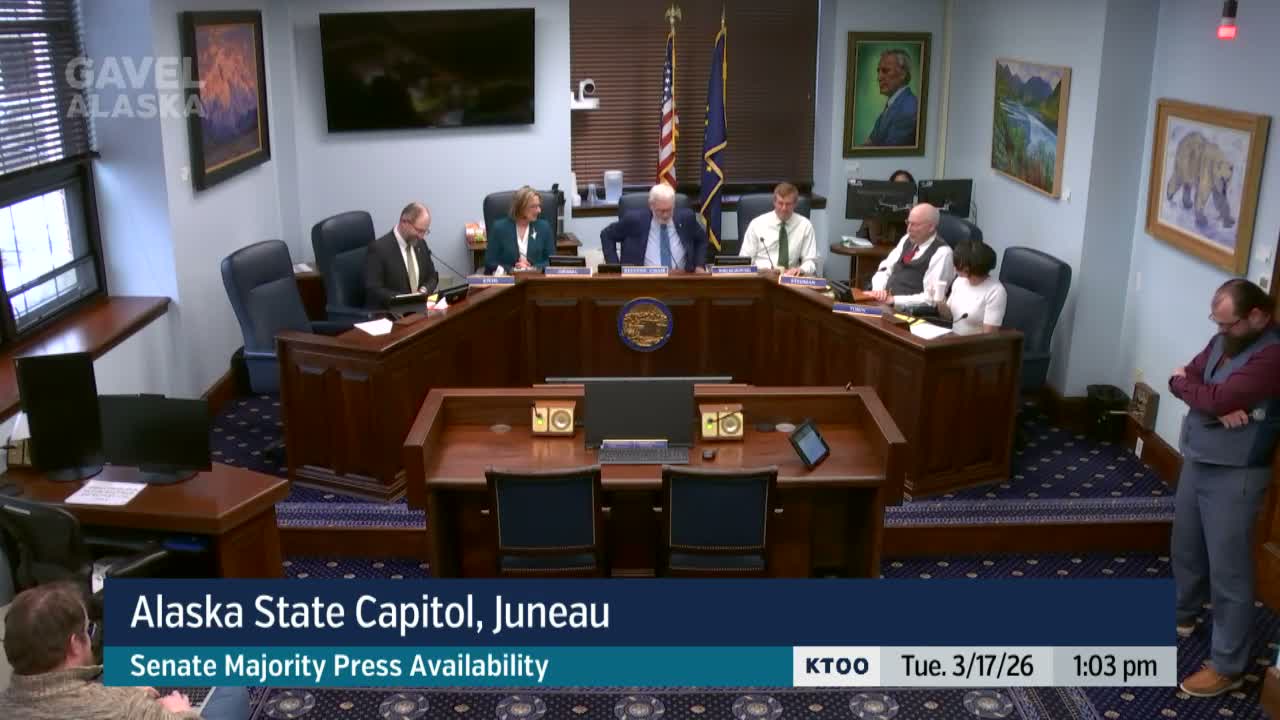
President Stevens opened the session by summarizing the Department of Revenue’s spring revenue forecast, which projects an average oil price of about $75 a barrel for fiscal year 2026. He said the forecast and its implications were the subject of a Senate Finance informational hearing.
Senator Stedman, summarizing that committee briefing, said the price uptick and some tax and expenditure shifts could leave FY26 roughly break‑even or produce a slight surplus but cautioned that the projection is uncertain: “the dispersion of the potential outcome of oil is fairly large” and prices could fall as quickly as they rose. He said any surplus would roll into the Constitutional Budget Reserve (CBR) and recommended concentrating any new capital spending on deferred maintenance rather than a robust capital program.
Senator Kiehl echoed that caution and framed the issue as structural: even with a temporary oil‑price bump the state faces recurring gaps in both capital and operating needs. Kiehl said the governor’s budget submissions are “at least $700,000,000 a year light” on capital needs, and cited salary and IT shortfalls he estimated in the tens and hundreds of millions of dollars.
Lawmakers said they expect to keep FY27 planning conservative. Stedman summarized the approach: use savings if needed for shortfalls, and direct surplus to the CBR rather than expand recurring obligations. “We’re gonna take a cautious approach,” he said.
Next steps: the Senate Finance Committee will continue to analyze the Department of Revenue’s forecast and its specific scenarios as they refine supplemental and FY27 proposals. No formal budget votes were taken during the session.
Senator Stedman, summarizing that committee briefing, said the price uptick and some tax and expenditure shifts could leave FY26 roughly break‑even or produce a slight surplus but cautioned that the projection is uncertain: “the dispersion of the potential outcome of oil is fairly large” and prices could fall as quickly as they rose. He said any surplus would roll into the Constitutional Budget Reserve (CBR) and recommended concentrating any new capital spending on deferred maintenance rather than a robust capital program.
Senator Kiehl echoed that caution and framed the issue as structural: even with a temporary oil‑price bump the state faces recurring gaps in both capital and operating needs. Kiehl said the governor’s budget submissions are “at least $700,000,000 a year light” on capital needs, and cited salary and IT shortfalls he estimated in the tens and hundreds of millions of dollars.
Lawmakers said they expect to keep FY27 planning conservative. Stedman summarized the approach: use savings if needed for shortfalls, and direct surplus to the CBR rather than expand recurring obligations. “We’re gonna take a cautious approach,” he said.
Next steps: the Senate Finance Committee will continue to analyze the Department of Revenue’s forecast and its specific scenarios as they refine supplemental and FY27 proposals. No formal budget votes were taken during the session.
View the Full Meeting & All Its Details
This article offers just a summary. Unlock complete video, transcripts, and insights as a Founder Member.
✓
Watch full, unedited meeting videos
✓
Search every word spoken in unlimited transcripts
✓
AI summaries & real-time alerts (all government levels)
✓
Permanent access to expanding government content
30-day money-back guarantee
