Lawmakers press for transportation supplemental as contractors warn of lost projects; gas‑line and property‑tax relief remain undecided
March 17, 2026 | 2026 Legislature Alaska, Alaska
This article was created by AI summarizing key points discussed. AI makes mistakes, so for full details and context, please refer to the video of the full meeting. Please report any errors so we can fix them. Report an error »
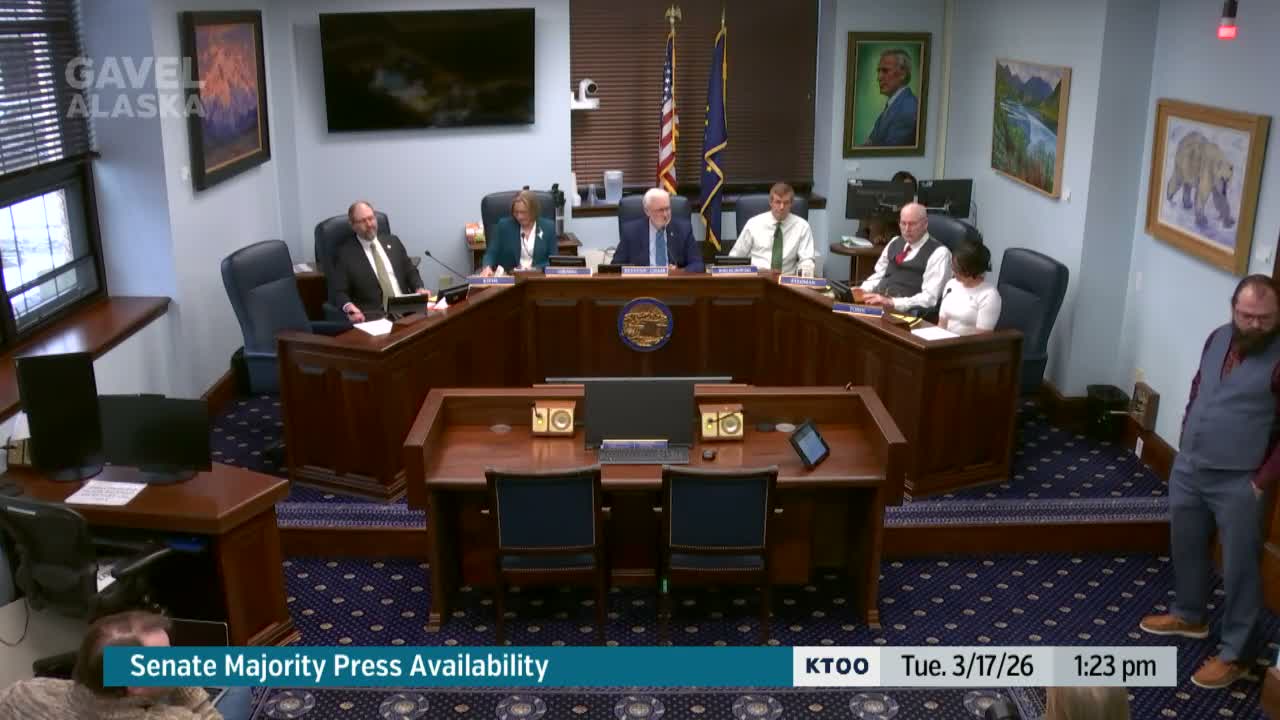
Reporters told the senators that businesses and contractors are urging swift action on a supplemental transportation appropriation, warning that project cancellations and layoffs are already occurring after last year’s veto of $70 million that had been intended to unlock about $700 million in matching federal funds.
Senator Wachowski said contractors and bankers are reporting lost projects and layoffs and that action should have happened months ago. “Every day that goes by is a potential day that you're gonna lose contracts,” he said. Senator Stedman and others said the Department of Transportation has a tentative advertising schedule, but contractors need mobilization and materials earlier in the season. Senators noted a contingency in the bill to fund shortfalls from the CBR and expressed preference to avoid adding new FY26 expenditures.
On a separate but related economic question, Eric Stone of Alaska Public Media asked about a gas‑line package and whether property‑tax relief will be part of it. Senator Giesel said the Senate Resources Committee will hear modeling and that she intends to move a gas‑line bill to finance, but fiscal consequences tied to the Glenfarn project (spelled variably in the transcript) remain under review by mayors and state agencies and so property‑tax relief is not yet determined. Giesel also described ongoing regulatory proposals before the Regulatory Commission of Alaska and noted gas resources in Cook Inlet and under Bluecrest leases.
Senators warned that because Alaska receives a 90/10 federal match on many transportation projects (compared with higher state shares in other states), failing to meet match timelines threatens long‑term consequences, including the potential for a lower match rate if the federal government perceives weak state participation.
Next steps: Finance and Transportation committees will continue hearings on the supplemental and related bills; the House’s timing was noted as critical for contractors’ planning but no votes occurred in the session excerpt.
Senator Wachowski said contractors and bankers are reporting lost projects and layoffs and that action should have happened months ago. “Every day that goes by is a potential day that you're gonna lose contracts,” he said. Senator Stedman and others said the Department of Transportation has a tentative advertising schedule, but contractors need mobilization and materials earlier in the season. Senators noted a contingency in the bill to fund shortfalls from the CBR and expressed preference to avoid adding new FY26 expenditures.
On a separate but related economic question, Eric Stone of Alaska Public Media asked about a gas‑line package and whether property‑tax relief will be part of it. Senator Giesel said the Senate Resources Committee will hear modeling and that she intends to move a gas‑line bill to finance, but fiscal consequences tied to the Glenfarn project (spelled variably in the transcript) remain under review by mayors and state agencies and so property‑tax relief is not yet determined. Giesel also described ongoing regulatory proposals before the Regulatory Commission of Alaska and noted gas resources in Cook Inlet and under Bluecrest leases.
Senators warned that because Alaska receives a 90/10 federal match on many transportation projects (compared with higher state shares in other states), failing to meet match timelines threatens long‑term consequences, including the potential for a lower match rate if the federal government perceives weak state participation.
Next steps: Finance and Transportation committees will continue hearings on the supplemental and related bills; the House’s timing was noted as critical for contractors’ planning but no votes occurred in the session excerpt.
Don't Miss a Word: See the Full Meeting!
Go beyond summaries. Unlock every video, transcript, and key insight with a Founder Membership.
✓
Get instant access to full meeting videos
✓
Search and clip any phrase from complete transcripts
✓
Receive AI-powered summaries & custom alerts
✓
Enjoy lifetime, unrestricted access to government data
30-day money-back guarantee
