Assembly subcommittee presses UC on deferred compact payments, enrollment funding and nonresident replacement plan
March 17, 2026 | California State Assembly, House, Legislative, California
This article was created by AI summarizing key points discussed. AI makes mistakes, so for full details and context, please refer to the video of the full meeting. Please report any errors so we can fix them. Report an error »
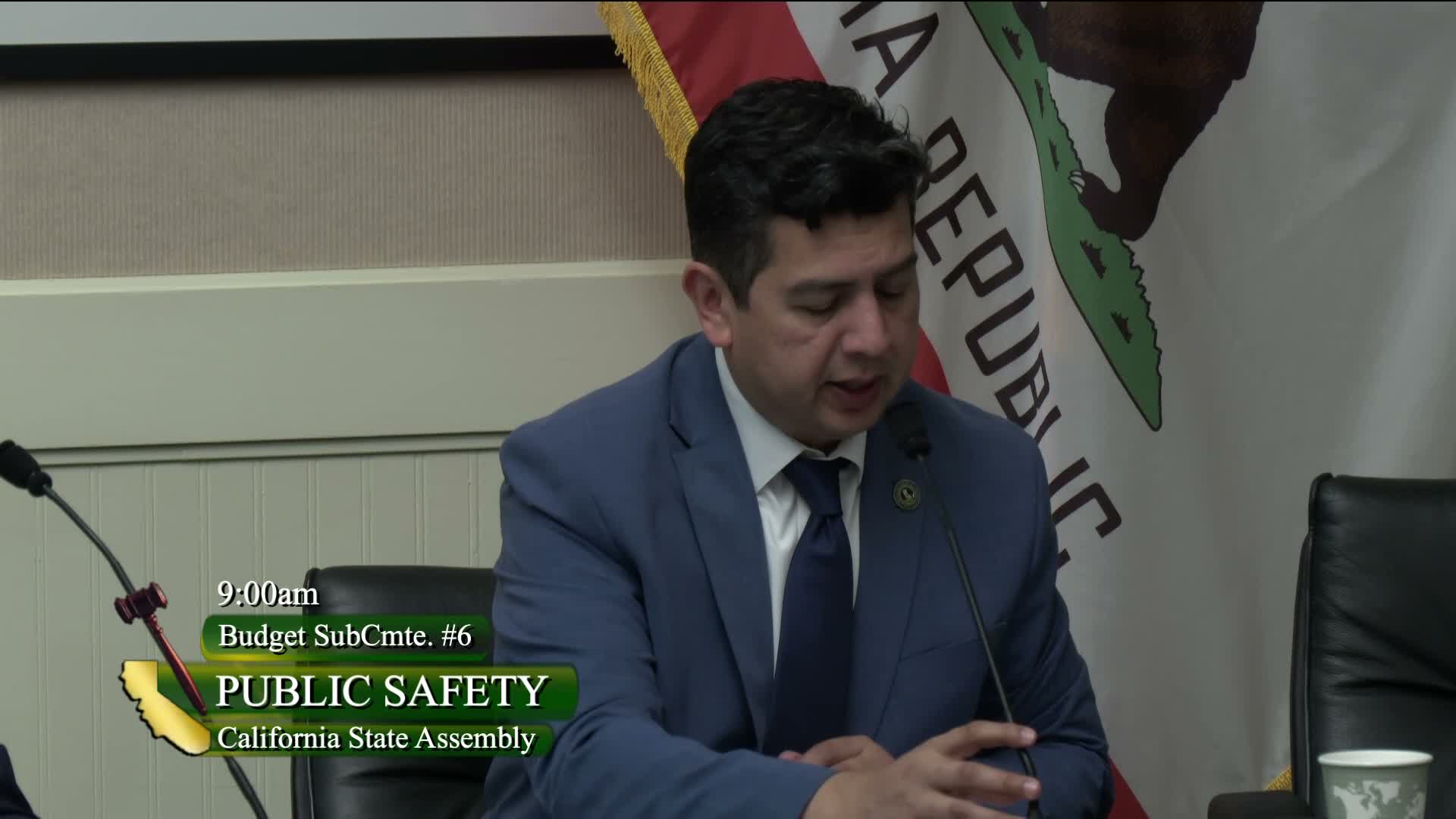
Chair Alvarez convened the Assembly Budget Committee's education finance subcommittee and said the hearing would focus on the final year of Governor Newsom's compact with the University of California and how the Legislature should support the system going forward. The chair asked witnesses to focus on how funding decisions will affect California students and long‑term affordability.
Florence Bouvet of the Legislative Analyst's Office recommended several alternatives to the governor's proposed base funding increase, including aligning any base increase with inflation, earmarking a share of increases for capital renewal (the LAO cited an estimated $9 billion backlog), retiring payment deferrals as one‑time funds become available, and avoiding new multiyear compacts in favor of annual appropriations for transparency and accountability. "Although compacts are intended to provide predictable funding to UC, actual appropriations are ultimately determined by budget conditions," Bouvet said.
Alex Velasquez of the Department of Finance outlined the governor's 2026‑27 budget provisions that affect UC: a proposed delay of a one‑time 3% payback from 2026‑27 to 2027‑28 (about $129.7 million), authorization for UC to request additional general fund cash‑flow loans in 2026‑27, and an ongoing 5% increase in the final year of the compact (about $254.3 million ongoing). He also said the governor's budget maintains earlier adopted amounts, including a $96.3 million ongoing amount tied to the fourth year of the compact and a deferred one‑time payment (about $240.8 million).
Seiya Vertanen, speaking for the University of California, described how campuses have already absorbed prior deferrals by implementing hiring freezes, eliminating positions and delaying projects. He told the committee that system unallocated core fund reserves are roughly $155 million — enough for about four days of operations — and that campuses face a systemwide structural deficit of roughly $300 million. "We are requesting that the Legislature provide all of the deferred compact funds so that we can maintain and continue that progress," Vertanen said.
Committee members pressed panelists on the nonresident replacement plan, a compact provision to replace nonresident undergraduates at three high‑demand campuses with California undergraduates and to backfill lost nonresident supplemental tuition. Assemblymember Fong asked for clarification on a roughly $61 million figure; Finance explained that the amount reflects earlier one‑time delays plus a final augmentation in the governor's budget, arriving at about $61 million ongoing for the replacement initiative and a total base funding of approximately $153 million for the program.
The LAO urged the Legislature to consider an alternative to the replacement plan: directly fund resident enrollment at the marginal cost rate (LAO estimated roughly $14,000 per student), which the office said would cost substantially less for the same resident enrollment outcome than the current buyout approach. "The nonresident replacement plan is a relatively expensive way of adding resident students to these campuses," Bouvet said.
UC witnesses and committee members disputed some assumptions behind the LAO's alternative. Vertanen said nonresident supplemental tuition provides critical cross‑subsidy revenue and that replacing nonresidents without full backfill creates an opportunity cost to campuses; he also said that differential nonresident pricing is currently constrained by university policy. "The current university policy does not permit differential fees on our campuses," Vertanen said, though he acknowledged UC is exploring analyses of differential pricing at the most sought‑after campuses.
Given outstanding data questions about whether UC could recoup lost revenue by raising nonresident tuition at specific campuses, Chair Alvarez moved to adopt supplemental reporting language requiring UC to prepare a report on the nonresident replacement plan and alternative approaches for Assembly review. The motion was seconded; a roll‑call vote recorded 'Aye' answers from Alvarez, Fong and Patel and the chair announced the motion carried. The committee also asked the LAO to prepare a report on a funding approach that separates a base COLA from enrollment funding.
The committee emphasized that any future decisions should account for both growth costs (the marginal cost of instruction) and inflationary pressures on existing campus populations, and urged UC and state analysts to provide the requested data on revenue tradeoffs, reserve usage and the feasibility of differential nonresident pricing ahead of budget adoption.
Florence Bouvet of the Legislative Analyst's Office recommended several alternatives to the governor's proposed base funding increase, including aligning any base increase with inflation, earmarking a share of increases for capital renewal (the LAO cited an estimated $9 billion backlog), retiring payment deferrals as one‑time funds become available, and avoiding new multiyear compacts in favor of annual appropriations for transparency and accountability. "Although compacts are intended to provide predictable funding to UC, actual appropriations are ultimately determined by budget conditions," Bouvet said.
Alex Velasquez of the Department of Finance outlined the governor's 2026‑27 budget provisions that affect UC: a proposed delay of a one‑time 3% payback from 2026‑27 to 2027‑28 (about $129.7 million), authorization for UC to request additional general fund cash‑flow loans in 2026‑27, and an ongoing 5% increase in the final year of the compact (about $254.3 million ongoing). He also said the governor's budget maintains earlier adopted amounts, including a $96.3 million ongoing amount tied to the fourth year of the compact and a deferred one‑time payment (about $240.8 million).
Seiya Vertanen, speaking for the University of California, described how campuses have already absorbed prior deferrals by implementing hiring freezes, eliminating positions and delaying projects. He told the committee that system unallocated core fund reserves are roughly $155 million — enough for about four days of operations — and that campuses face a systemwide structural deficit of roughly $300 million. "We are requesting that the Legislature provide all of the deferred compact funds so that we can maintain and continue that progress," Vertanen said.
Committee members pressed panelists on the nonresident replacement plan, a compact provision to replace nonresident undergraduates at three high‑demand campuses with California undergraduates and to backfill lost nonresident supplemental tuition. Assemblymember Fong asked for clarification on a roughly $61 million figure; Finance explained that the amount reflects earlier one‑time delays plus a final augmentation in the governor's budget, arriving at about $61 million ongoing for the replacement initiative and a total base funding of approximately $153 million for the program.
The LAO urged the Legislature to consider an alternative to the replacement plan: directly fund resident enrollment at the marginal cost rate (LAO estimated roughly $14,000 per student), which the office said would cost substantially less for the same resident enrollment outcome than the current buyout approach. "The nonresident replacement plan is a relatively expensive way of adding resident students to these campuses," Bouvet said.
UC witnesses and committee members disputed some assumptions behind the LAO's alternative. Vertanen said nonresident supplemental tuition provides critical cross‑subsidy revenue and that replacing nonresidents without full backfill creates an opportunity cost to campuses; he also said that differential nonresident pricing is currently constrained by university policy. "The current university policy does not permit differential fees on our campuses," Vertanen said, though he acknowledged UC is exploring analyses of differential pricing at the most sought‑after campuses.
Given outstanding data questions about whether UC could recoup lost revenue by raising nonresident tuition at specific campuses, Chair Alvarez moved to adopt supplemental reporting language requiring UC to prepare a report on the nonresident replacement plan and alternative approaches for Assembly review. The motion was seconded; a roll‑call vote recorded 'Aye' answers from Alvarez, Fong and Patel and the chair announced the motion carried. The committee also asked the LAO to prepare a report on a funding approach that separates a base COLA from enrollment funding.
The committee emphasized that any future decisions should account for both growth costs (the marginal cost of instruction) and inflationary pressures on existing campus populations, and urged UC and state analysts to provide the requested data on revenue tradeoffs, reserve usage and the feasibility of differential nonresident pricing ahead of budget adoption.
View the Full Meeting & All Its Details
This article offers just a summary. Unlock complete video, transcripts, and insights as a Founder Member.
✓
Watch full, unedited meeting videos
✓
Search every word spoken in unlimited transcripts
✓
AI summaries & real-time alerts (all government levels)
✓
Permanent access to expanding government content
30-day money-back guarantee
