Witness tells committee Arizona is 'end of the pipeline' with only about a week of fuel inventory; supply changes can spike prices
March 17, 2026 | 2026 Legislature Arizona, Arizona
This article was created by AI summarizing key points discussed. AI makes mistakes, so for full details and context, please refer to the video of the full meeting. Please report any errors so we can fix them. Report an error »
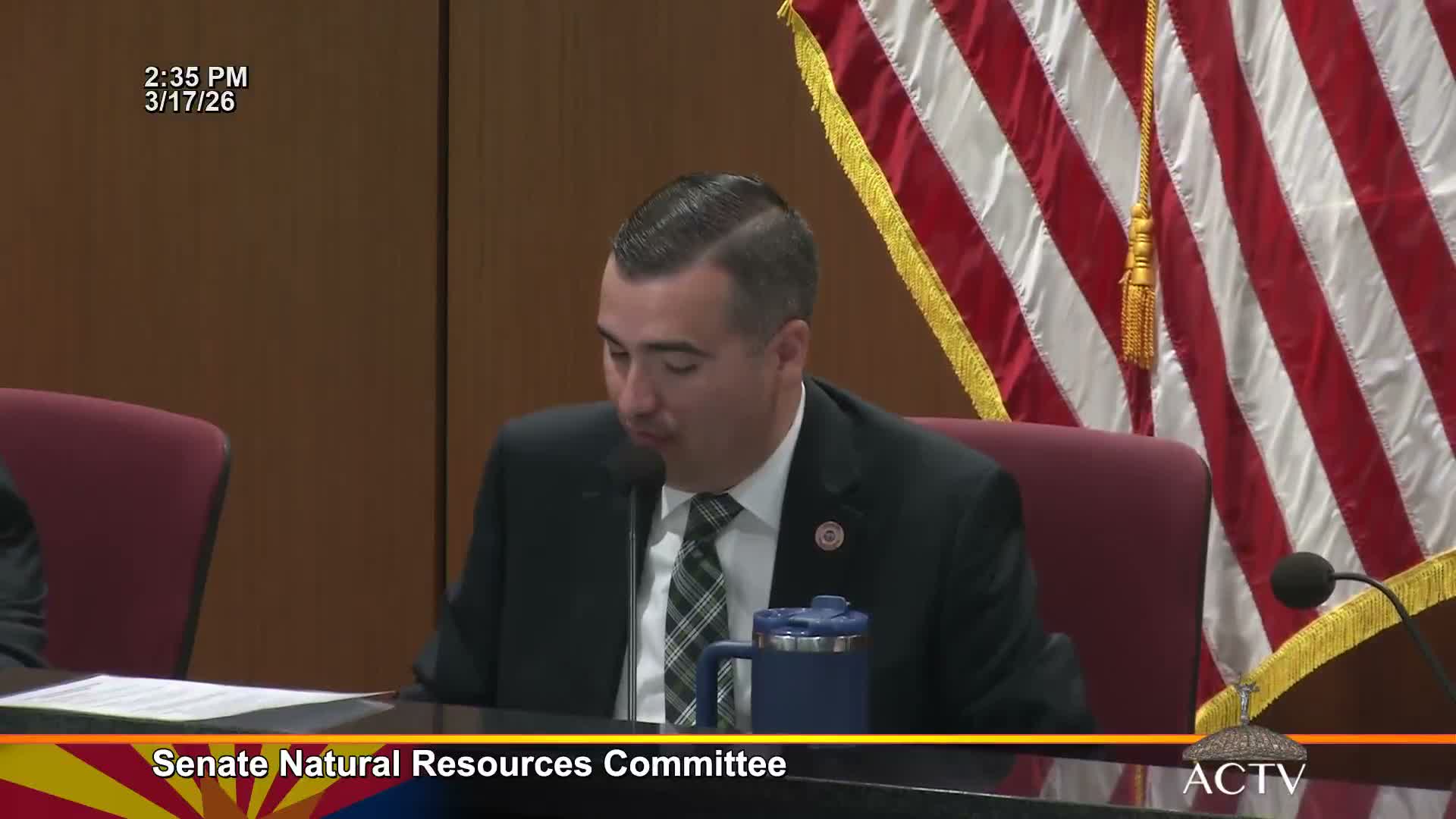
An energy systems presentation to the Senate Natural Resources Committee warned that Arizona sits at the end of major pipeline networks and is therefore vulnerable to supply disruptions and price spikes. Gordon Shrimp, senior energy adviser with Nimiqu Analytics LLC, told the committee that distribution terminals in Phoenix and Tucson typically hold only about a seven‑day supply of refined products, and that pipeline constraints or outages can quickly force truck deliveries at much higher cost.
Shrimp traced a run of factors that have tightened supply: refinery conversions in California that have removed significant gasoline production capacity, an increase in demand as the state recovered from the pandemic and a multi‑year operational change when Kinder Morgan reduced pipeline pressures in 2022 after PHMSA identified anomalies. "There’s only about a 7 day supply fuel at any 1 point in time," Shrimp said, and the resulting need to truck fuel during capacity shortfalls can add tens of cents per gallon or more to delivered prices.
He noted proposals to add pipeline capacity into Phoenix or reverse existing lines; such projects could change regional trade flows and refinery economics, but tariffs and final commercial terms remain unknown. Shrimp also said longer‑term demand trends — population growth, more licensed drivers in Arizona and increased electric‑vehicle adoption — interact with supply shifts to determine price outcomes.
Committee members were given the presenter’s slides and invited to follow up with the adviser; no formal action followed the presentation.
Shrimp traced a run of factors that have tightened supply: refinery conversions in California that have removed significant gasoline production capacity, an increase in demand as the state recovered from the pandemic and a multi‑year operational change when Kinder Morgan reduced pipeline pressures in 2022 after PHMSA identified anomalies. "There’s only about a 7 day supply fuel at any 1 point in time," Shrimp said, and the resulting need to truck fuel during capacity shortfalls can add tens of cents per gallon or more to delivered prices.
He noted proposals to add pipeline capacity into Phoenix or reverse existing lines; such projects could change regional trade flows and refinery economics, but tariffs and final commercial terms remain unknown. Shrimp also said longer‑term demand trends — population growth, more licensed drivers in Arizona and increased electric‑vehicle adoption — interact with supply shifts to determine price outcomes.
Committee members were given the presenter’s slides and invited to follow up with the adviser; no formal action followed the presentation.
Don't Miss a Word: See the Full Meeting!
Go beyond summaries. Unlock every video, transcript, and key insight with a Founder Membership.
✓
Get instant access to full meeting videos
✓
Search and clip any phrase from complete transcripts
✓
Receive AI-powered summaries & custom alerts
✓
Enjoy lifetime, unrestricted access to government data
30-day money-back guarantee
