Representative Hadden says H.59 will classify roadside farm markets as agriculture to ease permitting burdens
March 18, 2026 | 2026 Legislative Meetings, South Carolina
This article was created by AI summarizing key points discussed. AI makes mistakes, so for full details and context, please refer to the video of the full meeting. Please report any errors so we can fix them. Report an error »
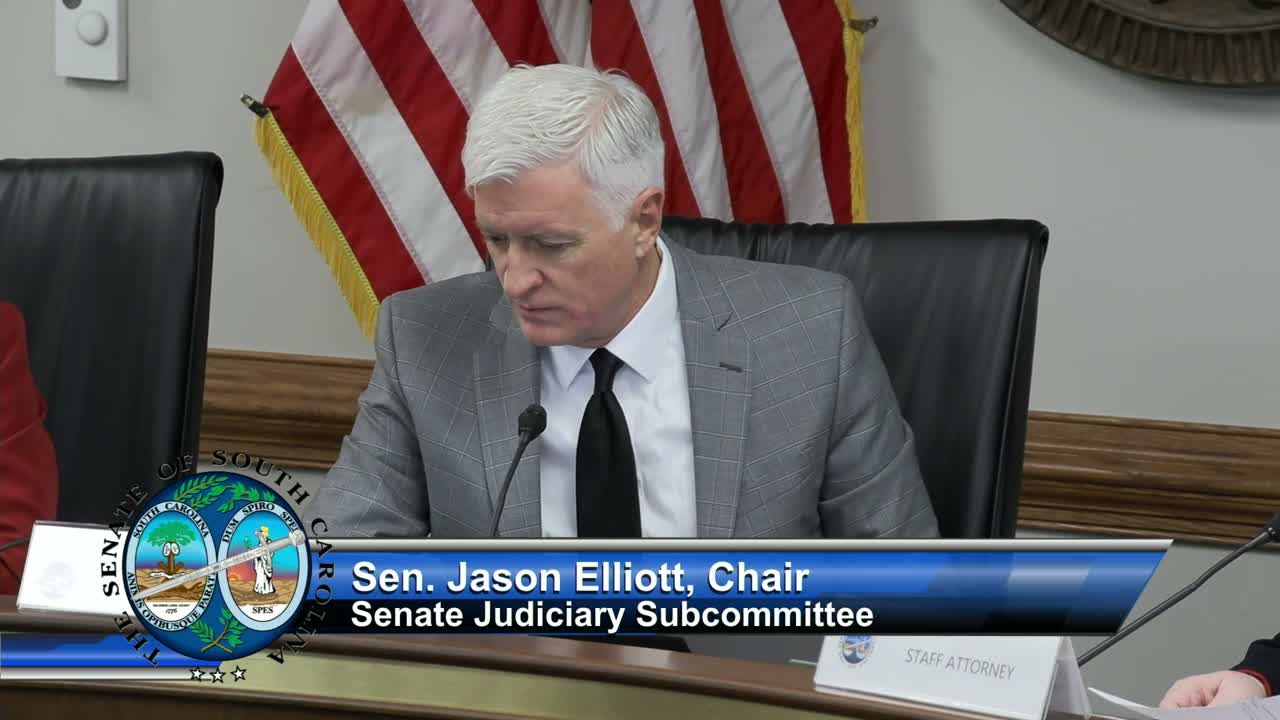
Representative Hadden asked the Senate subcommittee to consider H.59, which he said "clarifies the bonafide roadside farm markets are an agricultural use, not a commercial development." He told the committee that farmers across the state face inconsistent zoning and permitting that treats small farm markets like large retail projects, creating "unnecessary cost, delays and in many cases prevent[ing] them from operating at all."
Hadden said the bill preserves appropriate health and safety standards while ensuring farmers who sell products grown on their own land are treated as agriculture for land-use purposes. "This is important because direct to consumer sales are one of the last profitable paths for many small and midsize farms," he said, and argued roadside markets "keep farms viable, keep land in production, strengthen local food systems, do away with food deserts, and support rural economies."
Farmer Josh Fable testified in support, describing permitting inconsistencies across counties and saying a low-cost on-farm building lets him spend time growing and selling product rather than pursuing contracts. Stakeholders including Dana Phillips of the Municipal Association of South Carolina and Kent Lassane of the South Carolina Association of Counties signaled conditional support: they backed the bill as amended but urged liability and inspection provisions to address public-safety concerns for buildings that would not go through routine county inspections. Lassane said associations had worked with the bill sponsor to add clauses addressing liability.
The subcommittee adopted a technical cross-reference amendment (changing a reference from "article" to "section"), approved the committee web and, after motion and second, moved the bill forward as amended. Members said they would continue working with stakeholders on language as the bill advances.
Hadden said the bill preserves appropriate health and safety standards while ensuring farmers who sell products grown on their own land are treated as agriculture for land-use purposes. "This is important because direct to consumer sales are one of the last profitable paths for many small and midsize farms," he said, and argued roadside markets "keep farms viable, keep land in production, strengthen local food systems, do away with food deserts, and support rural economies."
Farmer Josh Fable testified in support, describing permitting inconsistencies across counties and saying a low-cost on-farm building lets him spend time growing and selling product rather than pursuing contracts. Stakeholders including Dana Phillips of the Municipal Association of South Carolina and Kent Lassane of the South Carolina Association of Counties signaled conditional support: they backed the bill as amended but urged liability and inspection provisions to address public-safety concerns for buildings that would not go through routine county inspections. Lassane said associations had worked with the bill sponsor to add clauses addressing liability.
The subcommittee adopted a technical cross-reference amendment (changing a reference from "article" to "section"), approved the committee web and, after motion and second, moved the bill forward as amended. Members said they would continue working with stakeholders on language as the bill advances.
View the Full Meeting & All Its Details
This article offers just a summary. Unlock complete video, transcripts, and insights as a Founder Member.
✓
Watch full, unedited meeting videos
✓
Search every word spoken in unlimited transcripts
✓
AI summaries & real-time alerts (all government levels)
✓
Permanent access to expanding government content
30-day money-back guarantee
