Experts and advocates clash over dairy digesters’ climate and community impacts at Senate hearing
March 17, 2026 | California State Senate, Senate, Legislative, California
This article was created by AI summarizing key points discussed. AI makes mistakes, so for full details and context, please refer to the video of the full meeting. Please report any errors so we can fix them. Report an error »
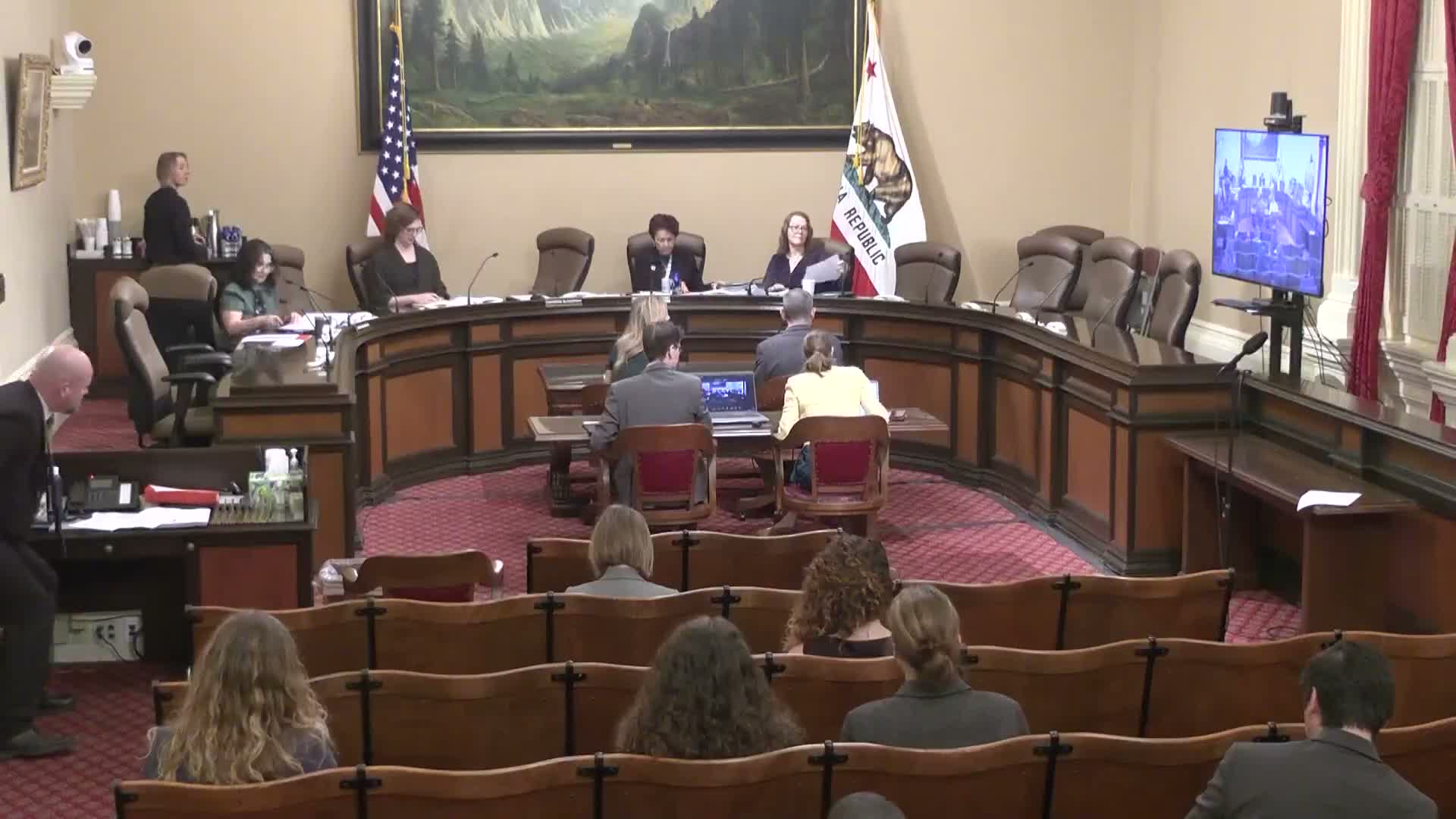
A panel of academics, community advocates and industry representatives clashed at a March 19 joint Senate hearing over whether state funding should continue to support dairy digesters or be redirected to alternative manure management and other practices.
Phoebe Seaton, co‑executive director of the Leadership Council for Justice and Accountability, told senators that additional public funding for dairy digesters "does not make any sense from an environmental or an economic perspective." Seaton said digesters rely on liquefied manure, which she argued creates methane production, increases nitrous‑oxide risks and can exacerbate groundwater contamination and localized odor and air‑pollution problems in agricultural communities.
"Dairy digesters and the subsidies that support them rely on the production, accumulation and liquefaction of manure," Seaton said, and she cited a published economics paper that estimated a high cost per metric ton for mitigation through digestion.
By contrast, a UC Davis researcher who testified said digesters, AMP (composting, solids separation) and herd efficiency together are the principal pathways driving dairy methane reductions. The witness reported an updated inventory of roughly 227 digesters operating or in development as of August 2023 (compared with earlier CARB counts), and estimated those projects could represent multi‑million metric‑ton annual reductions. The witness also described an enteric feed additive already approved in some markets that can reduce enteric methane by about 30% on average and called seaweed‑based additives and vaccines promising emerging technologies.
Industry and agricultural groups pushed back on critiques of digesters. A representative for the dairy and ag energy sector said the dairy industry has documented “more than 5,000,000 metric tons of annual reductions” and argued many reductions are not yet reflected in CARB’s inventory because of lags in reporting. He called for an "all of the above" strategy that uses AMP, digesters, SWEET, the Farmer program and other incentives together to reach California’s SB 1383 methane targets.
Panelists agreed on at least two points: farmer demand for incentive programs typically outpaces available funding, and program financing has been boom‑and‑bust—witnesses and air districts urged more consistent appropriations. Several witnesses also said AMP and digesters are not mutually exclusive: AMP can scale in some contexts, digesters are more applicable for liquid systems, and many digester projects include solid separators that feed AMP pathways.
Why it matters: the debate matters for how the Legislature allocates scarce GGRF dollars. Supporters say digesters have been decisive in large methane reductions and leverage private investments and LCFS credits; critics say digesters may deliver fewer community co‑benefits and carry groundwater and nitrous‑oxide risks. The LAO recommended further evaluation of program benefits and cost effectiveness.
What’s next: senators asked witnesses to share the underlying studies and cost analyses; no votes were taken and committee staff said they will review submitted materials and follow up in subsequent deliberations.
Phoebe Seaton, co‑executive director of the Leadership Council for Justice and Accountability, told senators that additional public funding for dairy digesters "does not make any sense from an environmental or an economic perspective." Seaton said digesters rely on liquefied manure, which she argued creates methane production, increases nitrous‑oxide risks and can exacerbate groundwater contamination and localized odor and air‑pollution problems in agricultural communities.
"Dairy digesters and the subsidies that support them rely on the production, accumulation and liquefaction of manure," Seaton said, and she cited a published economics paper that estimated a high cost per metric ton for mitigation through digestion.
By contrast, a UC Davis researcher who testified said digesters, AMP (composting, solids separation) and herd efficiency together are the principal pathways driving dairy methane reductions. The witness reported an updated inventory of roughly 227 digesters operating or in development as of August 2023 (compared with earlier CARB counts), and estimated those projects could represent multi‑million metric‑ton annual reductions. The witness also described an enteric feed additive already approved in some markets that can reduce enteric methane by about 30% on average and called seaweed‑based additives and vaccines promising emerging technologies.
Industry and agricultural groups pushed back on critiques of digesters. A representative for the dairy and ag energy sector said the dairy industry has documented “more than 5,000,000 metric tons of annual reductions” and argued many reductions are not yet reflected in CARB’s inventory because of lags in reporting. He called for an "all of the above" strategy that uses AMP, digesters, SWEET, the Farmer program and other incentives together to reach California’s SB 1383 methane targets.
Panelists agreed on at least two points: farmer demand for incentive programs typically outpaces available funding, and program financing has been boom‑and‑bust—witnesses and air districts urged more consistent appropriations. Several witnesses also said AMP and digesters are not mutually exclusive: AMP can scale in some contexts, digesters are more applicable for liquid systems, and many digester projects include solid separators that feed AMP pathways.
Why it matters: the debate matters for how the Legislature allocates scarce GGRF dollars. Supporters say digesters have been decisive in large methane reductions and leverage private investments and LCFS credits; critics say digesters may deliver fewer community co‑benefits and carry groundwater and nitrous‑oxide risks. The LAO recommended further evaluation of program benefits and cost effectiveness.
What’s next: senators asked witnesses to share the underlying studies and cost analyses; no votes were taken and committee staff said they will review submitted materials and follow up in subsequent deliberations.
Don't Miss a Word: See the Full Meeting!
Go beyond summaries. Unlock every video, transcript, and key insight with a Founder Membership.
✓
Get instant access to full meeting videos
✓
Search and clip any phrase from complete transcripts
✓
Receive AI-powered summaries & custom alerts
✓
Enjoy lifetime, unrestricted access to government data
30-day money-back guarantee
