Panel hears testimony on district 'regulatory sandbox' bill; Pickens County urges pilot flexibility
March 18, 2026 | 2026 Legislative Meetings, South Carolina
This article was created by AI summarizing key points discussed. AI makes mistakes, so for full details and context, please refer to the video of the full meeting. Please report any errors so we can fix them. Report an error »
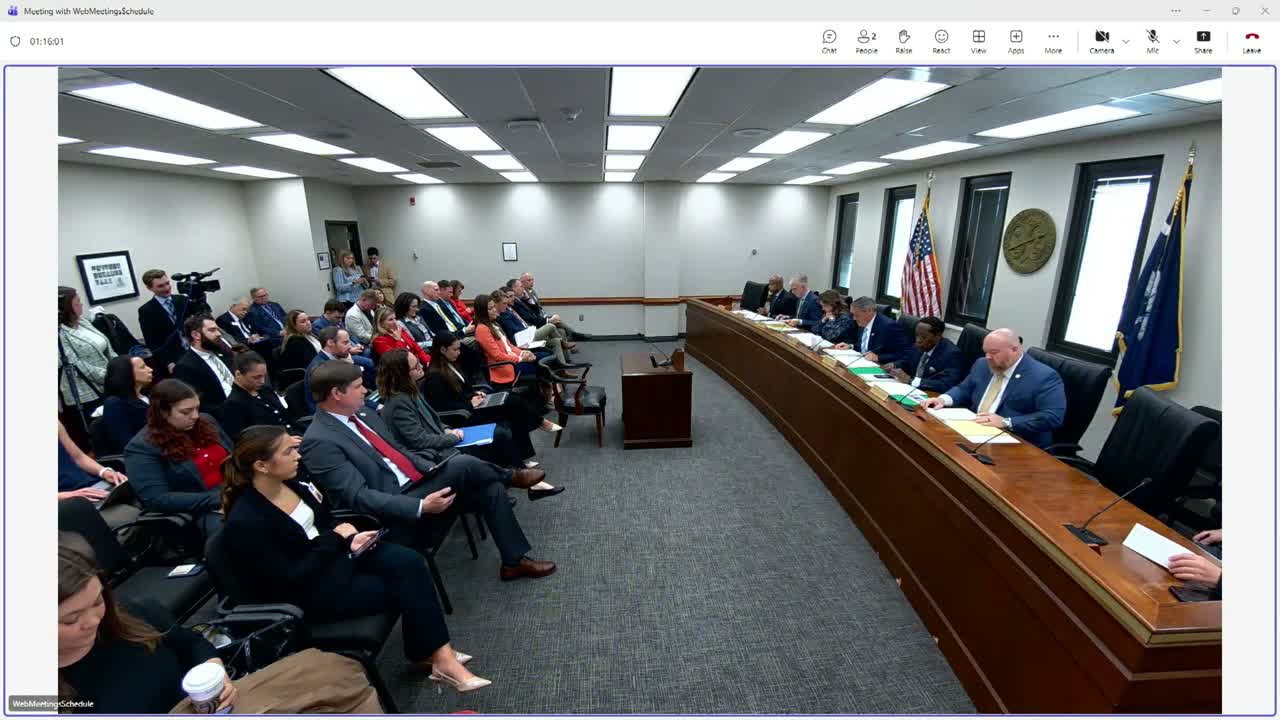
A legislative subcommittee heard proponents of SB 708, a bill that would allow school districts to apply to the State Department of Education for targeted waivers from certain statutory and regulatory requirements as part of a limited pilot.
The presenter said waivers could be valid for up to three years if districts demonstrate satisfactory performance; districts would submit annual reports to the Department, which would forward them to the council. The application could include alternative scheduling models and other innovations but would not automatically grant waivers — districts must apply and be approved.
Shannon Sharkey, associate superintendent for academics in Pickens County, described the district’s results and pilot plans, saying Pickens visited high-performing systems abroad and domestically and wants flexibility to adopt models such as a 45/15 hybrid schedule, integrated project‑based units, and more frequent formative assessments. "We would like it to not be as time consuming and punitive in the testing piece," Sharkey told the committee, urging a focus on formative measures in K–8 while preserving key summative checks.
Ryan of the Palmetto Promise Institute supported the concept of a regulatory sandbox but asked whether district report cards could be interpreted to apply to all schools within a district’s geographical boundary; he recommended careful drafting to avoid inadvertently imposing district report cards on independently authorized schools.
Amanda Fotis of the Spartanburg Christian Action Network and other parents raised concerns about divergent district calendars and family burdens if neighboring districts choose different schedules. Committee members pressed presenters on whether the bill’s main impact is on testing requirements and whether a broader revision of testing law would be preferable. After discussion, the committee voted to carry the bill over for further consideration and requested additional detail on state‑level implications and testing alternatives.
The presenter said waivers could be valid for up to three years if districts demonstrate satisfactory performance; districts would submit annual reports to the Department, which would forward them to the council. The application could include alternative scheduling models and other innovations but would not automatically grant waivers — districts must apply and be approved.
Shannon Sharkey, associate superintendent for academics in Pickens County, described the district’s results and pilot plans, saying Pickens visited high-performing systems abroad and domestically and wants flexibility to adopt models such as a 45/15 hybrid schedule, integrated project‑based units, and more frequent formative assessments. "We would like it to not be as time consuming and punitive in the testing piece," Sharkey told the committee, urging a focus on formative measures in K–8 while preserving key summative checks.
Ryan of the Palmetto Promise Institute supported the concept of a regulatory sandbox but asked whether district report cards could be interpreted to apply to all schools within a district’s geographical boundary; he recommended careful drafting to avoid inadvertently imposing district report cards on independently authorized schools.
Amanda Fotis of the Spartanburg Christian Action Network and other parents raised concerns about divergent district calendars and family burdens if neighboring districts choose different schedules. Committee members pressed presenters on whether the bill’s main impact is on testing requirements and whether a broader revision of testing law would be preferable. After discussion, the committee voted to carry the bill over for further consideration and requested additional detail on state‑level implications and testing alternatives.
View the Full Meeting & All Its Details
This article offers just a summary. Unlock complete video, transcripts, and insights as a Founder Member.
✓
Watch full, unedited meeting videos
✓
Search every word spoken in unlimited transcripts
✓
AI summaries & real-time alerts (all government levels)
✓
Permanent access to expanding government content
30-day money-back guarantee
