Panel advances bill modeled on Alyssa's Law after emotional testimony and cost questions
March 18, 2026 | 2026 Legislative Meetings, South Carolina
This article was created by AI summarizing key points discussed. AI makes mistakes, so for full details and context, please refer to the video of the full meeting. Please report any errors so we can fix them. Report an error »
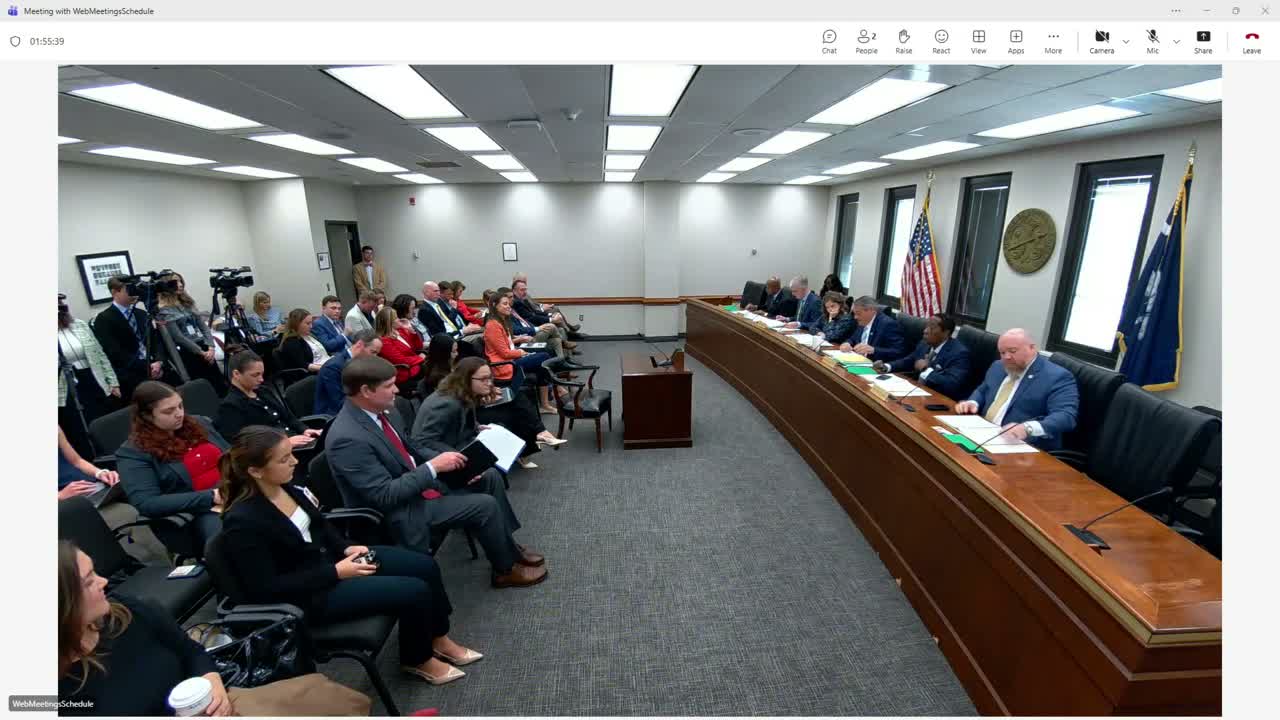
A legislative subcommittee voted to advance House Bill 3258, a measure modeled on Alyssa’s Law that would require public and charter school districts to acquire and implement a mobile panic‑alert system and direct the Department of Education, SLED and DPS to identify qualifying vendors.
Lori Alpade, who said she serves on the Broward County school board and described losing her daughter at a school shooting, gave emotional testimony urging passage: "Time equals life," she said, and described how a timely alert could have changed responses during the shooting that killed her daughter. Alpade told the committee the technology can also speed medical responses and cited local cases where alerts brought help quickly.
District safety directors and technology staff described implementations in their schools. Patrick Kelly and other teachers said the systems have saved time during medical and behavioral emergencies; one district reported more than 700 alerts in a month for primarily medical or behavioral events. Lexington School District 1 reported a per‑student first‑year cost of about $42 and an initial product cost of $259,000; infrastructure upgrades and PA system replacements have added substantial one‑time costs — one district cited additional first‑year costs near $616,500 and noted ongoing maintenance, camera, and cellular backup expenses.
Committee members expressed unanimous support for the policy’s safety goals but pressed on cost and equity: members and school-board representatives asked that the state consider funding so low‑wealth districts would not be left behind. A committee amendment moved the bill’s implementation date from 07/01/2027 to 07/01/2028 to allow districts time to budget and for the state to identify funding pathways; the amendment and the committee’s favorable report passed by voice votes.
Committee members and witnesses emphasized that while the technology can be lifesaving, statewide implementation requires attention to capital upgrades, recurring maintenance, IT support, and equitable funding so smaller or lower‑tax‑base districts can comply.
Lori Alpade, who said she serves on the Broward County school board and described losing her daughter at a school shooting, gave emotional testimony urging passage: "Time equals life," she said, and described how a timely alert could have changed responses during the shooting that killed her daughter. Alpade told the committee the technology can also speed medical responses and cited local cases where alerts brought help quickly.
District safety directors and technology staff described implementations in their schools. Patrick Kelly and other teachers said the systems have saved time during medical and behavioral emergencies; one district reported more than 700 alerts in a month for primarily medical or behavioral events. Lexington School District 1 reported a per‑student first‑year cost of about $42 and an initial product cost of $259,000; infrastructure upgrades and PA system replacements have added substantial one‑time costs — one district cited additional first‑year costs near $616,500 and noted ongoing maintenance, camera, and cellular backup expenses.
Committee members expressed unanimous support for the policy’s safety goals but pressed on cost and equity: members and school-board representatives asked that the state consider funding so low‑wealth districts would not be left behind. A committee amendment moved the bill’s implementation date from 07/01/2027 to 07/01/2028 to allow districts time to budget and for the state to identify funding pathways; the amendment and the committee’s favorable report passed by voice votes.
Committee members and witnesses emphasized that while the technology can be lifesaving, statewide implementation requires attention to capital upgrades, recurring maintenance, IT support, and equitable funding so smaller or lower‑tax‑base districts can comply.
Don't Miss a Word: See the Full Meeting!
Go beyond summaries. Unlock every video, transcript, and key insight with a Founder Membership.
✓
Get instant access to full meeting videos
✓
Search and clip any phrase from complete transcripts
✓
Receive AI-powered summaries & custom alerts
✓
Enjoy lifetime, unrestricted access to government data
30-day money-back guarantee
