South Carolina adjutant general asks legislature for millions to shore up Guard services and emergency operations
March 18, 2026 | 2026 Legislative Meetings, South Carolina
This article was created by AI summarizing key points discussed. AI makes mistakes, so for full details and context, please refer to the video of the full meeting. Please report any errors so we can fix them. Report an error »
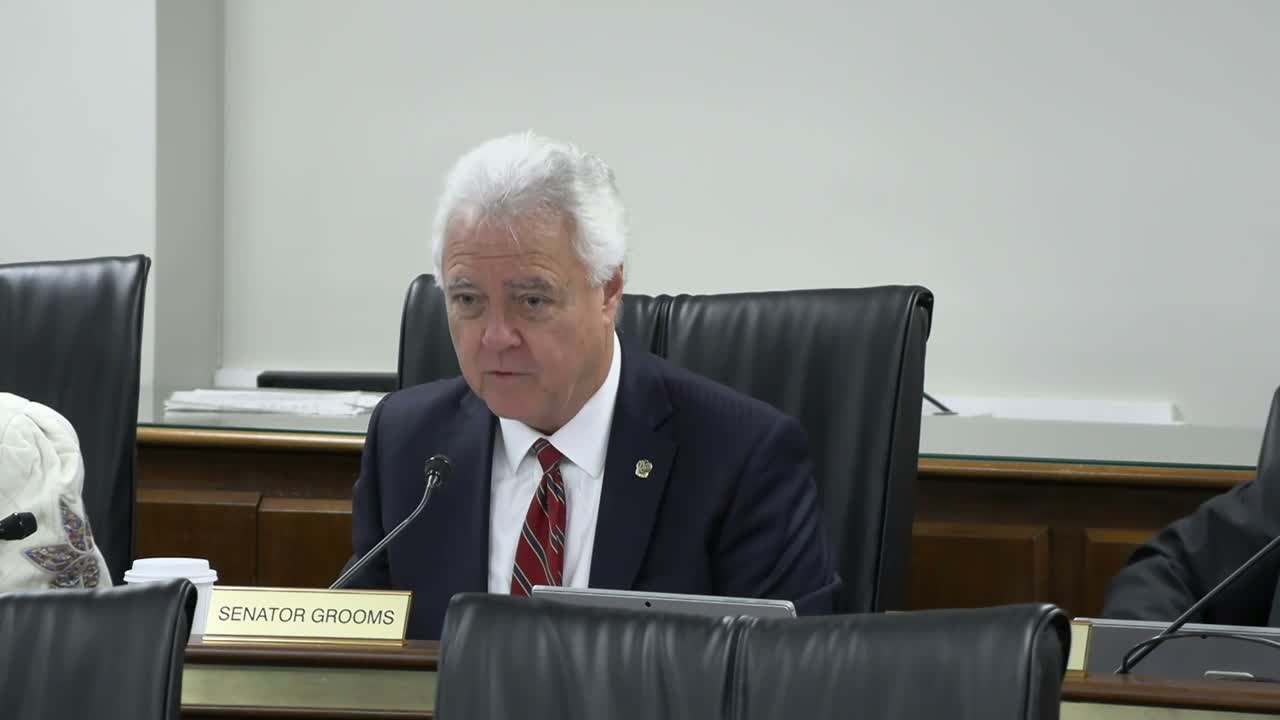
Adjutant General Robin Stilwell told the constitutional subcommittee that the South Carolina Military Department needs new recurring and nonrecurring appropriations to replace federal programs and shore up state readiness. At a hearing, Stilwell detailed a series of requests that together aim to keep behavioral-health services, firefighting capacity, armory maintenance and emergency-management functions staffed and operational.
"We have a request for $540,000 recurring," Stilwell said, describing funding for three behavioral health specialists, counselors, an employment specialist and a transition assistant to fill gaps left when federal programs such as Beyond Yellow Ribbon were cut. "Those specialists also, I want to point out, don't just work for the National Guard soldiers," he added, saying the specialists serve civilians, State Guard members and veterans from other services.
The department also requested $279,000 recurring for three full-time firefighters at McIntyre Joint National Guard Base after six federal firefighter positions were removed; $4 million recurring for armory maintenance and revitalization to sustain a two-armory-per-year schedule; and $10 million to complete construction of the State Emergency Operations Center (SEOC), which Stilwell said would break ground in March 2027 and finish in 2029.
Stilwell described a $37 million nonrecurring public assistance request intended to protect the state against higher outlays if the federal damage-assessment threshold for FEMA assistance rises. "Historically that threshold has been $9,000,000," he told senators, and officials at the committee repeatedly raised a possible federal discussion to move that level much higher. Stilwell said the department could withdraw state requests if federal funding is later provided.
State Emergency Management Director Kim Stinson said those federal uncertainties are already affecting planning. Stinson told the committee that routine grants such as the Emergency Management Performance Grant (EMPG), typically between $5.4 million and $6 million, have been subject to administrative holds and that the ongoing federal funding picture could delay or reduce FY26 flows. "We do not have access to those funds right now," Stinson said, warning that county-level emergency management staff and services could be jeopardized if federal support does not materialize.
Stinson reviewed recent disasters to illustrate the stakes: the Covington Drive fire (about 2,000 acres; emergency protective measures estimated at $3.2 million) and the Table Rock Complex fires (about 15,000 acres; emergency protective measures estimated at $13.7 million). She summarized the state's cumulative nonfederal share for recent disasters at nearly $450 million and said state appropriations have so far covered roughly $385 million, leaving an estimated additional need of about $63.1 million for the year.
Other requests included $70,000 recurring to convert an unfunded federal information management officer at the State Military Museum to a state-funded FTE for outreach; $565,000 nonrecurring for HVAC and plumbing work to make the Old Dominion Building usable for the growing State Guard; and $800,000 requested to close out the Youth Challenge program after federal funding ends, including an estimated $137,000 to cover accrued leave.
Committee members pressed presenters on several points, including whether FEMA changes originate in the current administration and what authority would deploy the National Guard to polling places; Stilwell said deployment would come from the governor or under federalization by the president and that he did not anticipate Guard deployment to polling places. Members also discussed the possibility of mandating emergency-manager certification at the county level and asked how the state would respond if FEMA adjusted cost-share formulas.
Stilwell and Stinson repeatedly framed many dollar figures as estimates or contingent on federal action. Several items the department described as contingent could be withdrawn if federal funding becomes available, Stilwell said. The committee concluded the hearing by thanking the military department and emergency management staff and asking presenters to follow up on detailed questions offline.
The subcommittee did not take formal votes during the presentation; any appropriation decisions will be made later in the budget process.
"We have a request for $540,000 recurring," Stilwell said, describing funding for three behavioral health specialists, counselors, an employment specialist and a transition assistant to fill gaps left when federal programs such as Beyond Yellow Ribbon were cut. "Those specialists also, I want to point out, don't just work for the National Guard soldiers," he added, saying the specialists serve civilians, State Guard members and veterans from other services.
The department also requested $279,000 recurring for three full-time firefighters at McIntyre Joint National Guard Base after six federal firefighter positions were removed; $4 million recurring for armory maintenance and revitalization to sustain a two-armory-per-year schedule; and $10 million to complete construction of the State Emergency Operations Center (SEOC), which Stilwell said would break ground in March 2027 and finish in 2029.
Stilwell described a $37 million nonrecurring public assistance request intended to protect the state against higher outlays if the federal damage-assessment threshold for FEMA assistance rises. "Historically that threshold has been $9,000,000," he told senators, and officials at the committee repeatedly raised a possible federal discussion to move that level much higher. Stilwell said the department could withdraw state requests if federal funding is later provided.
State Emergency Management Director Kim Stinson said those federal uncertainties are already affecting planning. Stinson told the committee that routine grants such as the Emergency Management Performance Grant (EMPG), typically between $5.4 million and $6 million, have been subject to administrative holds and that the ongoing federal funding picture could delay or reduce FY26 flows. "We do not have access to those funds right now," Stinson said, warning that county-level emergency management staff and services could be jeopardized if federal support does not materialize.
Stinson reviewed recent disasters to illustrate the stakes: the Covington Drive fire (about 2,000 acres; emergency protective measures estimated at $3.2 million) and the Table Rock Complex fires (about 15,000 acres; emergency protective measures estimated at $13.7 million). She summarized the state's cumulative nonfederal share for recent disasters at nearly $450 million and said state appropriations have so far covered roughly $385 million, leaving an estimated additional need of about $63.1 million for the year.
Other requests included $70,000 recurring to convert an unfunded federal information management officer at the State Military Museum to a state-funded FTE for outreach; $565,000 nonrecurring for HVAC and plumbing work to make the Old Dominion Building usable for the growing State Guard; and $800,000 requested to close out the Youth Challenge program after federal funding ends, including an estimated $137,000 to cover accrued leave.
Committee members pressed presenters on several points, including whether FEMA changes originate in the current administration and what authority would deploy the National Guard to polling places; Stilwell said deployment would come from the governor or under federalization by the president and that he did not anticipate Guard deployment to polling places. Members also discussed the possibility of mandating emergency-manager certification at the county level and asked how the state would respond if FEMA adjusted cost-share formulas.
Stilwell and Stinson repeatedly framed many dollar figures as estimates or contingent on federal action. Several items the department described as contingent could be withdrawn if federal funding becomes available, Stilwell said. The committee concluded the hearing by thanking the military department and emergency management staff and asking presenters to follow up on detailed questions offline.
The subcommittee did not take formal votes during the presentation; any appropriation decisions will be made later in the budget process.
View the Full Meeting & All Its Details
This article offers just a summary. Unlock complete video, transcripts, and insights as a Founder Member.
✓
Watch full, unedited meeting videos
✓
Search every word spoken in unlimited transcripts
✓
AI summaries & real-time alerts (all government levels)
✓
Permanent access to expanding government content
30-day money-back guarantee
