S.C. transportation secretary urges new legal tools, choice lanes and NEPA authority to speed projects
March 18, 2026 | 2026 Legislative Meetings, South Carolina
This article was created by AI summarizing key points discussed. AI makes mistakes, so for full details and context, please refer to the video of the full meeting. Please report any errors so we can fix them. Report an error »
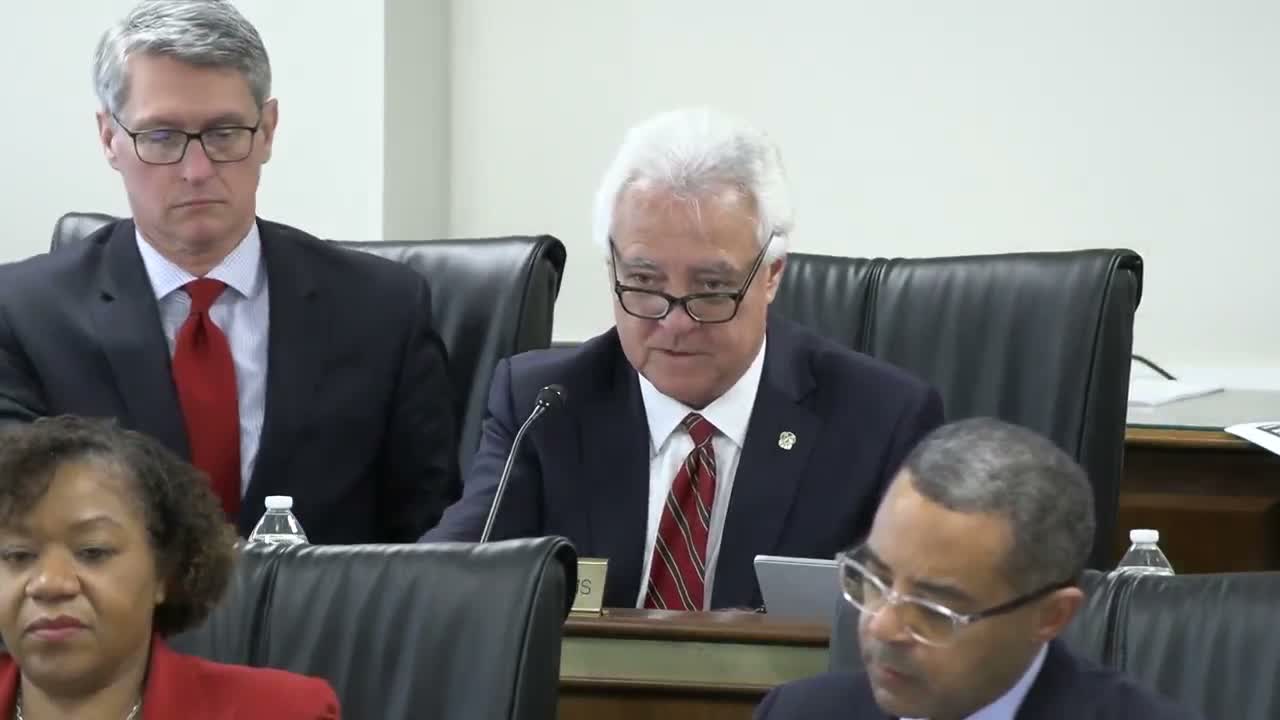
Secretary Justin Powell told the South Carolina Senate Transportation Committee that the Department of Transportation needs new statutory tools — including the ability to assume National Environmental Policy Act (NEPA) responsibilities from the Federal Highway Administration and greater procurement flexibility — to accelerate long‑running projects and stretch limited funding.
Powell delivered a broad "state of the DOT" update, listing recent accomplishments including what he called the largest debris cleanup mission after Hurricane Helene ("collecting over 5,400,000 cubic yards of debris") and a current construction pipeline he said has grown to nearly $7 billion under contract across the state. He warned that inflation and population growth have eroded the buying power of the gas‑tax penny and driven up per‑mile paving and project costs.
Why it matters: Powell framed the changes as tools to deliver projects faster and reduce pressure on the general gas‑tax payer. He said some large corridor projects (for example a rebuild of I‑26 in the Charleston area) carry price tags he described as roughly $7 billion and would monopolize interstate capacity work for 15–20 years at current funding levels.
Powell described two specific policy options before the Legislature. First, with legislative approval SCDOT would begin the certification process to assume NEPA responsibilities — a multistep, roughly year‑long federal certification process, he said — and has already assigned staff and drafted manuals to prepare for that transition. "With legislative approval, SCDOT is prepared to immediately begin the process with the Federal Highway Administration to assume NEPA authorities," Powell said.
Second, he outlined a study and preliminary modeling of "choice lanes" — optional, tolled lanes aimed at providing reliable travel speeds in congested corridors. Using the I‑526/I‑26 corridor in Charleston as an example, Powell said preliminary results show free‑lane afternoon commutes could fall by about 35% (from roughly 40 minutes to about 26 minutes) while choice‑lane users would see drives near 12 minutes. He presented a high‑level financing estimate that a full choice‑lane system might cost on the order of $10 billion in capital while offsetting revenues could reduce the state's net cost to roughly $4.6 billion; he described those figures as preliminary and conservative.
Committee members pressed Powell on details. Senators asked whether choice lanes would be limited to corridors with chronic congestion, whether ramp metering and AI traffic control had been studied (Greenville area studies were cited), and how staff and certifications would be handled if SCDOT assumes NEPA. Powell said SCDOT already has a "pretty robust environmental office" with biologists and archaeologists, that some permit work is being handled through the North Carolina FHWA division now, and that the certification timeline would be about a year once legislative approval is secured.
Powell also discussed workforce and contractor markets: he described an overall construction program that has attracted more bidders in recent lettings, and said SCDOT's statewide vacancy numbers imply roughly 12% of positions were vacant (he characterized the agency's communicated fill rate as about 87–88 percent). On work‑zone safety, he noted use of attenuator trailers and blue light speed‑feedback trailers that have reduced speeds in work zones.
Powell concluded by urging continued recurring investment and new tools from the General Assembly to maintain momentum under SCDOT's 10‑year plan. The committee thanked him and asked for follow‑up materials on topics including recoveries from bridge strikes, vacancy timelines and any additional modeling for choice lanes.
Powell delivered a broad "state of the DOT" update, listing recent accomplishments including what he called the largest debris cleanup mission after Hurricane Helene ("collecting over 5,400,000 cubic yards of debris") and a current construction pipeline he said has grown to nearly $7 billion under contract across the state. He warned that inflation and population growth have eroded the buying power of the gas‑tax penny and driven up per‑mile paving and project costs.
Why it matters: Powell framed the changes as tools to deliver projects faster and reduce pressure on the general gas‑tax payer. He said some large corridor projects (for example a rebuild of I‑26 in the Charleston area) carry price tags he described as roughly $7 billion and would monopolize interstate capacity work for 15–20 years at current funding levels.
Powell described two specific policy options before the Legislature. First, with legislative approval SCDOT would begin the certification process to assume NEPA responsibilities — a multistep, roughly year‑long federal certification process, he said — and has already assigned staff and drafted manuals to prepare for that transition. "With legislative approval, SCDOT is prepared to immediately begin the process with the Federal Highway Administration to assume NEPA authorities," Powell said.
Second, he outlined a study and preliminary modeling of "choice lanes" — optional, tolled lanes aimed at providing reliable travel speeds in congested corridors. Using the I‑526/I‑26 corridor in Charleston as an example, Powell said preliminary results show free‑lane afternoon commutes could fall by about 35% (from roughly 40 minutes to about 26 minutes) while choice‑lane users would see drives near 12 minutes. He presented a high‑level financing estimate that a full choice‑lane system might cost on the order of $10 billion in capital while offsetting revenues could reduce the state's net cost to roughly $4.6 billion; he described those figures as preliminary and conservative.
Committee members pressed Powell on details. Senators asked whether choice lanes would be limited to corridors with chronic congestion, whether ramp metering and AI traffic control had been studied (Greenville area studies were cited), and how staff and certifications would be handled if SCDOT assumes NEPA. Powell said SCDOT already has a "pretty robust environmental office" with biologists and archaeologists, that some permit work is being handled through the North Carolina FHWA division now, and that the certification timeline would be about a year once legislative approval is secured.
Powell also discussed workforce and contractor markets: he described an overall construction program that has attracted more bidders in recent lettings, and said SCDOT's statewide vacancy numbers imply roughly 12% of positions were vacant (he characterized the agency's communicated fill rate as about 87–88 percent). On work‑zone safety, he noted use of attenuator trailers and blue light speed‑feedback trailers that have reduced speeds in work zones.
Powell concluded by urging continued recurring investment and new tools from the General Assembly to maintain momentum under SCDOT's 10‑year plan. The committee thanked him and asked for follow‑up materials on topics including recoveries from bridge strikes, vacancy timelines and any additional modeling for choice lanes.
View the Full Meeting & All Its Details
This article offers just a summary. Unlock complete video, transcripts, and insights as a Founder Member.
✓
Watch full, unedited meeting videos
✓
Search every word spoken in unlimited transcripts
✓
AI summaries & real-time alerts (all government levels)
✓
Permanent access to expanding government content
30-day money-back guarantee
