Committee advances bill to criminalize nonconsensual transfer or sale of DNA data
March 17, 2026 | California State Assembly, House, Legislative, California
This article was created by AI summarizing key points discussed. AI makes mistakes, so for full details and context, please refer to the video of the full meeting. Please report any errors so we can fix them. Report an error »
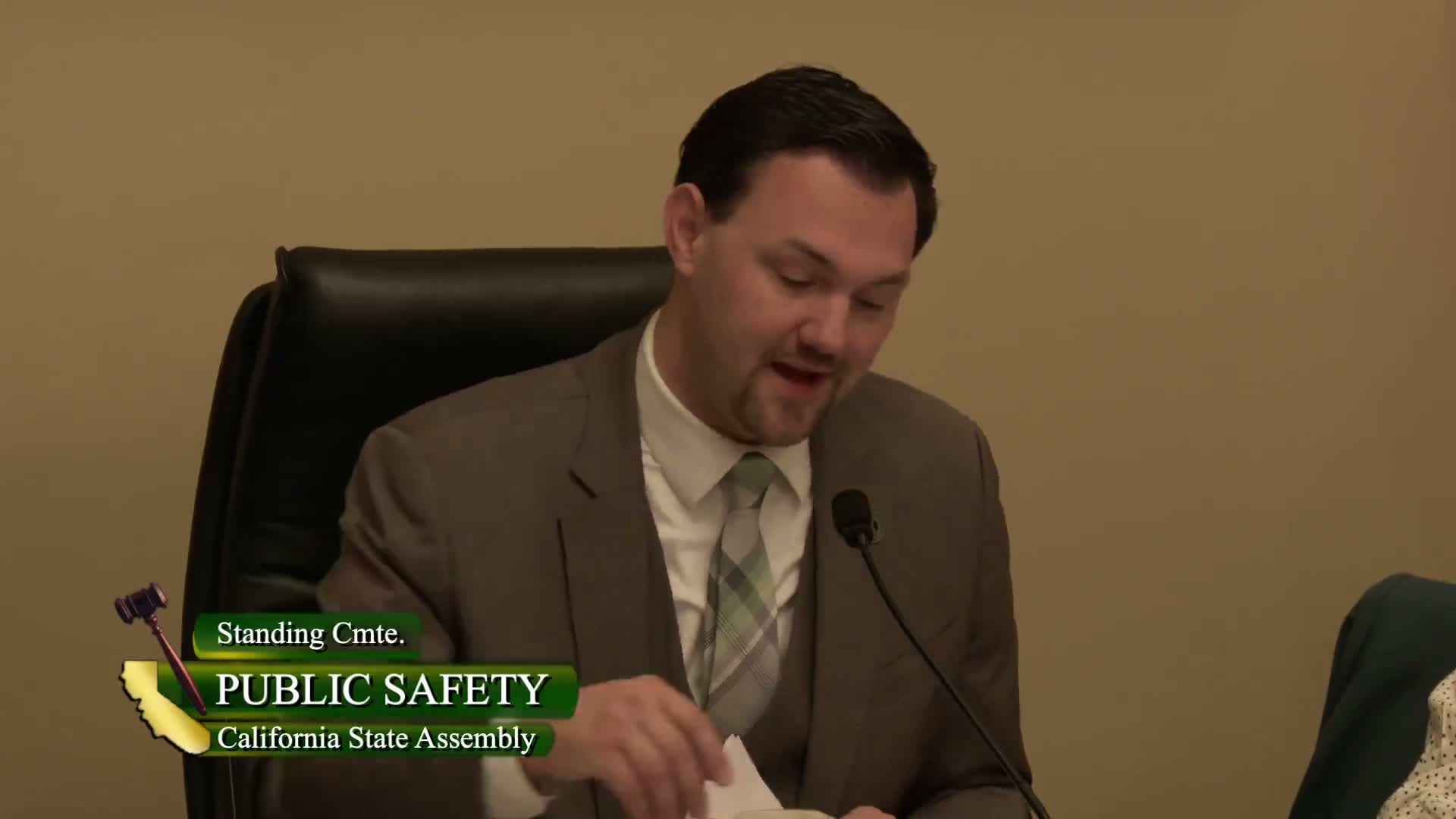
Assemblymember Ta introduced AB 17 27, saying California law protects some genetic privacy but leaves gaps that allow an individual’s DNA to be collected, tested or shared without consent. "Your DNA belongs to you and should not be collected, tested, or shared without your consent," the author said, accepting committee amendments.
Supporters framed the bill as closing a loophole exposed by historical cases such as Henrietta Lacks and recent technological advances that can infer physical traits from genetic data. April Robinson, representing A Voice for Choice Advocacy, told the committee the HeLa story shows harms when biological material and genomic information are used or commercialized without family consent.
Privacy advocates, including the ACLU, opposed criminalization as the primary tool, arguing civil and regulatory enforcement should be the focus and that carceral penalties could impose disproportionate harms. Maddie Hyatt (California Civil Liberties Advocates) said her organization accepted committee amendments and would continue to work with the author to refine language.
Committee members questioned implementation and protections included in the committee amendments. After testimony from supporters and opponents and several ‘me-too’ supporters on the record, the committee voted to pass AB 17 27 as amended to the Privacy and Consumer Protections Committee for further consideration.
Supporters framed the bill as closing a loophole exposed by historical cases such as Henrietta Lacks and recent technological advances that can infer physical traits from genetic data. April Robinson, representing A Voice for Choice Advocacy, told the committee the HeLa story shows harms when biological material and genomic information are used or commercialized without family consent.
Privacy advocates, including the ACLU, opposed criminalization as the primary tool, arguing civil and regulatory enforcement should be the focus and that carceral penalties could impose disproportionate harms. Maddie Hyatt (California Civil Liberties Advocates) said her organization accepted committee amendments and would continue to work with the author to refine language.
Committee members questioned implementation and protections included in the committee amendments. After testimony from supporters and opponents and several ‘me-too’ supporters on the record, the committee voted to pass AB 17 27 as amended to the Privacy and Consumer Protections Committee for further consideration.
View the Full Meeting & All Its Details
This article offers just a summary. Unlock complete video, transcripts, and insights as a Founder Member.
✓
Watch full, unedited meeting videos
✓
Search every word spoken in unlimited transcripts
✓
AI summaries & real-time alerts (all government levels)
✓
Permanent access to expanding government content
30-day money-back guarantee
