Panel votes to remove notarization requirement for PC 602 trespass letters amid debate over impacts on unhoused people
March 17, 2026 | California State Assembly, House, Legislative, California
This article was created by AI summarizing key points discussed. AI makes mistakes, so for full details and context, please refer to the video of the full meeting. Please report any errors so we can fix them. Report an error »
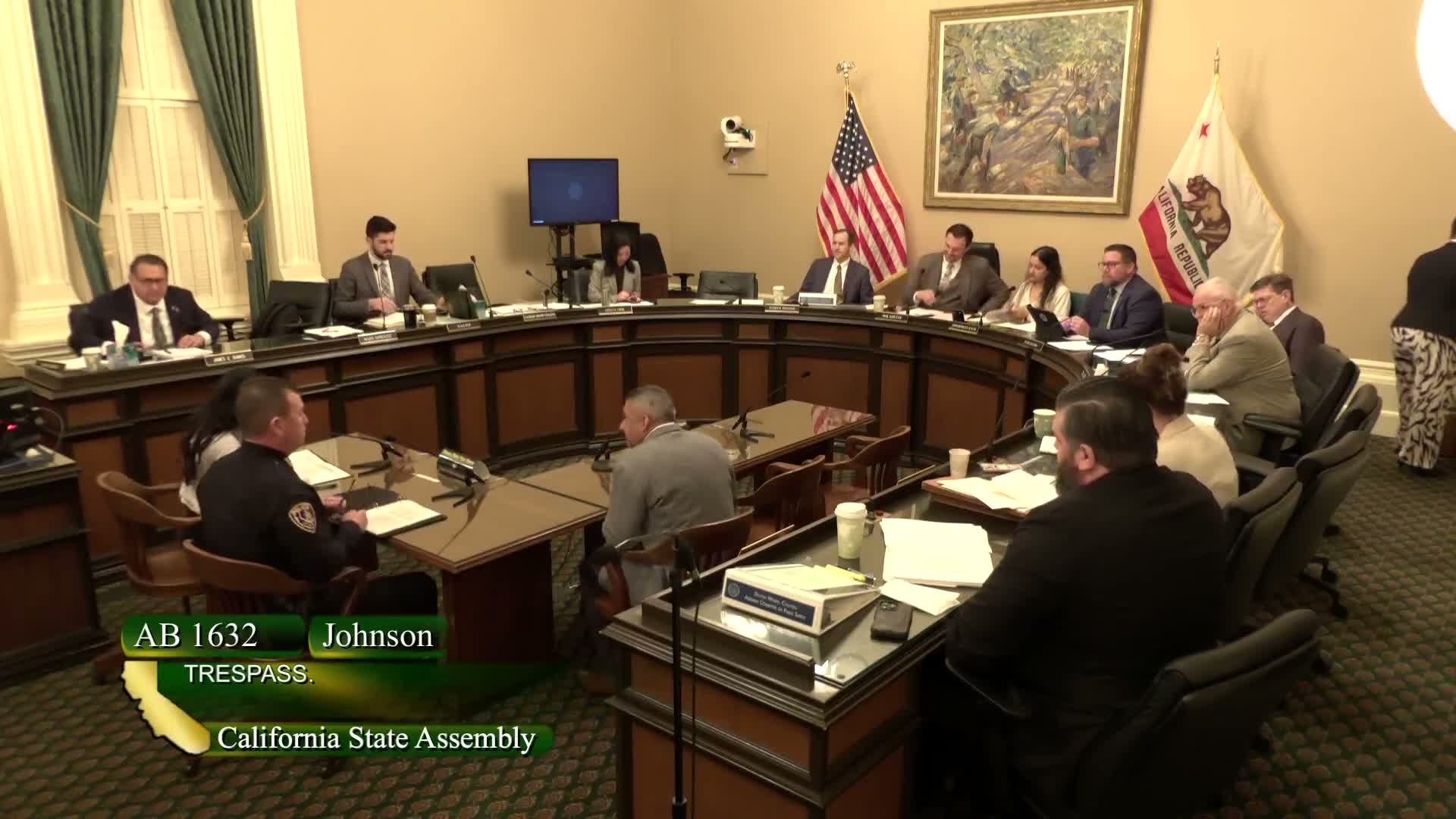
Assemblymember Johnson presented AB 16 32, which removes the requirement that trespass authorization letters filed under Penal Code section 602 be notarized. Johnson framed the change as a narrow, common-sense fix: notarization is an administrative burden that delays enforcement and costs staff time, he said, and the bill does not create new crimes.
Chief Larry Gonzalez of the Riverside Police Department, speaking for the California Police Chiefs Association, said the notarization requirement had produced local administrative costs and hindered proactive responses to trespassing on vacant lots and properties. He testified his department processed hundreds of 602 letters and that removing notarization would reduce delays and staffing burdens.
Supporters from cities and municipal districts and a social-work outreach witness said the tool can help property owners and also be used to reach people in crisis with interventions. Opponents — including Housing California and public-defender witnesses — warned that making it easier to file 602 letters could lead to weaponizing trespass laws against people experiencing homelessness, cause more arrests, and undermine due-process safeguards; they stressed that notarization had been added to help ensure the filer’s authority to request enforcement.
Committee members pressed both sides on likely effects on arrests and enforcement; supporters said electronic filing and other reforms already lower administrative burdens and that the bill does not change substantive trespass law, while opponents pointed to studies and practice showing enforcement frequently impacts unhoused residents. After discussion the committee voted to pass AB 16 32 as amended.
Chief Larry Gonzalez of the Riverside Police Department, speaking for the California Police Chiefs Association, said the notarization requirement had produced local administrative costs and hindered proactive responses to trespassing on vacant lots and properties. He testified his department processed hundreds of 602 letters and that removing notarization would reduce delays and staffing burdens.
Supporters from cities and municipal districts and a social-work outreach witness said the tool can help property owners and also be used to reach people in crisis with interventions. Opponents — including Housing California and public-defender witnesses — warned that making it easier to file 602 letters could lead to weaponizing trespass laws against people experiencing homelessness, cause more arrests, and undermine due-process safeguards; they stressed that notarization had been added to help ensure the filer’s authority to request enforcement.
Committee members pressed both sides on likely effects on arrests and enforcement; supporters said electronic filing and other reforms already lower administrative burdens and that the bill does not change substantive trespass law, while opponents pointed to studies and practice showing enforcement frequently impacts unhoused residents. After discussion the committee voted to pass AB 16 32 as amended.
View the Full Meeting & All Its Details
This article offers just a summary. Unlock complete video, transcripts, and insights as a Founder Member.
✓
Watch full, unedited meeting videos
✓
Search every word spoken in unlimited transcripts
✓
AI summaries & real-time alerts (all government levels)
✓
Permanent access to expanding government content
30-day money-back guarantee
