Bill to expand farm‑use tax deferments to S‑corps and diverse agricultural operations advances in committee with follow-up requested
March 16, 2026 | 2026 Legislature Alaska, Alaska
This article was created by AI summarizing key points discussed. AI makes mistakes, so for full details and context, please refer to the video of the full meeting. Please report any errors so we can fix them. Report an error »
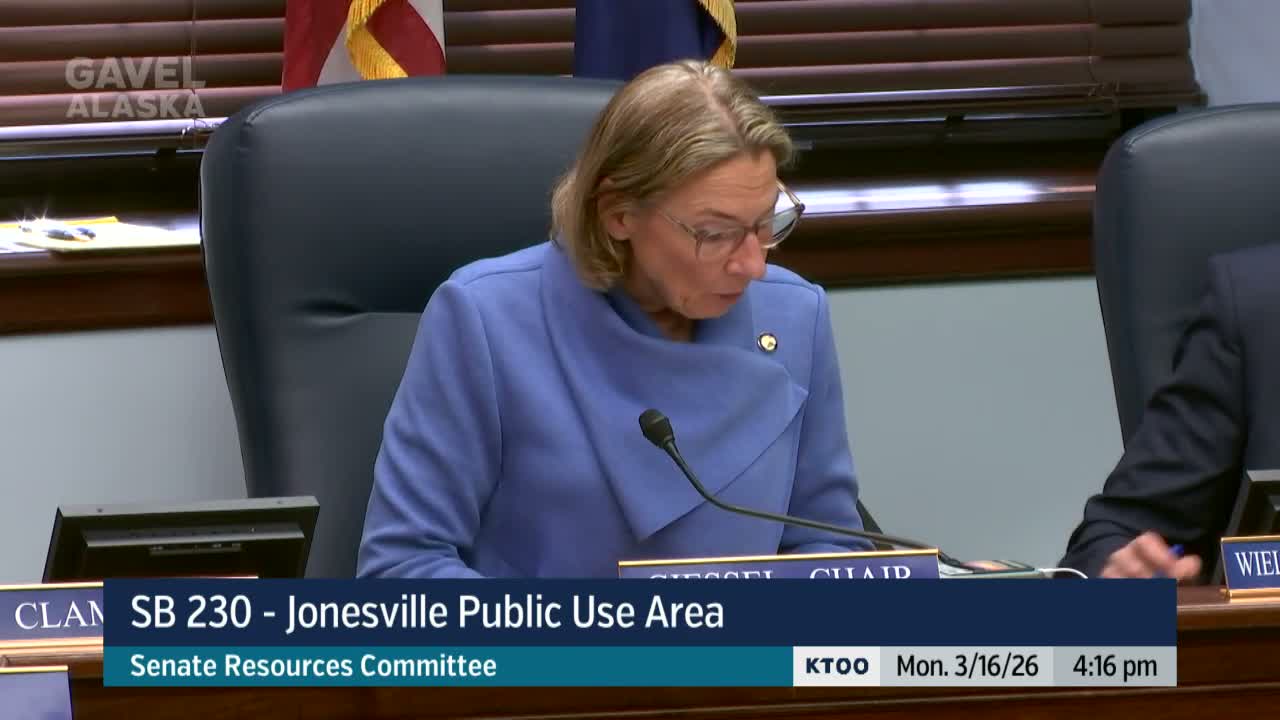
Senator Jesse Bjorkman told the committee that SB200 is a cleanup bill following 2024 farm‑law changes that unintentionally excluded farms operating as S corporations from farm‑use assessments. “Senate bill 200 corrects this oversight by allowing S‑corp farms to submit the equivalent information to local assessors,” he said, arguing the change will help keep agricultural land in production and strengthen Alaska’s food resilience.
Sponsor staff Laura Ashe walked members through the sectional changes: amendments to AS 29.45.060 to permit S‑corps to qualify by submitting information equivalent to IRS Schedule F, a first‑year farmer provision, an expanded farm‑use definition to include operations that support food production (e.g., peony farms, hay for horses), language to include land under approved soil conservation plans, an exclusion for marijuana operations and a statutory definition for S‑corporations.
Rita Joe Schultz, a peony grower and Farm Bureau executive committee member, testified in support and described how property taxes can threaten small farms. “This bill is very important to Alaska’s horticulture industry,” she said, urging the committee to preserve farmland through tax policy.
State Assessor Dan Nelson explained that the deferment is triggered when land converts to a nonfarm use, at which point the owner is liable for the additional tax plus interest for a look‑back period (statute references a seven‑year look‑back and an 8% interest provision). Committee members pressed on whether the $2,500 threshold is gross or net (Nelson and staff confirmed it is gross sales) and asked whether municipalities such as Anchorage have eligible applicants (staff said some may be unaware of the program).
Chair Giesel closed public testimony (none present), set an amendment deadline for Friday at 5 p.m., and asked staff to check with the Municipality of Anchorage about a Rabbit Creek orchard potentially eligible for the deferment.
What’s next: Staff and the sponsor will prepare any clarifications ahead of the amendment deadline; local assessors may be asked to provide examples of how the change would affect municipal tax rolls.
Sponsor staff Laura Ashe walked members through the sectional changes: amendments to AS 29.45.060 to permit S‑corps to qualify by submitting information equivalent to IRS Schedule F, a first‑year farmer provision, an expanded farm‑use definition to include operations that support food production (e.g., peony farms, hay for horses), language to include land under approved soil conservation plans, an exclusion for marijuana operations and a statutory definition for S‑corporations.
Rita Joe Schultz, a peony grower and Farm Bureau executive committee member, testified in support and described how property taxes can threaten small farms. “This bill is very important to Alaska’s horticulture industry,” she said, urging the committee to preserve farmland through tax policy.
State Assessor Dan Nelson explained that the deferment is triggered when land converts to a nonfarm use, at which point the owner is liable for the additional tax plus interest for a look‑back period (statute references a seven‑year look‑back and an 8% interest provision). Committee members pressed on whether the $2,500 threshold is gross or net (Nelson and staff confirmed it is gross sales) and asked whether municipalities such as Anchorage have eligible applicants (staff said some may be unaware of the program).
Chair Giesel closed public testimony (none present), set an amendment deadline for Friday at 5 p.m., and asked staff to check with the Municipality of Anchorage about a Rabbit Creek orchard potentially eligible for the deferment.
What’s next: Staff and the sponsor will prepare any clarifications ahead of the amendment deadline; local assessors may be asked to provide examples of how the change would affect municipal tax rolls.
Don't Miss a Word: See the Full Meeting!
Go beyond summaries. Unlock every video, transcript, and key insight with a Founder Membership.
✓
Get instant access to full meeting videos
✓
Search and clip any phrase from complete transcripts
✓
Receive AI-powered summaries & custom alerts
✓
Enjoy lifetime, unrestricted access to government data
30-day money-back guarantee
