Committee advances bill to let ASL court interpreters join collective bargaining
March 17, 2026 | California State Assembly, House, Legislative, California
This article was created by AI summarizing key points discussed. AI makes mistakes, so for full details and context, please refer to the video of the full meeting. Please report any errors so we can fix them. Report an error »
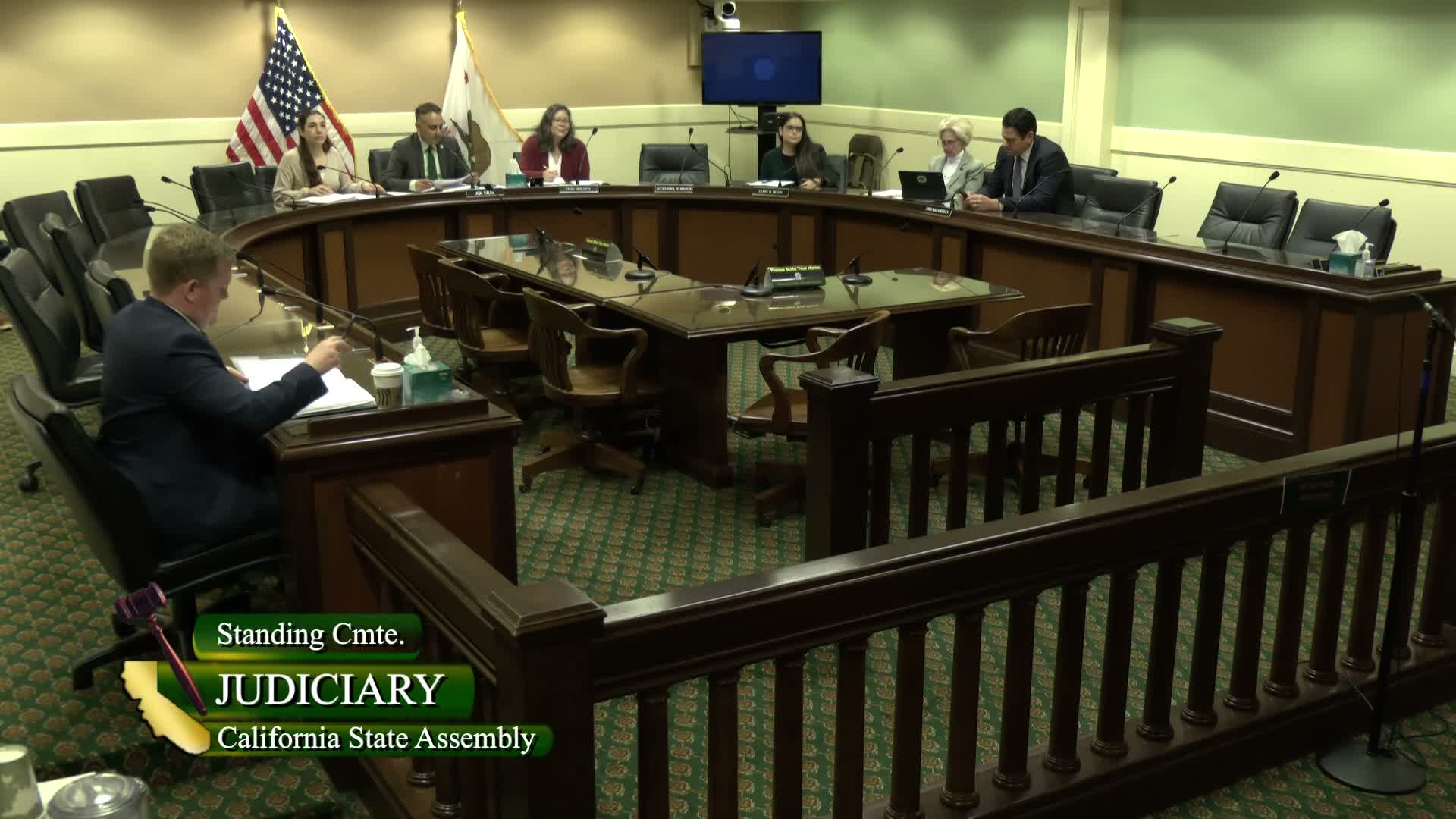
Assemblymember Li introduced AB 19 16 to allow American Sign Language interpreters to participate in the same collective-bargaining framework that governs certified spoken-language court interpreters. Li said the change recognizes ASL and addresses recruitment and representation gaps in the trial-court interpreter workforce.
Carmen Ramos, president of the California Federation of Interpreters, read a statement from an ASL court interpreter in Sacramento who described being unrepresented and unable to access existing bargaining protections. Ramos said ASL interpreters are excluded from the statutory definition of certified interpreter and that exclusion contributes to recruitment challenges and unequal employment protections.
Ignacio Hernandez, representing California Interpreters, told the committee that the Judicial Council's master list of ASL interpreters has declined ("there were 55 ASL interpreters on their master list; now it's down to 33, or I believe 39"), illustrating a shrinking pool of qualified ASL interpreters available to meet demand. Several certified court interpreters from regions across the state spoke in support, citing access needs in their local courts.
A motion to pass AB 19 16 to the appropriations committee was made and seconded; the committee advanced the bill on roll call. The committee recorded broad support and asked staff to continue working with stakeholders on implementation details.
The bill proceeds to the Assembly Appropriations Committee for fiscal consideration and any needed amendments.
Carmen Ramos, president of the California Federation of Interpreters, read a statement from an ASL court interpreter in Sacramento who described being unrepresented and unable to access existing bargaining protections. Ramos said ASL interpreters are excluded from the statutory definition of certified interpreter and that exclusion contributes to recruitment challenges and unequal employment protections.
Ignacio Hernandez, representing California Interpreters, told the committee that the Judicial Council's master list of ASL interpreters has declined ("there were 55 ASL interpreters on their master list; now it's down to 33, or I believe 39"), illustrating a shrinking pool of qualified ASL interpreters available to meet demand. Several certified court interpreters from regions across the state spoke in support, citing access needs in their local courts.
A motion to pass AB 19 16 to the appropriations committee was made and seconded; the committee advanced the bill on roll call. The committee recorded broad support and asked staff to continue working with stakeholders on implementation details.
The bill proceeds to the Assembly Appropriations Committee for fiscal consideration and any needed amendments.
Don't Miss a Word: See the Full Meeting!
Go beyond summaries. Unlock every video, transcript, and key insight with a Founder Membership.
✓
Get instant access to full meeting videos
✓
Search and clip any phrase from complete transcripts
✓
Receive AI-powered summaries & custom alerts
✓
Enjoy lifetime, unrestricted access to government data
30-day money-back guarantee
