Assembly committee advances bill to cap CSU executive pay after heated debate
March 17, 2026 | California State Assembly, House, Legislative, California
This article was created by AI summarizing key points discussed. AI makes mistakes, so for full details and context, please refer to the video of the full meeting. Please report any errors so we can fix them. Report an error »
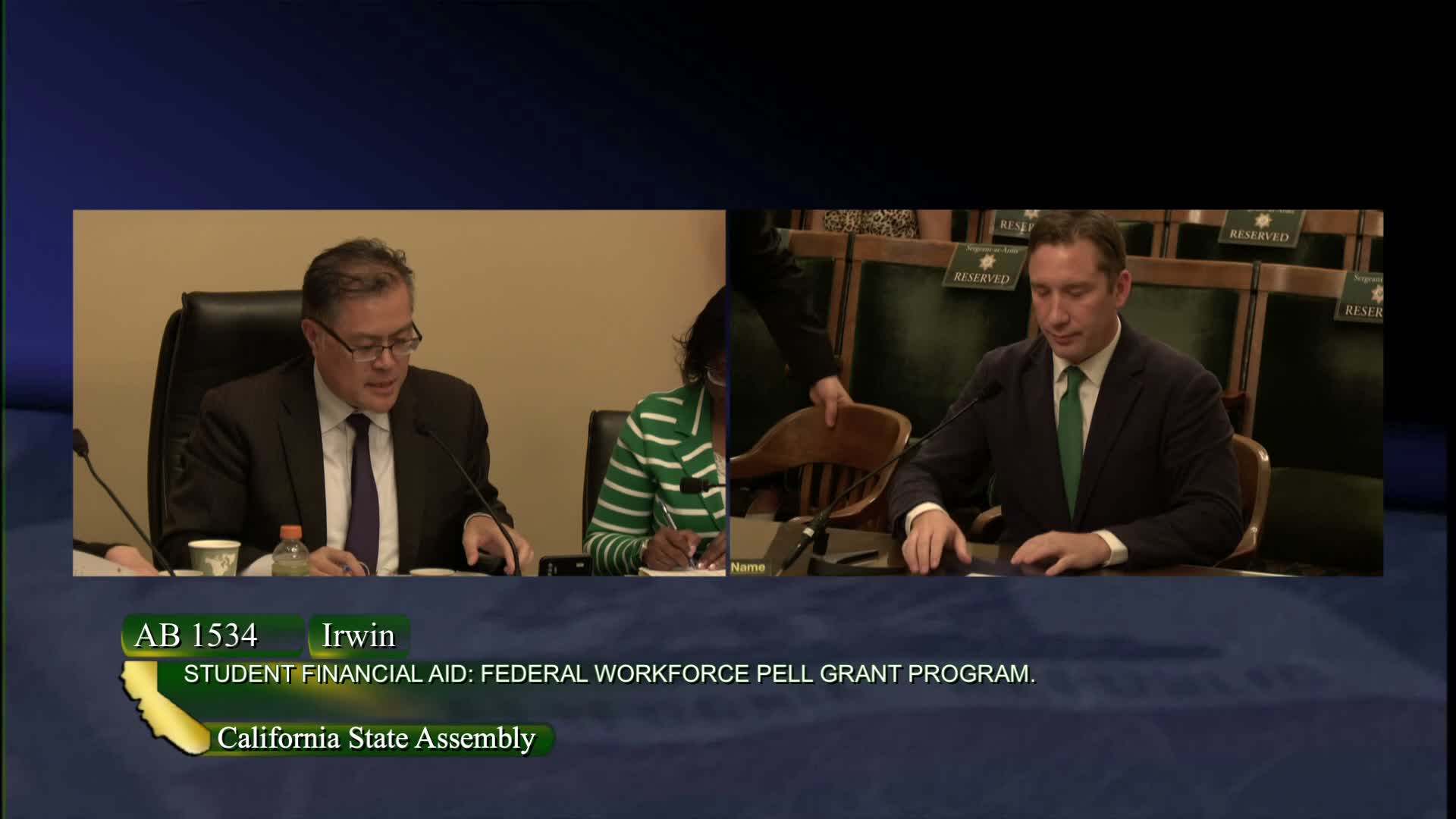
The Assembly Higher Education Committee voted to advance AB 18 31, a bill proposing statutory limits on compensation for non‑represented California State University (CSU) executives, after a lengthy hearing that drew passionate testimony from students, faculty and CSU officials.
The bill, presented to the committee by the measure’s sponsor, would cap base salaries for certain CSU managerial and executive positions at 125% of the governor’s salary, prohibit executive salary increases during any fiscal year when student tuition is raised, and repeal a November 2025 CSU resolution that authorized significant pay increases for top executives. The sponsor told the committee the intent is to refocus CSU priorities on affordability and student access.
Margarita Berta Avila, president of the California Faculty Association, testified in strong support, saying the union represents 29,000 educators and that faculty and staff are struggling while some campus leaders receive large pay packages. “If you agree with students, with staff, and faculty that their executive compensation increases are outrageous, then we need you to do something about it,” Avila said.
Student testimony reinforced the message about affordability. Michael Lee Chang, a political science student at Sacramento State, described balancing multiple jobs and the pressure students face as tuition and fees rise, urging the committee to vote for accountability. “While students are juggling work and school, while families are stretched thin, CSU leadership looked at that reality and decided the real priority was executive compensation,” Chang said.
CSU representatives opposed the proposal. Greg Sachs, vice chancellor for external relations and communications at the CSU Office of the Chancellor, told the committee that the system operates like “small cities” and that a rigid statutory cap would hamper recruitment and retention of experienced leaders. He said the CSU adopted a compensation philosophy and that many campus presidents’ pay fell below market median prior to the recent changes.
Committee members questioned scope and exemptions. The sponsor said she would accept and work on amendments to narrow the bill’s scope to base salary, exclude represented employees, and remove retroactive repeal language. Members raised the potential for unintended impacts on non‑represented frontline staff and campus operations and urged further refinement.
The committee moved the bill to the Appropriations Committee (motion passed as recorded in committee action). The sponsor reiterated willingness to continue meetings with CSU leaders, students and stakeholders to craft amendments and to preserve the bill’s guardrails.
The committee’s action advances the measure but does not adopt final statutory language; additional amendments are expected as AB 18 31 proceeds through the legislative process.
The bill, presented to the committee by the measure’s sponsor, would cap base salaries for certain CSU managerial and executive positions at 125% of the governor’s salary, prohibit executive salary increases during any fiscal year when student tuition is raised, and repeal a November 2025 CSU resolution that authorized significant pay increases for top executives. The sponsor told the committee the intent is to refocus CSU priorities on affordability and student access.
Margarita Berta Avila, president of the California Faculty Association, testified in strong support, saying the union represents 29,000 educators and that faculty and staff are struggling while some campus leaders receive large pay packages. “If you agree with students, with staff, and faculty that their executive compensation increases are outrageous, then we need you to do something about it,” Avila said.
Student testimony reinforced the message about affordability. Michael Lee Chang, a political science student at Sacramento State, described balancing multiple jobs and the pressure students face as tuition and fees rise, urging the committee to vote for accountability. “While students are juggling work and school, while families are stretched thin, CSU leadership looked at that reality and decided the real priority was executive compensation,” Chang said.
CSU representatives opposed the proposal. Greg Sachs, vice chancellor for external relations and communications at the CSU Office of the Chancellor, told the committee that the system operates like “small cities” and that a rigid statutory cap would hamper recruitment and retention of experienced leaders. He said the CSU adopted a compensation philosophy and that many campus presidents’ pay fell below market median prior to the recent changes.
Committee members questioned scope and exemptions. The sponsor said she would accept and work on amendments to narrow the bill’s scope to base salary, exclude represented employees, and remove retroactive repeal language. Members raised the potential for unintended impacts on non‑represented frontline staff and campus operations and urged further refinement.
The committee moved the bill to the Appropriations Committee (motion passed as recorded in committee action). The sponsor reiterated willingness to continue meetings with CSU leaders, students and stakeholders to craft amendments and to preserve the bill’s guardrails.
The committee’s action advances the measure but does not adopt final statutory language; additional amendments are expected as AB 18 31 proceeds through the legislative process.
Don't Miss a Word: See the Full Meeting!
Go beyond summaries. Unlock every video, transcript, and key insight with a Founder Membership.
✓
Get instant access to full meeting videos
✓
Search and clip any phrase from complete transcripts
✓
Receive AI-powered summaries & custom alerts
✓
Enjoy lifetime, unrestricted access to government data
30-day money-back guarantee
