Legislators Press BPPE on Enforcement, Student Protections and Fee Plan During Sunset Review
March 17, 2026 | California State Senate, Senate, Legislative, California
This article was created by AI summarizing key points discussed. AI makes mistakes, so for full details and context, please refer to the video of the full meeting. Please report any errors so we can fix them. Report an error »
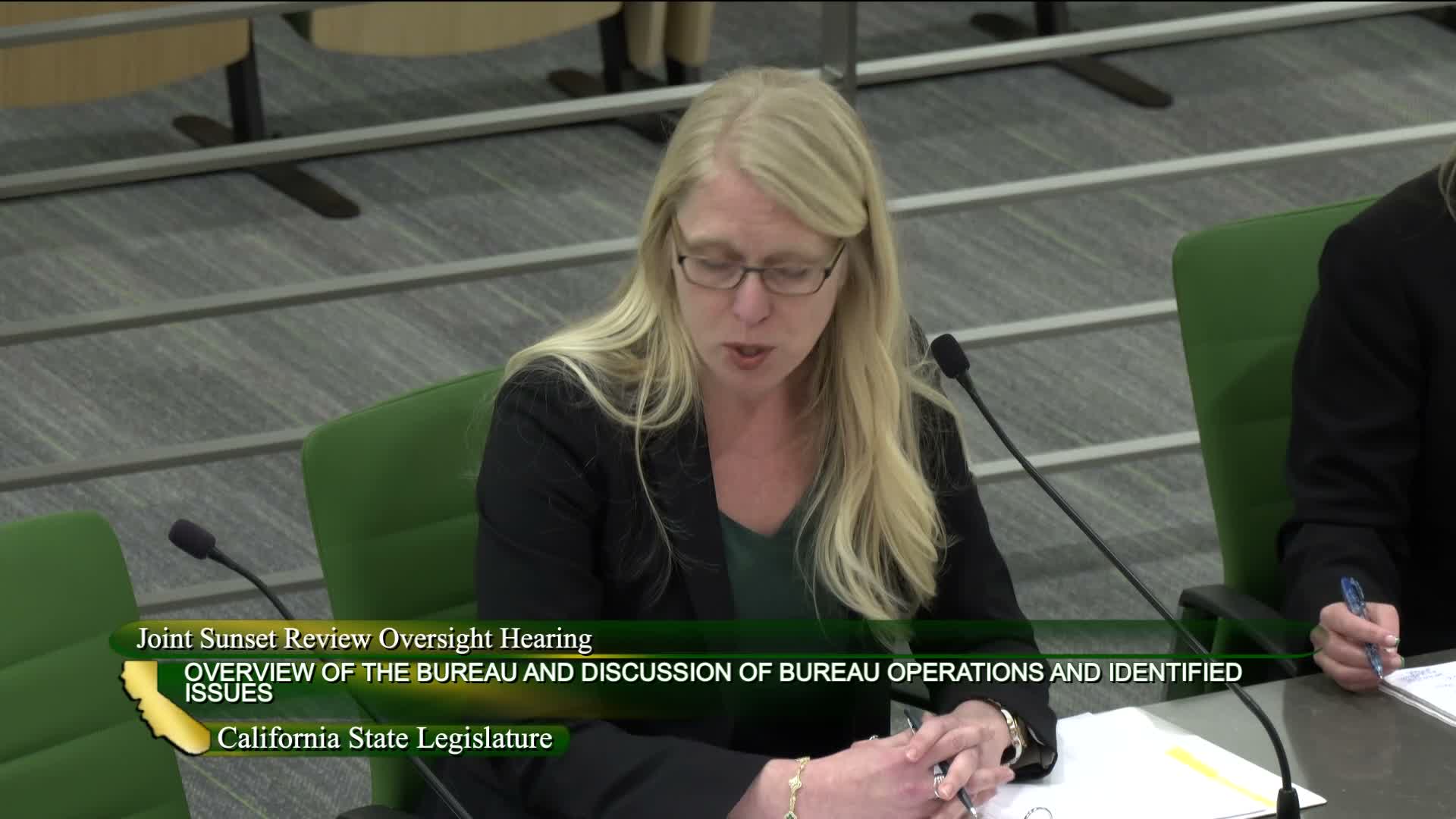
Joint Assembly and Senate committees held an oversight hearing this morning on the Bureau for Private Postsecondary Education's (BPPE) sunset report, pressing BPPE Chief Deborah Cochran and Department of Consumer Affairs Acting Director Christine Lally on enforcement, student relief and fee increases aimed at closing the agency's structural budget gap.
BPPE Chief Deborah Cochran told the committees that the bureau has modernized data systems, increased inspections and substantially raised the number of administrative citations issued, but that the agency still faces a long-term fiscal shortfall that likely requires legislative action on fees or mandates to resolve. "We have reduced expenditures, eliminated positions, maximized revenue, and pursued trailer bill language," Cochran said, and added the bureau "cannot take additional steps without legislative action to increase fees or reduce mandates."
Why it matters: BPPE regulates roughly a half-million students in California's private career and degree programs; lawmakers said state oversight has become more important as federal monitoring shifts. Members asked how the bureau can both protect students from bad actors and avoid burdening legitimate institutions.
Key details from the hearing:
- Enforcement tools and limits: Cochran described BPPE's two primary enforcement tracks: a citation-and-fine program for less serious violations and formal accusations that can lead to license revocation or probation. For approved institutions the statute allows fines up to $5,000 per violation; Cochran said average citation fines are about $8,000 and some citations exceed $10,000–$20,000. Institutions operating without required approval can face fines up to $100,000. Cochran said the bureau increasingly documents recurring minor violations so they can be treated as willful misconduct when patterns emerge.
- Student records and school closures: Lawmakers pressed BPPE about student access to transcripts when schools close. Cochran said current law requires institutions to permanently maintain student records but that practice sometimes fails when institutions go silent. She said the bureau is studying whether it should take a larger role ensuring access to transcripts and is coordinating with other regulators and states.
- Student Tuition Recovery Fund (STRF): Cochran described STRF as an insurance-like pool funded by institution‑collected assessments. By statute the fund is meant to remain between $20 million and $25 million; Cochran said the current balance is over $25 million, assessments are set to zero, and projections do not indicate a need to resume assessments before 2029. She said the bureau approved about 1,100 STRF claims totaling roughly $17 million over the last four years and that the average approved claim is about $12,000. Cochran told lawmakers the bureau is recommending some statutory adjustments (for administrative simplicity) but does not currently favor replacing STRF with a surety-bond model.
- Fairness and alternatives: Several members and commenters said the STRF assessment method can feel unfair because students at high-end, out‑of‑state, or short-term programs may pay different cumulative assessments based on tuition structure. Senator Nilo and others urged closer study of risk-based approaches or surety bonds. Cochran acknowledged alternatives exist in other states but emphasized that STRF has worked for California students to date.
- Fees and workload analysis: BPPE proposed changes to application and registration fees to shore up revenue. Cochran said application fees were matched to a fee-by-fee workload analysis and that annual fees generate roughly 90% of BPPE's revenue. One example discussed: the current five‑year out‑of‑state registration fee is $1,500 (annualized $300); the bureau proposed raising the five‑year registration to $10,000 (annualized ~ $2,000) to cover monitoring workload. Cochran said most proposed application fees align with documented workload, but some members pressed for transparency on fee calculations and to ensure small institutions are not unfairly burdened.
- Prevention and proactive monitoring: Cochran described the bureau's compliance inspections (one announced and one unannounced within a five‑year period), monthly workshops for institutions, and new data analytics to detect red flags in reported graduation and placement rates. She said the bureau is considering earlier follow-up inspections for newly approved institutions to reduce compliance gaps.
- Data and labor-market outcomes: Cochran said BPPE will transfer institution outcome data to the Cradle to Career data system this month to match education data with Employment Development Department (EDD) records, enabling better verified labor‑market information in the absence of a federal gainful‑employment rule.
Public comment: Providers and higher‑education advocates praised BPPE's work but urged targeted, risk‑based regulation, expressed concern about steep fee increases for some members, and encouraged further study of surety bonds and fee fairness. A representative of several provider organizations said the sector supplies critical workforce training and asked lawmakers to avoid policies that would unintentionally harm legitimate programs.
What did not happen: The committees did not take any votes or adopt binding changes at the hearing. Members repeatedly asked for more detailed fee‑by‑fee workload analyses and follow‑up information on STRF claims and claimant satisfaction.
What's next: Committee chairs and BPPE staff signaled further follow-up and possible legislative proposals to calibrate fees, statutory authority to bar serial bad actors from re‑entering the market, and potential statutory tweaks to STRF administration. The hearing concluded with no formal action and the committees adjourned.
Quotes (selected):
"We have reduced expenditures, eliminated positions, maximized revenue, and pursued trailer bill language," BPPE Chief Deborah Cochran said, adding that "there are no additional steps the bureau can take without legislative action to increase fees or reduce mandates."
Chair Wahab, chair of the Senate Business, Professions and Economic Development Committee, warned lawmakers about institutions that "target immigrant students" and asked how the bureau will "hold bad actors accountable."
Sen. Nilo urged lawmakers to "take a hard look" at STRF's insurance‑pool design and questioned whether the current flat assessment model fairly reflects institutional risk.
Ending: The committees thanked staff and BPPE leaders for the sunset report and asked for more detailed budget and workload documents; the hearing ended with the promise of continued oversight and no immediate legislative votes.
BPPE Chief Deborah Cochran told the committees that the bureau has modernized data systems, increased inspections and substantially raised the number of administrative citations issued, but that the agency still faces a long-term fiscal shortfall that likely requires legislative action on fees or mandates to resolve. "We have reduced expenditures, eliminated positions, maximized revenue, and pursued trailer bill language," Cochran said, and added the bureau "cannot take additional steps without legislative action to increase fees or reduce mandates."
Why it matters: BPPE regulates roughly a half-million students in California's private career and degree programs; lawmakers said state oversight has become more important as federal monitoring shifts. Members asked how the bureau can both protect students from bad actors and avoid burdening legitimate institutions.
Key details from the hearing:
- Enforcement tools and limits: Cochran described BPPE's two primary enforcement tracks: a citation-and-fine program for less serious violations and formal accusations that can lead to license revocation or probation. For approved institutions the statute allows fines up to $5,000 per violation; Cochran said average citation fines are about $8,000 and some citations exceed $10,000–$20,000. Institutions operating without required approval can face fines up to $100,000. Cochran said the bureau increasingly documents recurring minor violations so they can be treated as willful misconduct when patterns emerge.
- Student records and school closures: Lawmakers pressed BPPE about student access to transcripts when schools close. Cochran said current law requires institutions to permanently maintain student records but that practice sometimes fails when institutions go silent. She said the bureau is studying whether it should take a larger role ensuring access to transcripts and is coordinating with other regulators and states.
- Student Tuition Recovery Fund (STRF): Cochran described STRF as an insurance-like pool funded by institution‑collected assessments. By statute the fund is meant to remain between $20 million and $25 million; Cochran said the current balance is over $25 million, assessments are set to zero, and projections do not indicate a need to resume assessments before 2029. She said the bureau approved about 1,100 STRF claims totaling roughly $17 million over the last four years and that the average approved claim is about $12,000. Cochran told lawmakers the bureau is recommending some statutory adjustments (for administrative simplicity) but does not currently favor replacing STRF with a surety-bond model.
- Fairness and alternatives: Several members and commenters said the STRF assessment method can feel unfair because students at high-end, out‑of‑state, or short-term programs may pay different cumulative assessments based on tuition structure. Senator Nilo and others urged closer study of risk-based approaches or surety bonds. Cochran acknowledged alternatives exist in other states but emphasized that STRF has worked for California students to date.
- Fees and workload analysis: BPPE proposed changes to application and registration fees to shore up revenue. Cochran said application fees were matched to a fee-by-fee workload analysis and that annual fees generate roughly 90% of BPPE's revenue. One example discussed: the current five‑year out‑of‑state registration fee is $1,500 (annualized $300); the bureau proposed raising the five‑year registration to $10,000 (annualized ~ $2,000) to cover monitoring workload. Cochran said most proposed application fees align with documented workload, but some members pressed for transparency on fee calculations and to ensure small institutions are not unfairly burdened.
- Prevention and proactive monitoring: Cochran described the bureau's compliance inspections (one announced and one unannounced within a five‑year period), monthly workshops for institutions, and new data analytics to detect red flags in reported graduation and placement rates. She said the bureau is considering earlier follow-up inspections for newly approved institutions to reduce compliance gaps.
- Data and labor-market outcomes: Cochran said BPPE will transfer institution outcome data to the Cradle to Career data system this month to match education data with Employment Development Department (EDD) records, enabling better verified labor‑market information in the absence of a federal gainful‑employment rule.
Public comment: Providers and higher‑education advocates praised BPPE's work but urged targeted, risk‑based regulation, expressed concern about steep fee increases for some members, and encouraged further study of surety bonds and fee fairness. A representative of several provider organizations said the sector supplies critical workforce training and asked lawmakers to avoid policies that would unintentionally harm legitimate programs.
What did not happen: The committees did not take any votes or adopt binding changes at the hearing. Members repeatedly asked for more detailed fee‑by‑fee workload analyses and follow‑up information on STRF claims and claimant satisfaction.
What's next: Committee chairs and BPPE staff signaled further follow-up and possible legislative proposals to calibrate fees, statutory authority to bar serial bad actors from re‑entering the market, and potential statutory tweaks to STRF administration. The hearing concluded with no formal action and the committees adjourned.
Quotes (selected):
"We have reduced expenditures, eliminated positions, maximized revenue, and pursued trailer bill language," BPPE Chief Deborah Cochran said, adding that "there are no additional steps the bureau can take without legislative action to increase fees or reduce mandates."
Chair Wahab, chair of the Senate Business, Professions and Economic Development Committee, warned lawmakers about institutions that "target immigrant students" and asked how the bureau will "hold bad actors accountable."
Sen. Nilo urged lawmakers to "take a hard look" at STRF's insurance‑pool design and questioned whether the current flat assessment model fairly reflects institutional risk.
Ending: The committees thanked staff and BPPE leaders for the sunset report and asked for more detailed budget and workload documents; the hearing ended with the promise of continued oversight and no immediate legislative votes.
Don't Miss a Word: See the Full Meeting!
Go beyond summaries. Unlock every video, transcript, and key insight with a Founder Membership.
✓
Get instant access to full meeting videos
✓
Search and clip any phrase from complete transcripts
✓
Receive AI-powered summaries & custom alerts
✓
Enjoy lifetime, unrestricted access to government data
30-day money-back guarantee
