House committee hears bill to modernize occupational therapy scope in Alaska
March 13, 2026 | 2026 Legislature Alaska, Alaska
This article was created by AI summarizing key points discussed. AI makes mistakes, so for full details and context, please refer to the video of the full meeting. Please report any errors so we can fix them. Report an error »
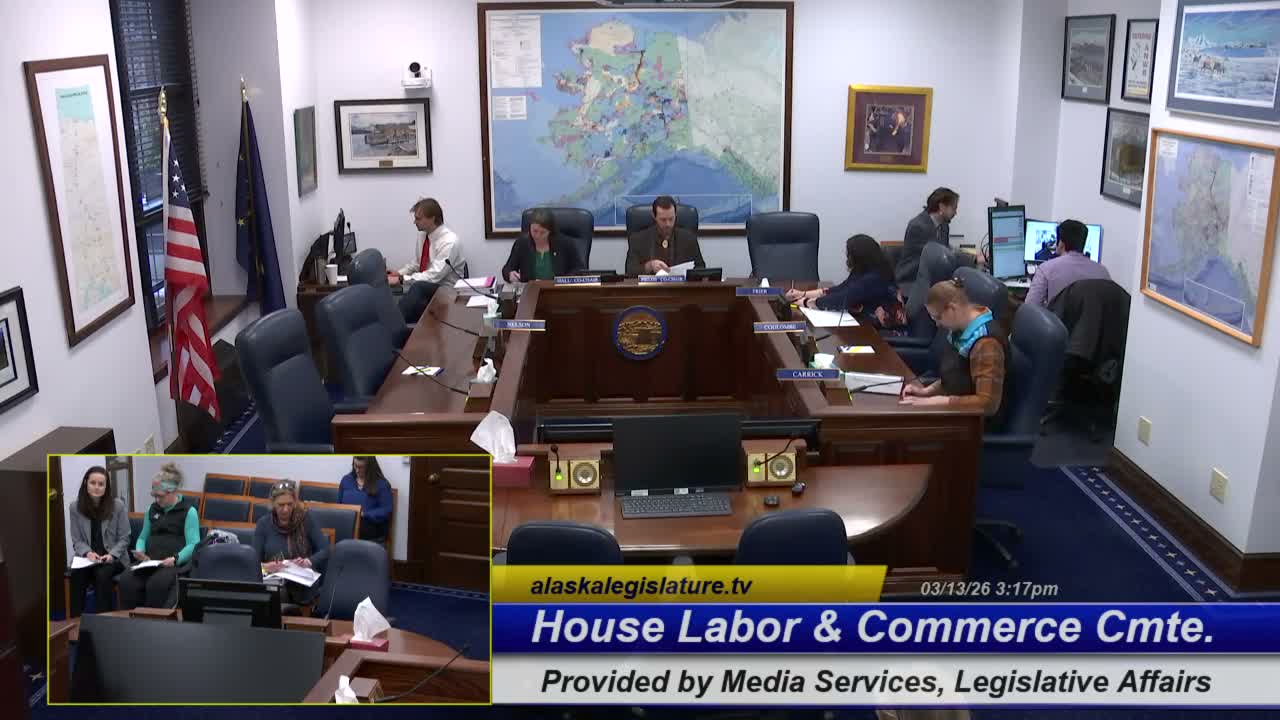
The House Labor and Commerce Committee reviewed House Bill 347, a committee bill to modernize Alaska’s occupational therapy scope of practice.
Co-chair Representative Carolyn Hall said the current statute describes occupational therapists as helping patients "cope," a description she said is outdated and can narrow the care Alaskans receive. "HB 347 is a practical modernization of Alaska's occupational therapy statute," Hall said, arguing clearer statutory language will improve access and timeliness of care.
Joan Wilkerson, chief of staff for Representative Hall, read the sectional analysis: Section 1 defines the scope of practice for occupational therapists and occupational therapy assistants (OTAs); Section 2 replaces vague phrases such as "developing skills" with definitive language; Section 3 revises the OTA definition to clarify supervision and administered duties; and Section 4 expands the definition of tests and measurement to include imaging and electrodiagnostic methods.
Tori Daughtry, an occupational therapist and member of the state physical therapy and occupational therapy licensing board, testified the board supports HB 347. "Alaskans deserve the opportunity to receive OT services consistent with basic national standards, and OT should assist a patient with improving their function," Daughtry said, noting a 2023 law opinion identified limitations in the current statute that fail to recognize OTs' role in restoring or enhancing function.
Daughtry and other witnesses clarified differences between OTs and OTAs: OTs practice autonomously and are responsible for evaluation, while OTAs work under supervision and may assist with components of assessment that the OT completes. "This language protects the role of the OTA," Daughtry said.
Witnesses also addressed patient access and referrals. Committee members asked whether HB 347 would allow patients to seek OT care directly; Daughtry said the bill would put direct access into statute so therapists could evaluate and begin care without a physician referral, while acknowledging insurers may still set reimbursement requirements. "In theory, if a patient were to fall down, sprain their wrist, they can go directly to occupational therapy to be treated," she said.
Committee members questioned the removal of the phrase "for compensation" from the statute. Testimony explained that removing that phrase prevents a reading that volunteers or mission practitioners are excluded. The board’s witness described an existing limited-permit process for out-of-state volunteers: "There’s the option as an occupational therapist to receive up to two limited permits in their lifetime, and it limits the number of days that they're able to practice occupational therapy," she said, noting limited permits allow rapid approval for disaster or volunteer responses.
Jean Keckutt, clinical director of Alaska Hand Rehabilitation, and Celeste Tidenko, NBCOT ambassador for Alaska, both urged support for the bill, saying it would align Alaska law with modern, evidence-based OT practice and reduce barriers—particularly in rural areas where delays can prolong disability.
No committee vote on HB 347 was recorded during the session. The committee clerk set an amendment deadline of Thursday, 03/19, at 5:00 p.m. The committee left the bill open for amendments and further consideration.
The committee did not take final action on HB 347 during the meeting; the bill remains pending further committee work and any amendments.
Co-chair Representative Carolyn Hall said the current statute describes occupational therapists as helping patients "cope," a description she said is outdated and can narrow the care Alaskans receive. "HB 347 is a practical modernization of Alaska's occupational therapy statute," Hall said, arguing clearer statutory language will improve access and timeliness of care.
Joan Wilkerson, chief of staff for Representative Hall, read the sectional analysis: Section 1 defines the scope of practice for occupational therapists and occupational therapy assistants (OTAs); Section 2 replaces vague phrases such as "developing skills" with definitive language; Section 3 revises the OTA definition to clarify supervision and administered duties; and Section 4 expands the definition of tests and measurement to include imaging and electrodiagnostic methods.
Tori Daughtry, an occupational therapist and member of the state physical therapy and occupational therapy licensing board, testified the board supports HB 347. "Alaskans deserve the opportunity to receive OT services consistent with basic national standards, and OT should assist a patient with improving their function," Daughtry said, noting a 2023 law opinion identified limitations in the current statute that fail to recognize OTs' role in restoring or enhancing function.
Daughtry and other witnesses clarified differences between OTs and OTAs: OTs practice autonomously and are responsible for evaluation, while OTAs work under supervision and may assist with components of assessment that the OT completes. "This language protects the role of the OTA," Daughtry said.
Witnesses also addressed patient access and referrals. Committee members asked whether HB 347 would allow patients to seek OT care directly; Daughtry said the bill would put direct access into statute so therapists could evaluate and begin care without a physician referral, while acknowledging insurers may still set reimbursement requirements. "In theory, if a patient were to fall down, sprain their wrist, they can go directly to occupational therapy to be treated," she said.
Committee members questioned the removal of the phrase "for compensation" from the statute. Testimony explained that removing that phrase prevents a reading that volunteers or mission practitioners are excluded. The board’s witness described an existing limited-permit process for out-of-state volunteers: "There’s the option as an occupational therapist to receive up to two limited permits in their lifetime, and it limits the number of days that they're able to practice occupational therapy," she said, noting limited permits allow rapid approval for disaster or volunteer responses.
Jean Keckutt, clinical director of Alaska Hand Rehabilitation, and Celeste Tidenko, NBCOT ambassador for Alaska, both urged support for the bill, saying it would align Alaska law with modern, evidence-based OT practice and reduce barriers—particularly in rural areas where delays can prolong disability.
No committee vote on HB 347 was recorded during the session. The committee clerk set an amendment deadline of Thursday, 03/19, at 5:00 p.m. The committee left the bill open for amendments and further consideration.
The committee did not take final action on HB 347 during the meeting; the bill remains pending further committee work and any amendments.
View the Full Meeting & All Its Details
This article offers just a summary. Unlock complete video, transcripts, and insights as a Founder Member.
✓
Watch full, unedited meeting videos
✓
Search every word spoken in unlimited transcripts
✓
AI summaries & real-time alerts (all government levels)
✓
Permanent access to expanding government content
30-day money-back guarantee
