Alaska lawmakers weigh stronger consumer protections for cryptocurrency kiosks after surge in fraud complaints
March 13, 2026 | 2026 Legislature Alaska, Alaska
This article was created by AI summarizing key points discussed. AI makes mistakes, so for full details and context, please refer to the video of the full meeting. Please report any errors so we can fix them. Report an error »
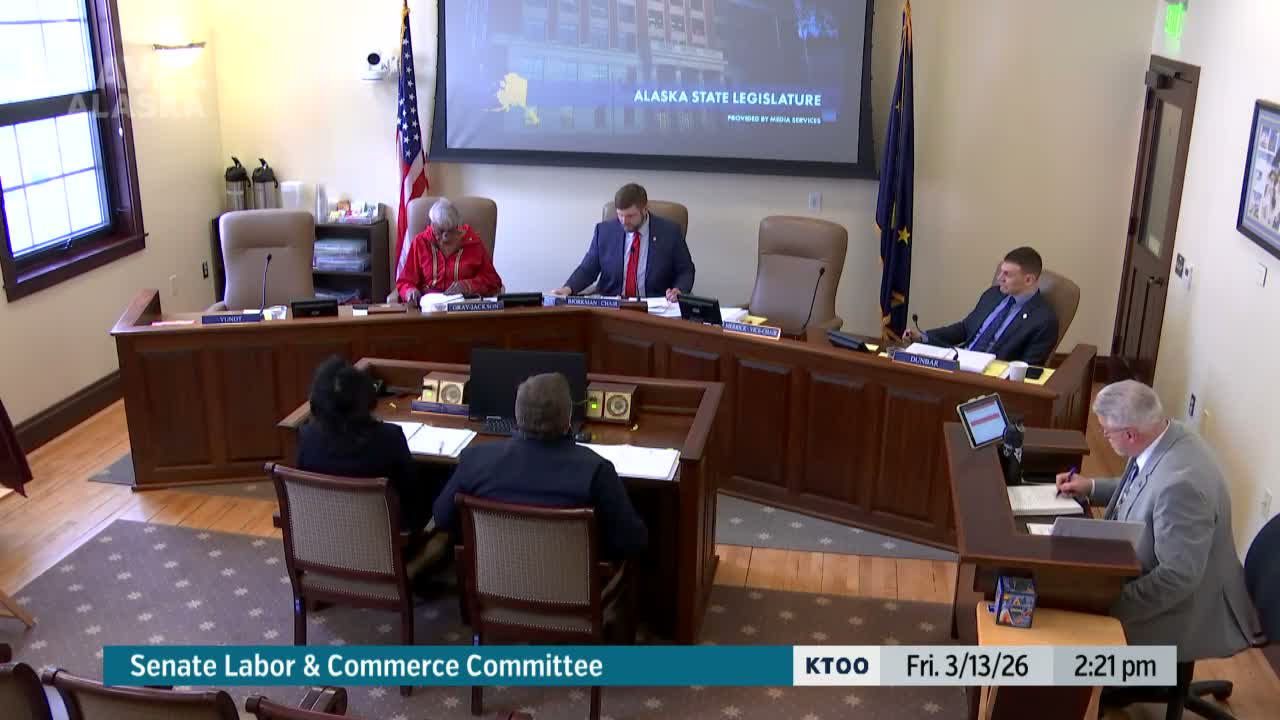
Lawmakers in the Senate Labor and Commerce Committee heard emotional testimony March 13 about cryptocurrency kiosk scams that AARP and local advocates say have sharply increased in Alaska and disproportionately harmed older residents.
Clark Flint Barr, AARP government affairs director for financial security, presented FBI Internet Crime Complaint Center data showing nearly 11,000 national kiosk-related complaints in 2024 and 48 Alaska complaints with nearly $1 million in reported losses; he said older adults bore the large majority of losses. "These machines are increasingly used by criminals as a fast hard to recover payment rail," he told committee members, and he urged state-level consumer protections including kiosk registration, on-machine fraud warnings, transaction limits, fee transparency and refund rights for fraud victims — measures similar to those in Senator Kathy Tilton’s bill.
Public testimony included Brenda Shilvin of the MATSU Council on Aging, who described multiple local instances of seniors coerced into feeding cash into kiosks; Phyllis Silverton recounted losing $8,000 in a cloned-voice emotional scam. Industry representatives offered mixed reactions: Chris Edwards of Bitcoin Depot opposed the bill as written and warned it could put kiosks out of business, while Claire Wolfson of CoinFlip said her company supports most protections but warned that the draft’s 3% fee cap is extremely low and could be untenable for legitimate operators.
The committee closed public testimony, noted that a series of agency experts joined online, and set SB 249 aside for further consideration next week. Committee members said balancing fraud prevention with access for cash-reliant populations will require additional discussion.
Clark Flint Barr, AARP government affairs director for financial security, presented FBI Internet Crime Complaint Center data showing nearly 11,000 national kiosk-related complaints in 2024 and 48 Alaska complaints with nearly $1 million in reported losses; he said older adults bore the large majority of losses. "These machines are increasingly used by criminals as a fast hard to recover payment rail," he told committee members, and he urged state-level consumer protections including kiosk registration, on-machine fraud warnings, transaction limits, fee transparency and refund rights for fraud victims — measures similar to those in Senator Kathy Tilton’s bill.
Public testimony included Brenda Shilvin of the MATSU Council on Aging, who described multiple local instances of seniors coerced into feeding cash into kiosks; Phyllis Silverton recounted losing $8,000 in a cloned-voice emotional scam. Industry representatives offered mixed reactions: Chris Edwards of Bitcoin Depot opposed the bill as written and warned it could put kiosks out of business, while Claire Wolfson of CoinFlip said her company supports most protections but warned that the draft’s 3% fee cap is extremely low and could be untenable for legitimate operators.
The committee closed public testimony, noted that a series of agency experts joined online, and set SB 249 aside for further consideration next week. Committee members said balancing fraud prevention with access for cash-reliant populations will require additional discussion.
View the Full Meeting & All Its Details
This article offers just a summary. Unlock complete video, transcripts, and insights as a Founder Member.
✓
Watch full, unedited meeting videos
✓
Search every word spoken in unlimited transcripts
✓
AI summaries & real-time alerts (all government levels)
✓
Permanent access to expanding government content
30-day money-back guarantee
