City staff outline 'Signature Trail' alignment, typologies and phased rollout
March 12, 2026 | Dublin Planning & Zoning Commission, Dublin, Franklin County, Ohio
This article was created by AI summarizing key points discussed. AI makes mistakes, so for full details and context, please refer to the video of the full meeting. Please report any errors so we can fix them. Report an error »
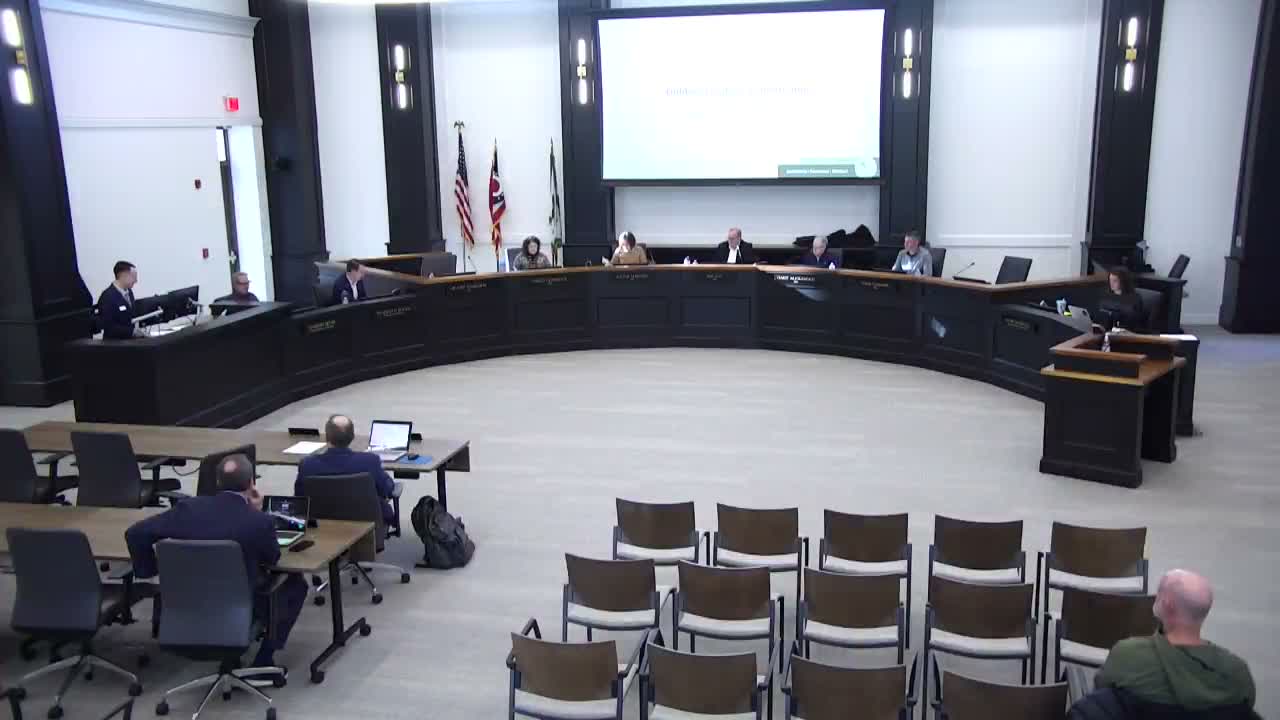
JM Rayburn, a transportation planner with the city of Dublin, gave commissioners an overview of the council-adopted Signature Trail study and how staff expect the corridor to function across diverse parts of the city.
Rayburn said the study—adopted by council Dec. 8, 2025—used more than 13 public events and an online survey that together reached over 500 people to land on a recommended east–west alignment linking Sawmill Road on the east with the planned passenger-rail area on the west. "We engaged over 500 people for input on the Signature Trail study," he said.
The plan divides the route into three typologies: an urban typology for dense, redevelopment areas; a park/nature‑preserve typology for river and wooded sections; and a suburban/new‑development typology intended to inform future site plans. Design standards include a 16‑foot shared‑use path paired with a six‑foot sidewalk, and preferred corridor widths of about 27 feet in natural areas, 33 feet in new development and 35 feet in urban zones. Rayburn said narrower options are available where constraints exist.
Staff described crossings as a primary implementation challenge. The preferred alignment reduces roadway interactions and relies on a mix of at‑grade treatments and grade separations where necessary. Rayburn said elevated or undercrossing structures would be more costly but provide the highest level of safety and create opportunities for placemaking.
On phasing, Rayburn said the study was split into more than 20 segments to allow manageable construction and coordination with other projects, including the John Shields Parkway extension, Metro Center redevelopment and possible passenger‑rail infrastructure. "We broke up the trail into over 20 different segments," he said, and noted that council directed staff to start with an early, visible segment on the west side to generate momentum.
Commission members pressed staff about implementation triggers and short‑term connections if the passenger‑rail station does not proceed. Rayburn said the trail would still be extended westward to tie into the regional Heritage Trail if the station were not realized, and that staff will use existing facilities—such as the Dublin Link pedestrian bridge and other shared paths—while design work proceeds.
Rayburn also said staff will coordinate trail requirements with development reviews so applicants understand how the signature treatment should be reflected in site plans. The full Signature Trail Study is available on the city's Transportation and Mobility strategic studies webpage.
What happens next: staff will carry the adopted alignment and typologies into design and coordinate with applicants, partner agencies and future capital projects to phase delivery.
Rayburn said the study—adopted by council Dec. 8, 2025—used more than 13 public events and an online survey that together reached over 500 people to land on a recommended east–west alignment linking Sawmill Road on the east with the planned passenger-rail area on the west. "We engaged over 500 people for input on the Signature Trail study," he said.
The plan divides the route into three typologies: an urban typology for dense, redevelopment areas; a park/nature‑preserve typology for river and wooded sections; and a suburban/new‑development typology intended to inform future site plans. Design standards include a 16‑foot shared‑use path paired with a six‑foot sidewalk, and preferred corridor widths of about 27 feet in natural areas, 33 feet in new development and 35 feet in urban zones. Rayburn said narrower options are available where constraints exist.
Staff described crossings as a primary implementation challenge. The preferred alignment reduces roadway interactions and relies on a mix of at‑grade treatments and grade separations where necessary. Rayburn said elevated or undercrossing structures would be more costly but provide the highest level of safety and create opportunities for placemaking.
On phasing, Rayburn said the study was split into more than 20 segments to allow manageable construction and coordination with other projects, including the John Shields Parkway extension, Metro Center redevelopment and possible passenger‑rail infrastructure. "We broke up the trail into over 20 different segments," he said, and noted that council directed staff to start with an early, visible segment on the west side to generate momentum.
Commission members pressed staff about implementation triggers and short‑term connections if the passenger‑rail station does not proceed. Rayburn said the trail would still be extended westward to tie into the regional Heritage Trail if the station were not realized, and that staff will use existing facilities—such as the Dublin Link pedestrian bridge and other shared paths—while design work proceeds.
Rayburn also said staff will coordinate trail requirements with development reviews so applicants understand how the signature treatment should be reflected in site plans. The full Signature Trail Study is available on the city's Transportation and Mobility strategic studies webpage.
What happens next: staff will carry the adopted alignment and typologies into design and coordinate with applicants, partner agencies and future capital projects to phase delivery.
View the Full Meeting & All Its Details
This article offers just a summary. Unlock complete video, transcripts, and insights as a Founder Member.
✓
Watch full, unedited meeting videos
✓
Search every word spoken in unlimited transcripts
✓
AI summaries & real-time alerts (all government levels)
✓
Permanent access to expanding government content
30-day money-back guarantee
