Dublin adopts numeric noise threshold and 'pervasive noise' standard; police will use decibel meters
March 12, 2026 | Dublin Planning & Zoning Commission, Dublin, Franklin County, Ohio
This article was created by AI summarizing key points discussed. AI makes mistakes, so for full details and context, please refer to the video of the full meeting. Please report any errors so we can fix them. Report an error »
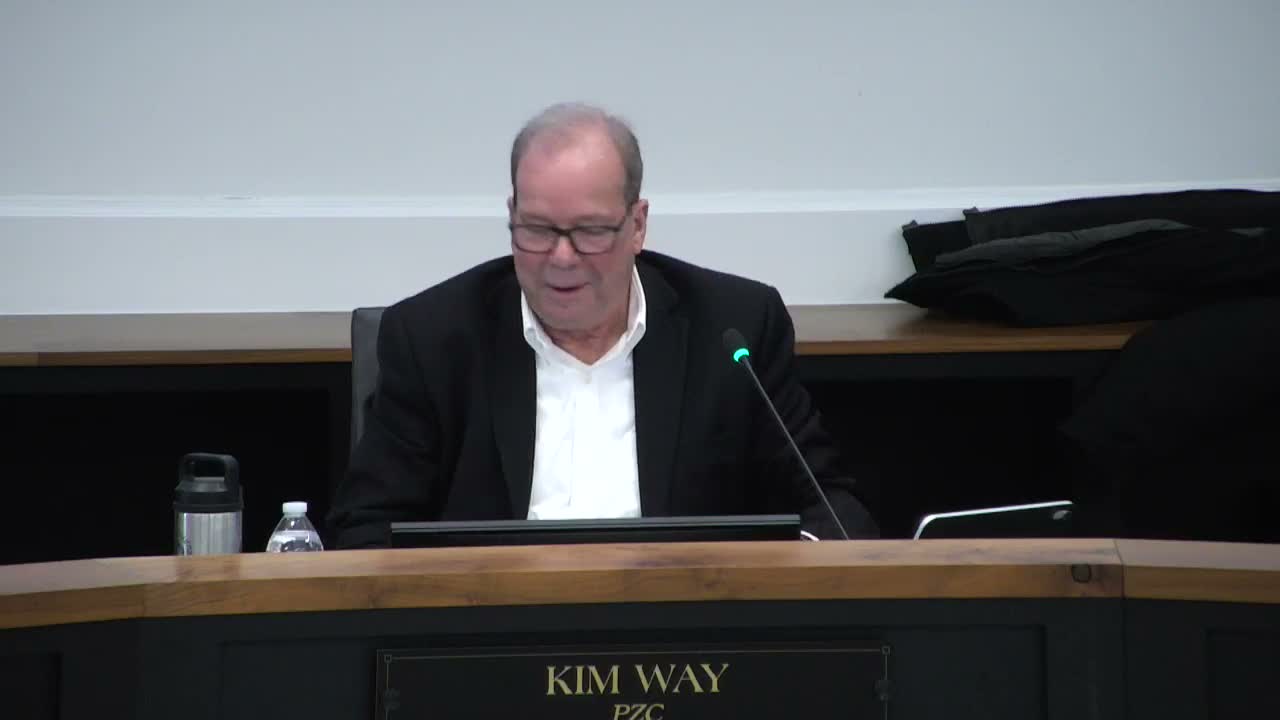
Thad Boggs, a city staff member who led the noise‑code update presentation to the Planning & Zoning Commission, summarized amendments that city council adopted on Feb. 9, 2026 to address vehicle and environmental noise.
Boggs said the revisions create a hybrid enforcement approach: staff added a quantitative option—a threshold set around 80 decibels for certain motor‑vehicle and equipment noises—while keeping a qualitative "reasonableness" standard for complaints that do not reach the numeric threshold. "The quantitative aspect that we ultimately recommended ... provides a second approach," he said.
Boggs said the 80‑decibel benchmark was chosen to target louder, sustained sources such as certain lawn‑care equipment and to give police a clearer tool for enforcement; the Dublin Police Department now has a decibel meter for evaluations. He also described a "pervasive noise" concept intended to capture low‑level but continuous noises—such as hums from HVAC or industrial equipment—that may not spike above the numeric threshold but nonetheless disrupt neighbors.
On enforcement channels, Boggs said calls involving traffic noise or disorderly behavior should go to police (nonemergency line for non‑threatening incidents), while repeated building‑system noise or HVAC concerns are typically routed to code enforcement. Exceptions written into the amendments include construction activities conducted during permitted hours and city‑permitted special events; Boggs explicitly noted the city's own July 4 fireworks are exempt.
Commissioners asked whether numeric thresholds invite legal challenges. Boggs said numeric measures supplement but do not replace the reasonableness standard, and compared the approach to having both a per‑se and an evidentiary offense in other enforcement contexts. He emphasized that some pervasive noises will still require collection of evidence and may rely on complaints from multiple residents.
What happens next: the code amendments are in effect as adopted Feb. 9, 2026; Boggs said there were no enforcement cases under the new rules yet and staff will continue public education about reporting pathways for police versus code enforcement.
Boggs said the revisions create a hybrid enforcement approach: staff added a quantitative option—a threshold set around 80 decibels for certain motor‑vehicle and equipment noises—while keeping a qualitative "reasonableness" standard for complaints that do not reach the numeric threshold. "The quantitative aspect that we ultimately recommended ... provides a second approach," he said.
Boggs said the 80‑decibel benchmark was chosen to target louder, sustained sources such as certain lawn‑care equipment and to give police a clearer tool for enforcement; the Dublin Police Department now has a decibel meter for evaluations. He also described a "pervasive noise" concept intended to capture low‑level but continuous noises—such as hums from HVAC or industrial equipment—that may not spike above the numeric threshold but nonetheless disrupt neighbors.
On enforcement channels, Boggs said calls involving traffic noise or disorderly behavior should go to police (nonemergency line for non‑threatening incidents), while repeated building‑system noise or HVAC concerns are typically routed to code enforcement. Exceptions written into the amendments include construction activities conducted during permitted hours and city‑permitted special events; Boggs explicitly noted the city's own July 4 fireworks are exempt.
Commissioners asked whether numeric thresholds invite legal challenges. Boggs said numeric measures supplement but do not replace the reasonableness standard, and compared the approach to having both a per‑se and an evidentiary offense in other enforcement contexts. He emphasized that some pervasive noises will still require collection of evidence and may rely on complaints from multiple residents.
What happens next: the code amendments are in effect as adopted Feb. 9, 2026; Boggs said there were no enforcement cases under the new rules yet and staff will continue public education about reporting pathways for police versus code enforcement.
View the Full Meeting & All Its Details
This article offers just a summary. Unlock complete video, transcripts, and insights as a Founder Member.
✓
Watch full, unedited meeting videos
✓
Search every word spoken in unlimited transcripts
✓
AI summaries & real-time alerts (all government levels)
✓
Permanent access to expanding government content
30-day money-back guarantee
