Alief ISD retreat: CFO warns of nearly $20M deficit, board briefed on 215 proposed staff reductions and insurance options
February 07, 2026 | ALIEF ISD, School Districts, Texas
This article was created by AI summarizing key points discussed. AI makes mistakes, so for full details and context, please refer to the video of the full meeting. Please report any errors so we can fix them. Report an error »
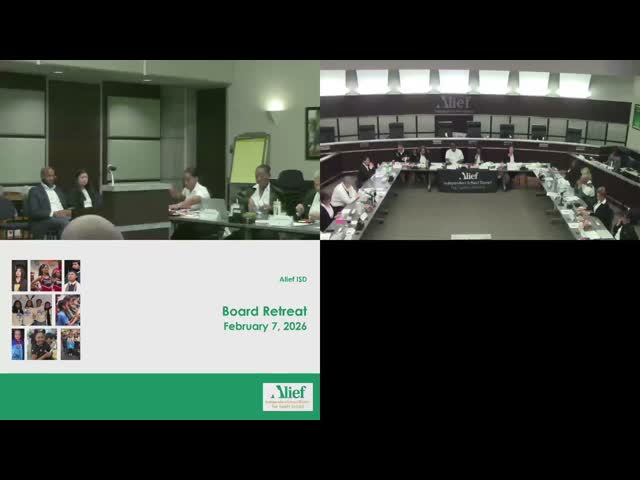
Alief Independent School District officials told trustees at a Feb. 7 special retreat that ongoing enrollment declines and rising costs have put the district on track for multi‑million‑dollar deficits, and staff outlined potential staffing and insurance changes to narrow the gap.
CFO Dr. Emily Littlefield told trustees the district’s enrollment fell from a 36,764 October snapshot to 36,104 as of the previous week and that the decline shows no immediate rebound. "We are expecting a deficit of almost $20,000,000," Littlefield said, attributing the shortfall to lower revenue tied to fewer students and continued growth in expenditures.
Why it matters: Littlefield said the district’s projected fund balance could fall from roughly $174 million to about $137 million within two years, representing about 29 percent of expenditures and covering approximately 105 days of operating costs; by comparison the Texas Education Agency recommends a roughly 75‑day reserve. School leaders said one more year at current projections would bring the balance below recommended levels.
Staff presented a set of measures built into the 2026–27 budget assumptions to close the gap. Slides shown to trustees listed a possible total reduction of 215 staff positions (some grant‑funded and some local) and estimated savings of about $21,700,000 if the full slate of changes were implemented. Littlefield emphasized that the proposals are under review with central leadership and that "nothing has been decided."
Health insurance emerged as a major cost driver. Littlefield said Alief spends about 8 percent of its expenditures on insurance — higher than several peer districts — and that the district has solicited bids and asked consultants to request a quote from TRS ActiveCare. "If you compare ours to TRS Care...it actually is gonna benefit the employees that we have on there because, once we contribute, what we do, then it actually, is a benefit to them," Littlefield said, while also warning that employees with spouse or family plans could see larger premium increases.
Trustees questioned the implications of joining TRS ActiveCare, including recent changes to the opt‑out window. Board members were told that districts that move into TRS ActiveCare typically face a commitment period (discussed in the meeting as about five years) during which exiting is limited, and that some costs (administrative fees, stop‑loss coverage) would shift under different arrangements.
Uncertainty from House Bill 2 and TEA guidance complicated forecasting. Staff said the district has not yet received commissioner’s rules for new special‑education intensity tiers and reporting requirements, so Littlefield’s team is conservatively forecasting special‑education funding as flat for the coming year; the presentation noted a $1,300,000 estimate tied to new evaluation requirements. Hold‑harmless funding assumptions were also uncertain: the budget included $6,500,000 for hold‑harmless but staff cited external estimates ranging from roughly $3,100,000 to $10,500,000.
Staffing changes under consideration include raising general staffing ratios at many campuses while keeping lower ratios for TIP/TAP campuses, exploring itinerant/shared positions (for example, a shared assistant principal or counselor across two nearby elementary campuses), and revisiting nurse and special‑education staffing models. Littlefield said some proposed reductions are based on ratio formulas and that, if implemented as presented, the district would reduce personnel costs by the figures shown on the slides.
Board members asked for more analysis and recommended deeper review before any formal decisions. One trustee suggested forming a committee to analyze insurance and benefit tradeoffs in more detail; staff agreed to provide more multi‑year comparisons and follow up information about the TRS ActiveCare commitment terms.
Next steps: Staff said they will provide additional data, pursue quotes and consultant analysis, and refine long‑range planning and bond program materials. Trustees were invited to submit feedback via a QR code provided at the meeting; staff indicated Charles and Mr. Lewis will present additional long‑range and bond program detail in subsequent sessions.
The board held no votes at the retreat; presenters repeatedly noted that the items shown were proposals and under review, and that formal actions would come later after further analysis and discussion.
CFO Dr. Emily Littlefield told trustees the district’s enrollment fell from a 36,764 October snapshot to 36,104 as of the previous week and that the decline shows no immediate rebound. "We are expecting a deficit of almost $20,000,000," Littlefield said, attributing the shortfall to lower revenue tied to fewer students and continued growth in expenditures.
Why it matters: Littlefield said the district’s projected fund balance could fall from roughly $174 million to about $137 million within two years, representing about 29 percent of expenditures and covering approximately 105 days of operating costs; by comparison the Texas Education Agency recommends a roughly 75‑day reserve. School leaders said one more year at current projections would bring the balance below recommended levels.
Staff presented a set of measures built into the 2026–27 budget assumptions to close the gap. Slides shown to trustees listed a possible total reduction of 215 staff positions (some grant‑funded and some local) and estimated savings of about $21,700,000 if the full slate of changes were implemented. Littlefield emphasized that the proposals are under review with central leadership and that "nothing has been decided."
Health insurance emerged as a major cost driver. Littlefield said Alief spends about 8 percent of its expenditures on insurance — higher than several peer districts — and that the district has solicited bids and asked consultants to request a quote from TRS ActiveCare. "If you compare ours to TRS Care...it actually is gonna benefit the employees that we have on there because, once we contribute, what we do, then it actually, is a benefit to them," Littlefield said, while also warning that employees with spouse or family plans could see larger premium increases.
Trustees questioned the implications of joining TRS ActiveCare, including recent changes to the opt‑out window. Board members were told that districts that move into TRS ActiveCare typically face a commitment period (discussed in the meeting as about five years) during which exiting is limited, and that some costs (administrative fees, stop‑loss coverage) would shift under different arrangements.
Uncertainty from House Bill 2 and TEA guidance complicated forecasting. Staff said the district has not yet received commissioner’s rules for new special‑education intensity tiers and reporting requirements, so Littlefield’s team is conservatively forecasting special‑education funding as flat for the coming year; the presentation noted a $1,300,000 estimate tied to new evaluation requirements. Hold‑harmless funding assumptions were also uncertain: the budget included $6,500,000 for hold‑harmless but staff cited external estimates ranging from roughly $3,100,000 to $10,500,000.
Staffing changes under consideration include raising general staffing ratios at many campuses while keeping lower ratios for TIP/TAP campuses, exploring itinerant/shared positions (for example, a shared assistant principal or counselor across two nearby elementary campuses), and revisiting nurse and special‑education staffing models. Littlefield said some proposed reductions are based on ratio formulas and that, if implemented as presented, the district would reduce personnel costs by the figures shown on the slides.
Board members asked for more analysis and recommended deeper review before any formal decisions. One trustee suggested forming a committee to analyze insurance and benefit tradeoffs in more detail; staff agreed to provide more multi‑year comparisons and follow up information about the TRS ActiveCare commitment terms.
Next steps: Staff said they will provide additional data, pursue quotes and consultant analysis, and refine long‑range planning and bond program materials. Trustees were invited to submit feedback via a QR code provided at the meeting; staff indicated Charles and Mr. Lewis will present additional long‑range and bond program detail in subsequent sessions.
The board held no votes at the retreat; presenters repeatedly noted that the items shown were proposals and under review, and that formal actions would come later after further analysis and discussion.
Don't Miss a Word: See the Full Meeting!
Go beyond summaries. Unlock every video, transcript, and key insight with a Founder Membership.
✓
Get instant access to full meeting videos
✓
Search and clip any phrase from complete transcripts
✓
Receive AI-powered summaries & custom alerts
✓
Enjoy lifetime, unrestricted access to government data
30-day money-back guarantee
