Senate subcommittee hears calls for water‑use transparency and statewide oversight in data‑center siting debate
March 17, 2026 | 2026 Legislative Meetings, South Carolina
This article was created by AI summarizing key points discussed. AI makes mistakes, so for full details and context, please refer to the video of the full meeting. Please report any errors so we can fix them. Report an error »
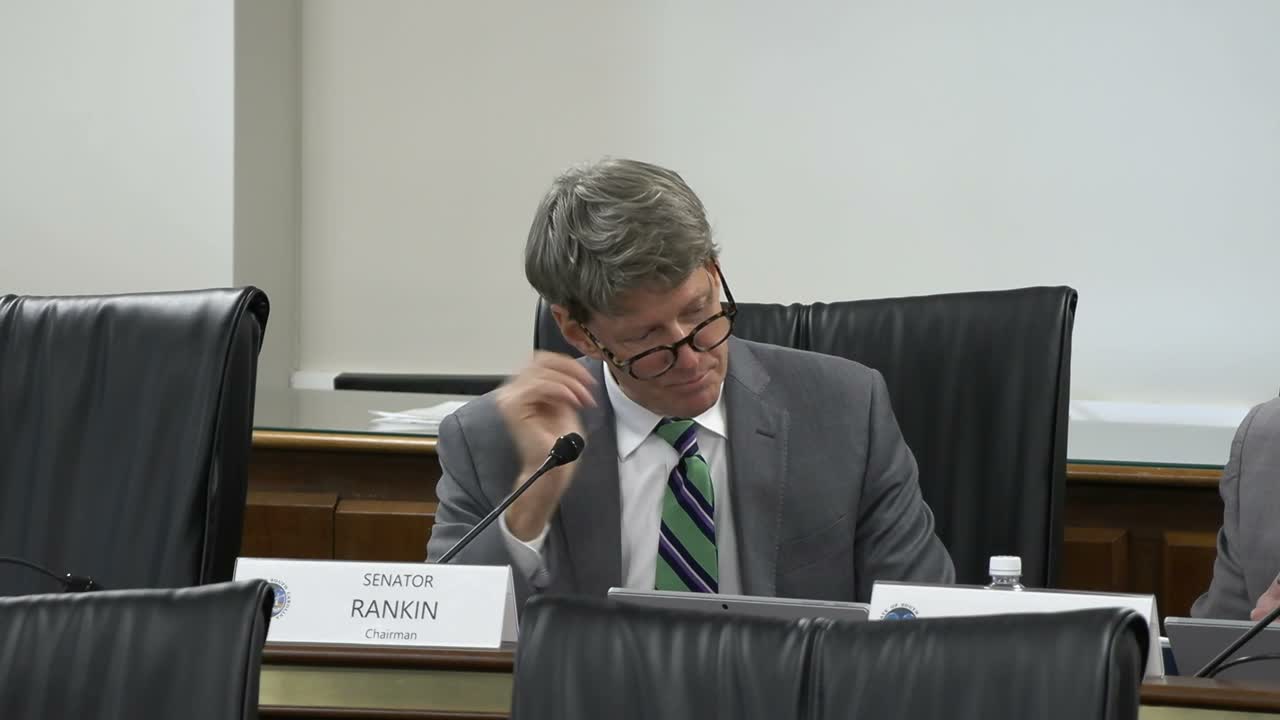
Megan Chase, director of government affairs for the Speedwell Group, told the Senate Judiciary subcommittee that missing, inconsistent information about data‑center water use has fueled fear and misinformation in communities and urged passage of reporting requirements tied to the state water plan. "The absence of clear, transparent, information that's provided willingly and freely to a community creates the conditions for fear and misinformation to spread," Chase said.
The hearing focused on S 902 (the Data Center Citing Act) and related bills, and several witnesses recommended clarifying who should hold siting oversight and what reporting should be required. John Brooker, senior vice president for policy and government relations at Conservation Voters of South Carolina, said S 902 should require reporting of total water withdrawals and source as well as consumptive use, and cautioned against giving the Public Service Commission unchecked authority to override local law. "A single large data center can consume the same amount of power as an entire city," Brooker said, underscoring the scale of impacts the subcommittee is weighing.
Testimony repeatedly distinguished two oversight questions: environmental/resource review (water, ecology) and electric‑system adequacy (generation and transmission). Several conservation witnesses urged that the Department of Environmental Services (DES) — which compiles statewide water‑use data — be involved in measuring and incorporating data‑center withdrawals into river basin plans and the state water plan, pointing out that DES currently classifies evaporative losses as "consumptive" use and identifies a "major water user" threshold in its rules.
Senators pressed witnesses about whether large data operators voluntarily disclose water use. Chase said the models used to build the current state water plan predate the recent boom in data‑center siting and do not reliably account for data‑center cooling needs; she and others recommended adopting reporting standards so DES and river basin councils can incorporate accurate numbers in future planning.
Opponents of vesting sole siting authority in the PSC warned that commissioners are not locally elected, raising concerns about accountability and the commission's expertise on land‑use and ecological impacts. Brooker and others suggested clear, objective standards — e.g., infrastructure adequacy criteria — rather than a broad judgment call about whether a site is "needed." They also recommended that reporting require both consumptive and non‑consumptive withdrawals so impacts on flow, temperature and ecological health can be assessed.
The subcommittee heard agreement across many witnesses that transparency is a foundational step, but differences remained over which agency should make final siting or override determinations. The committee paused further testimony and invited utility and cooperative representatives to discuss how the electric system is planning and protecting ratepayers.
The subcommittee adjourned after receiving testimony and said it would return to the technical details and potential amendments.
The hearing focused on S 902 (the Data Center Citing Act) and related bills, and several witnesses recommended clarifying who should hold siting oversight and what reporting should be required. John Brooker, senior vice president for policy and government relations at Conservation Voters of South Carolina, said S 902 should require reporting of total water withdrawals and source as well as consumptive use, and cautioned against giving the Public Service Commission unchecked authority to override local law. "A single large data center can consume the same amount of power as an entire city," Brooker said, underscoring the scale of impacts the subcommittee is weighing.
Testimony repeatedly distinguished two oversight questions: environmental/resource review (water, ecology) and electric‑system adequacy (generation and transmission). Several conservation witnesses urged that the Department of Environmental Services (DES) — which compiles statewide water‑use data — be involved in measuring and incorporating data‑center withdrawals into river basin plans and the state water plan, pointing out that DES currently classifies evaporative losses as "consumptive" use and identifies a "major water user" threshold in its rules.
Senators pressed witnesses about whether large data operators voluntarily disclose water use. Chase said the models used to build the current state water plan predate the recent boom in data‑center siting and do not reliably account for data‑center cooling needs; she and others recommended adopting reporting standards so DES and river basin councils can incorporate accurate numbers in future planning.
Opponents of vesting sole siting authority in the PSC warned that commissioners are not locally elected, raising concerns about accountability and the commission's expertise on land‑use and ecological impacts. Brooker and others suggested clear, objective standards — e.g., infrastructure adequacy criteria — rather than a broad judgment call about whether a site is "needed." They also recommended that reporting require both consumptive and non‑consumptive withdrawals so impacts on flow, temperature and ecological health can be assessed.
The subcommittee heard agreement across many witnesses that transparency is a foundational step, but differences remained over which agency should make final siting or override determinations. The committee paused further testimony and invited utility and cooperative representatives to discuss how the electric system is planning and protecting ratepayers.
The subcommittee adjourned after receiving testimony and said it would return to the technical details and potential amendments.
View the Full Meeting & All Its Details
This article offers just a summary. Unlock complete video, transcripts, and insights as a Founder Member.
✓
Watch full, unedited meeting videos
✓
Search every word spoken in unlimited transcripts
✓
AI summaries & real-time alerts (all government levels)
✓
Permanent access to expanding government content
30-day money-back guarantee
