Utilities tell subcommittee long‑term contracts, deposits and curtailment protect ratepayers from speculative data‑center costs
March 17, 2026 | 2026 Legislative Meetings, South Carolina
This article was created by AI summarizing key points discussed. AI makes mistakes, so for full details and context, please refer to the video of the full meeting. Please report any errors so we can fix them. Report an error »
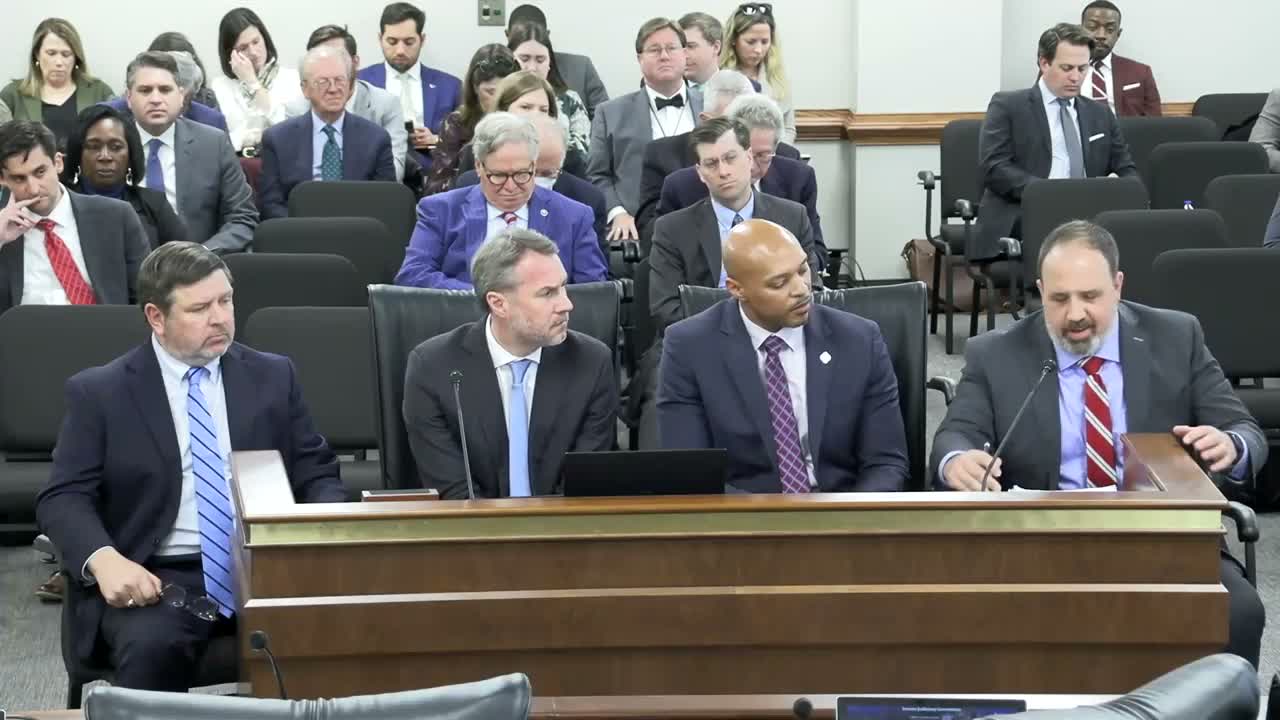
Representatives from Dominion Energy, Duke Energy, Santee Cooper and the Electric Cooperatives explained to the subcommittee how utility practice and tariff tools reduce the risk that data‑center development will shift infrastructure costs to residential and small‑business ratepayers.
Jonathan Yarbrough of Dominion described contractual safeguards Dominion uses for large customers: long‑term service agreements, minimum billing requirements and termination fees. "We require long term contracts... In our case, it was 14 years," Yarbrough said, adding that minimum billing and termination penalties are designed to ensure those customers pay for the proportionate share of transmission and generation upgrades they require.
Duke Energy's Tiger Wells said the company now requires interconnection studies and large upfront deposits to cover transmission upgrade costs (he gave a working range of roughly $20 million to $130 million depending on scope), plus a mandatory 15‑year minimum term and standard 75% take‑or‑pay provisions for very large loads. He also described mandatory curtailment provisions—between 50 and 100 hours per year—to preserve system reliability during shortages.
John Frick of the Electric Cooperatives explained that co‑ops have lower customer density and therefore higher per‑customer infrastructure costs, so large industrial loads can improve system efficiency but pose unique risks; the co‑ops are converting practices into written policy and rate schedules to ensure uniform protections.
Santee Cooper said it has adopted a large‑load tariff (board adoption in April was referenced) and requires upfront security and written service agreements so the utility is not left covering stranded costs. Witnesses told the committee that after implementing these deposit and contract requirements, interconnection queue volumes fell dramatically in some cases — an effect they cited as evidence the rules weed out speculative actors.
Committee members pressed utilities on who ultimately confirms prudency and how system costs are allocated in rate cases; utilities described the typical financing model (roughly 50% debt / 50% equity), construction‑work‑in‑progress financing and the Public Service Commission's role in reviewing prudency and approving rates.
Witnesses recommended technical amendments and coordination between DES and the PSC for issues that cross environmental and electric‑system boundaries; the subcommittee said it will review those details in follow‑up work.
Jonathan Yarbrough of Dominion described contractual safeguards Dominion uses for large customers: long‑term service agreements, minimum billing requirements and termination fees. "We require long term contracts... In our case, it was 14 years," Yarbrough said, adding that minimum billing and termination penalties are designed to ensure those customers pay for the proportionate share of transmission and generation upgrades they require.
Duke Energy's Tiger Wells said the company now requires interconnection studies and large upfront deposits to cover transmission upgrade costs (he gave a working range of roughly $20 million to $130 million depending on scope), plus a mandatory 15‑year minimum term and standard 75% take‑or‑pay provisions for very large loads. He also described mandatory curtailment provisions—between 50 and 100 hours per year—to preserve system reliability during shortages.
John Frick of the Electric Cooperatives explained that co‑ops have lower customer density and therefore higher per‑customer infrastructure costs, so large industrial loads can improve system efficiency but pose unique risks; the co‑ops are converting practices into written policy and rate schedules to ensure uniform protections.
Santee Cooper said it has adopted a large‑load tariff (board adoption in April was referenced) and requires upfront security and written service agreements so the utility is not left covering stranded costs. Witnesses told the committee that after implementing these deposit and contract requirements, interconnection queue volumes fell dramatically in some cases — an effect they cited as evidence the rules weed out speculative actors.
Committee members pressed utilities on who ultimately confirms prudency and how system costs are allocated in rate cases; utilities described the typical financing model (roughly 50% debt / 50% equity), construction‑work‑in‑progress financing and the Public Service Commission's role in reviewing prudency and approving rates.
Witnesses recommended technical amendments and coordination between DES and the PSC for issues that cross environmental and electric‑system boundaries; the subcommittee said it will review those details in follow‑up work.
View the Full Meeting & All Its Details
This article offers just a summary. Unlock complete video, transcripts, and insights as a Founder Member.
✓
Watch full, unedited meeting videos
✓
Search every word spoken in unlimited transcripts
✓
AI summaries & real-time alerts (all government levels)
✓
Permanent access to expanding government content
30-day money-back guarantee
