Senate approves second reading of bill raising penalties for interfering with critical services during emergencies
March 17, 2026 | 2026 Legislative Meetings, South Carolina
This article was created by AI summarizing key points discussed. AI makes mistakes, so for full details and context, please refer to the video of the full meeting. Please report any errors so we can fix them. Report an error »
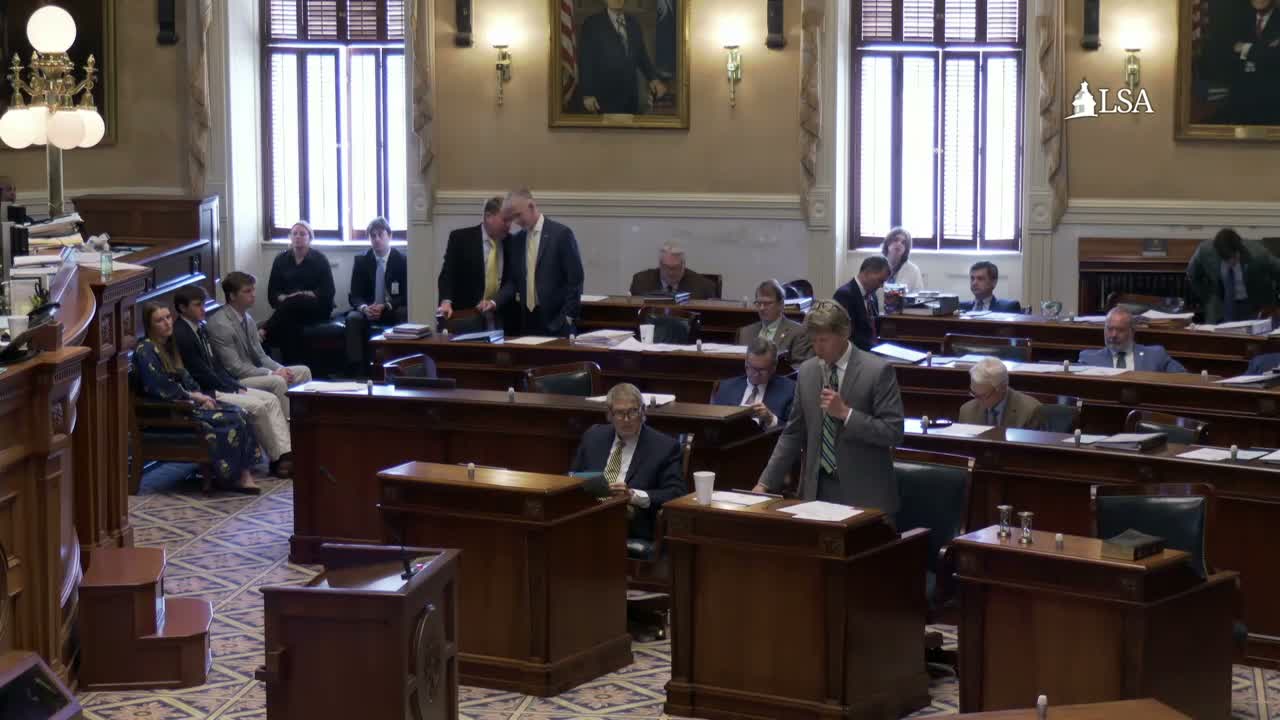
Senate Bill 808, as amended by the Judiciary Committee, would make it a misdemeanor to willfully interfere with workers providing critical services during a state of emergency and would allow felony charges for willful destruction or tampering with certain systems.
Senator Rankin, explaining the bill, said the measure elevates protections for workers who restore electrical, gas, water, sewer, telephone and satellite internet service during emergencies. “If there was a destruction or tampering with an electrical system, that would be classified as a felony punishable, in the discretion of the court,” he told colleagues.
Senators questioned whether the bill created any gap with current statutes and whether it was intended to cover on‑property harassment of line crews versus broader protests. Senator Sutton asked whether the bill fills a statutory gap or merely elevates existing protections; Rankin said it elevates protections for critical services and reiterated the statute’s focus on workers performing restoration work.
After objection was heard and a roll call ordered, the clerk recorded a second‑reading vote of 27–10 in favor of moving S 808 forward; the transcript does not contain the final third-reading or enactment vote.
Sponsors said the bill protects essential workers during emergency restoration operations; critics cautioned about overbroad application and said the statute should narrowly target conduct that endangers workers rather than ordinary complaints.
The bill advanced on second reading; senators flagged scope and enforcement questions for later consideration.
Senator Rankin, explaining the bill, said the measure elevates protections for workers who restore electrical, gas, water, sewer, telephone and satellite internet service during emergencies. “If there was a destruction or tampering with an electrical system, that would be classified as a felony punishable, in the discretion of the court,” he told colleagues.
Senators questioned whether the bill created any gap with current statutes and whether it was intended to cover on‑property harassment of line crews versus broader protests. Senator Sutton asked whether the bill fills a statutory gap or merely elevates existing protections; Rankin said it elevates protections for critical services and reiterated the statute’s focus on workers performing restoration work.
After objection was heard and a roll call ordered, the clerk recorded a second‑reading vote of 27–10 in favor of moving S 808 forward; the transcript does not contain the final third-reading or enactment vote.
Sponsors said the bill protects essential workers during emergency restoration operations; critics cautioned about overbroad application and said the statute should narrowly target conduct that endangers workers rather than ordinary complaints.
The bill advanced on second reading; senators flagged scope and enforcement questions for later consideration.
Don't Miss a Word: See the Full Meeting!
Go beyond summaries. Unlock every video, transcript, and key insight with a Founder Membership.
✓
Get instant access to full meeting videos
✓
Search and clip any phrase from complete transcripts
✓
Receive AI-powered summaries & custom alerts
✓
Enjoy lifetime, unrestricted access to government data
30-day money-back guarantee
