Maine House approves amendment directing PUC to consider electricity affordability
March 17, 2026 | 2026 Legislature ME, Maine
This article was created by AI summarizing key points discussed. AI makes mistakes, so for full details and context, please refer to the video of the full meeting. Please report any errors so we can fix them. Report an error »
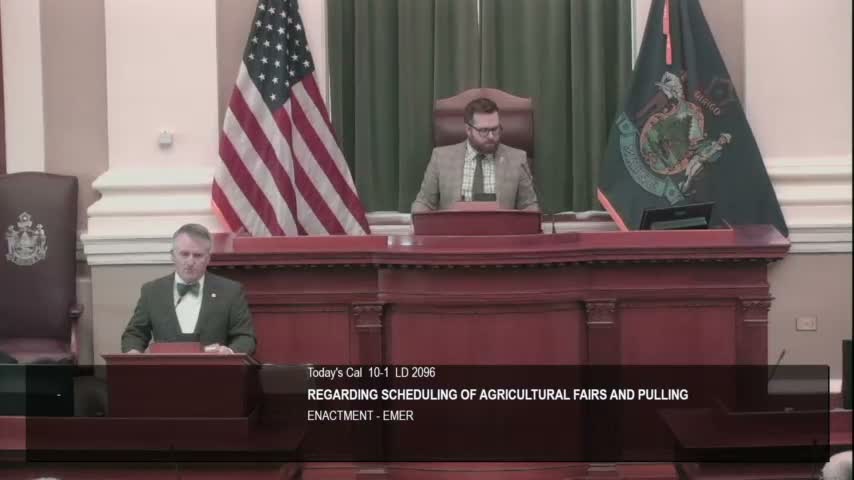
The Maine House on March 17 approved an amendment requiring the Public Utilities Commission to consider affordability for residential customers when exercising its regulatory duties and to develop an affordability metric to guide decisions.
Proponents said the change bolsters transparency and accountability in electricity policymaking. “This bill focuses on three simple principles: affordability, transparency, and accountability,” said a representative supporting the measure, arguing the metric will let policymakers measure and manage household impacts.
Opponents said the commission already weighs reliability and safety and warned the new requirement could duplicate existing work. Several members blamed a mix of factors for higher bills, with some pointing to the region’s dependence on natural gas and storm recovery and distribution costs; others attributed rising costs to past state energy policies and subsidies for certain renewables.
The debate included repeated calls for clearer, data‑driven decisions. Supporters said published credit and collection data and a delivery‑side review of rate design will help contain costs and reduce volatility. Critics said the legislation risks politicizing technical PUC functions and questioned whether the proposed affordability definition can be fairly applied across districts.
After extended debate, the House approved the amendment by recorded vote, with the chair announcing the tally in favor. The measure will be sent to the Senate for concurrence as the Legislature continues work on related energy items.
Proponents said the change bolsters transparency and accountability in electricity policymaking. “This bill focuses on three simple principles: affordability, transparency, and accountability,” said a representative supporting the measure, arguing the metric will let policymakers measure and manage household impacts.
Opponents said the commission already weighs reliability and safety and warned the new requirement could duplicate existing work. Several members blamed a mix of factors for higher bills, with some pointing to the region’s dependence on natural gas and storm recovery and distribution costs; others attributed rising costs to past state energy policies and subsidies for certain renewables.
The debate included repeated calls for clearer, data‑driven decisions. Supporters said published credit and collection data and a delivery‑side review of rate design will help contain costs and reduce volatility. Critics said the legislation risks politicizing technical PUC functions and questioned whether the proposed affordability definition can be fairly applied across districts.
After extended debate, the House approved the amendment by recorded vote, with the chair announcing the tally in favor. The measure will be sent to the Senate for concurrence as the Legislature continues work on related energy items.
View the Full Meeting & All Its Details
This article offers just a summary. Unlock complete video, transcripts, and insights as a Founder Member.
✓
Watch full, unedited meeting videos
✓
Search every word spoken in unlimited transcripts
✓
AI summaries & real-time alerts (all government levels)
✓
Permanent access to expanding government content
30-day money-back guarantee
