Ag Day on the Hill: FFA and 4‑H leaders and Tennessee farmers highlight youth programs, forestry and local processing
March 12, 2026 | 2026 Legislature TN, Tennessee
This article was created by AI summarizing key points discussed. AI makes mistakes, so for full details and context, please refer to the video of the full meeting. Please report any errors so we can fix them. Report an error »
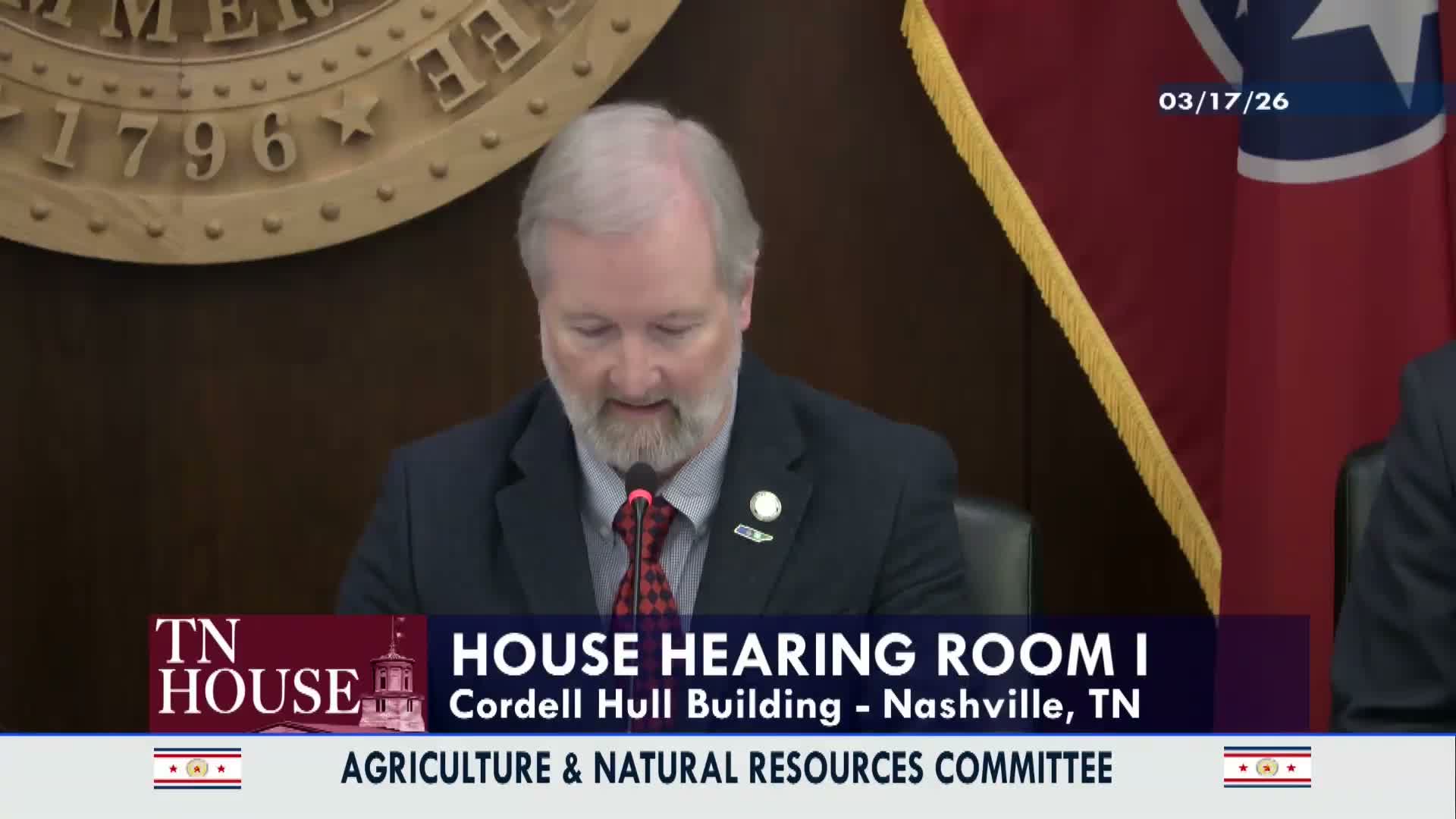
T. Wayne Williams, vice president of the National FFA Southern Region, told the House Agriculture and Natural Resources Committee on March 17 that the experience of serving as a national officer underscores the importance of supporting agricultural education and future leaders. "Many are the plans in a person's heart, but the purpose will stand," Williams said, urging lawmakers to "focus on the big picture of Tennessee agriculture."
Tracy Middleton, who identified herself as owner of Middleton Lumber Company and Mill Creek Land and Cattle, described forestry as a "long term crop" and said forestry contributes "$29,100,000,000 into the state's economy each year," arguing that policies should recognize the industry's long planning horizons and generational stewardship.
Alex Snodgrass, state 4‑H president, thanked the general assembly for what he described as a "historic investment" in 4‑H and cited the funding amount: "the largest in 4 H history, dollars 45,250,000.00," saying the appropriation will expand outreach for more than 151,000 Tennessee 4‑H members.
Matthew McClanahan of the Tennessee Association of Conservation Districts presented Representative Rusty Grylls with a distinguished service award and highlighted the work of 95 local soil and water conservation district boards that support federal and state programs.
Carl Schultz, a farmer and owner of Tennemo Rice Company in Dyer County, described starting a rice mill after receiving a Tennessee Department of Agriculture farm grant; he said the business is milling and packaging rice for internet sales (site noted in the record as "tinnymorice.com") and framed local processing as a diversification strategy that improves supply‑chain resilience.
Speakers repeatedly linked Ag Day displays and youth programs to long‑term workforce and community benefits. Committee members and presenters thanked volunteers and staff who organized Ag Day; Representative Grills singled out Shelby Benoy for her role coordinating the event. The committee recessed regular calendar business to hear the presentations and then returned and adjourned without additional votes on the presentations.
Next steps: presentations were ceremonial and informational; any policy follow‑up (budget or statutory changes) would proceed through the committee review process.
Tracy Middleton, who identified herself as owner of Middleton Lumber Company and Mill Creek Land and Cattle, described forestry as a "long term crop" and said forestry contributes "$29,100,000,000 into the state's economy each year," arguing that policies should recognize the industry's long planning horizons and generational stewardship.
Alex Snodgrass, state 4‑H president, thanked the general assembly for what he described as a "historic investment" in 4‑H and cited the funding amount: "the largest in 4 H history, dollars 45,250,000.00," saying the appropriation will expand outreach for more than 151,000 Tennessee 4‑H members.
Matthew McClanahan of the Tennessee Association of Conservation Districts presented Representative Rusty Grylls with a distinguished service award and highlighted the work of 95 local soil and water conservation district boards that support federal and state programs.
Carl Schultz, a farmer and owner of Tennemo Rice Company in Dyer County, described starting a rice mill after receiving a Tennessee Department of Agriculture farm grant; he said the business is milling and packaging rice for internet sales (site noted in the record as "tinnymorice.com") and framed local processing as a diversification strategy that improves supply‑chain resilience.
Speakers repeatedly linked Ag Day displays and youth programs to long‑term workforce and community benefits. Committee members and presenters thanked volunteers and staff who organized Ag Day; Representative Grills singled out Shelby Benoy for her role coordinating the event. The committee recessed regular calendar business to hear the presentations and then returned and adjourned without additional votes on the presentations.
Next steps: presentations were ceremonial and informational; any policy follow‑up (budget or statutory changes) would proceed through the committee review process.
View the Full Meeting & All Its Details
This article offers just a summary. Unlock complete video, transcripts, and insights as a Founder Member.
✓
Watch full, unedited meeting videos
✓
Search every word spoken in unlimited transcripts
✓
AI summaries & real-time alerts (all government levels)
✓
Permanent access to expanding government content
30-day money-back guarantee
