Laredo residents press council for independent studies and transparency on proposed border wall and buoy system
March 16, 2026 | Laredo, Webb County, Texas
This article was created by AI summarizing key points discussed. AI makes mistakes, so for full details and context, please refer to the video of the full meeting. Please report any errors so we can fix them. Report an error »
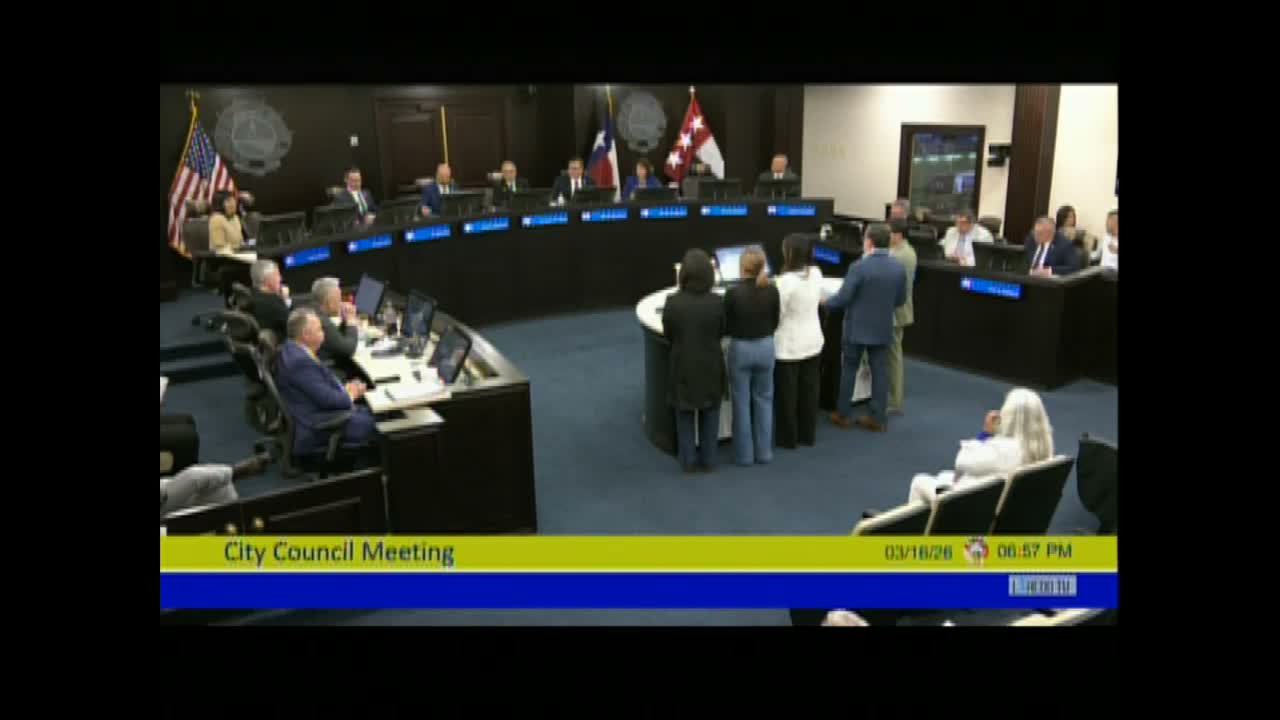
LAREDO, Texas — Dozens of residents, veterans and local experts used the City Council's public-comment period on March 16 to urge the city to demand full engineering plans and independent flood-risk and environmental reviews before allowing any section of the federal border wall or a buoy barrier to be installed in the Rio Grande.
The comments followed briefing materials and a privately commissioned analysis (the Tompkins report) that several speakers cited as forecasting significant increases in flood pressure and debris capture if buoys are installed. "If any of our bridges are destroyed or even if they are just damaged and have to be closed for prolonged repair, this can have serious consequences for our local economy," said Adrian Tristan, a District 5 resident (public comment), adding: "The decisions that you all make today will certainly impact and determine who lives and who dies."
The public outcry covered several themes: flood risk and debris accumulation, threats to municipal drinking-water intakes, microplastic contamination from buoy deterioration, impacts on low-income riverfront neighborhoods and the economic consequences if international bridges were damaged. "The proposed buoy system would have struck as much as 8% of the river's conveyance area," said Adrian Zapata, citing the Tompkins analysis and warning that trapped debris could increase pressure on bridge piers.
Council action and next steps
Earlier in the meeting council members debated whether to go into an executive session with outside counsel to discuss litigation risks related to the wall and buoys. After concerns about fairness to public speakers, the council amended the motion and voted to hear public comment before the executive deliberation. The mayor said staff will continue coordinating with federal and regional partners, and council indicated it will seek data from the U.S. Army Corps of Engineers and its outside counsel (Jackson Walker) before making decisions.
The mayor framed the city's stance as requiring transparency: "For Laredo, the Rio Grande is not just a border. It's our primary source of drinking water. Any project that altered the river must be carefully studied to ensure it does not jeopardize our water supply," he said.
Who spoke
Speakers included scientists, neighborhood leaders and representatives of civic groups. Several speakers called for an independent peer review and for the city to withhold approval until it has full plans and independent technical analysis. The Laredo Immigrant Alliance and other community organizations urged the city to prioritize local needs and question federal spending priorities.
What the city asked for
Council members asked staff to assemble technical data and engineering schematics as they become available, consider hiring independent reviewers and broaden the Riverfront Advisory Committee's scope to evaluate potential impacts to neighborhoods, bridges and water systems.
The council did not adopt a policy prohibiting the project; instead members voted to gather more information and to hear legal advice in executive session following public comment. The council directed staff to report back with any available federal plans, relevant engineering data and options for independent review.
Provenance: topicintro SEG 1424, topfinish SEG 2560
The comments followed briefing materials and a privately commissioned analysis (the Tompkins report) that several speakers cited as forecasting significant increases in flood pressure and debris capture if buoys are installed. "If any of our bridges are destroyed or even if they are just damaged and have to be closed for prolonged repair, this can have serious consequences for our local economy," said Adrian Tristan, a District 5 resident (public comment), adding: "The decisions that you all make today will certainly impact and determine who lives and who dies."
The public outcry covered several themes: flood risk and debris accumulation, threats to municipal drinking-water intakes, microplastic contamination from buoy deterioration, impacts on low-income riverfront neighborhoods and the economic consequences if international bridges were damaged. "The proposed buoy system would have struck as much as 8% of the river's conveyance area," said Adrian Zapata, citing the Tompkins analysis and warning that trapped debris could increase pressure on bridge piers.
Council action and next steps
Earlier in the meeting council members debated whether to go into an executive session with outside counsel to discuss litigation risks related to the wall and buoys. After concerns about fairness to public speakers, the council amended the motion and voted to hear public comment before the executive deliberation. The mayor said staff will continue coordinating with federal and regional partners, and council indicated it will seek data from the U.S. Army Corps of Engineers and its outside counsel (Jackson Walker) before making decisions.
The mayor framed the city's stance as requiring transparency: "For Laredo, the Rio Grande is not just a border. It's our primary source of drinking water. Any project that altered the river must be carefully studied to ensure it does not jeopardize our water supply," he said.
Who spoke
Speakers included scientists, neighborhood leaders and representatives of civic groups. Several speakers called for an independent peer review and for the city to withhold approval until it has full plans and independent technical analysis. The Laredo Immigrant Alliance and other community organizations urged the city to prioritize local needs and question federal spending priorities.
What the city asked for
Council members asked staff to assemble technical data and engineering schematics as they become available, consider hiring independent reviewers and broaden the Riverfront Advisory Committee's scope to evaluate potential impacts to neighborhoods, bridges and water systems.
The council did not adopt a policy prohibiting the project; instead members voted to gather more information and to hear legal advice in executive session following public comment. The council directed staff to report back with any available federal plans, relevant engineering data and options for independent review.
Provenance: topicintro SEG 1424, topfinish SEG 2560
Don't Miss a Word: See the Full Meeting!
Go beyond summaries. Unlock every video, transcript, and key insight with a Founder Membership.
✓
Get instant access to full meeting videos
✓
Search and clip any phrase from complete transcripts
✓
Receive AI-powered summaries & custom alerts
✓
Enjoy lifetime, unrestricted access to government data
30-day money-back guarantee
