Senate clarifies taxation of oil and gas production; bill to reinforce gross production tax passes after debate
March 17, 2026 | 2026 Legislature OK, Oklahoma
This article was created by AI summarizing key points discussed. AI makes mistakes, so for full details and context, please refer to the video of the full meeting. Please report any errors so we can fix them. Report an error »
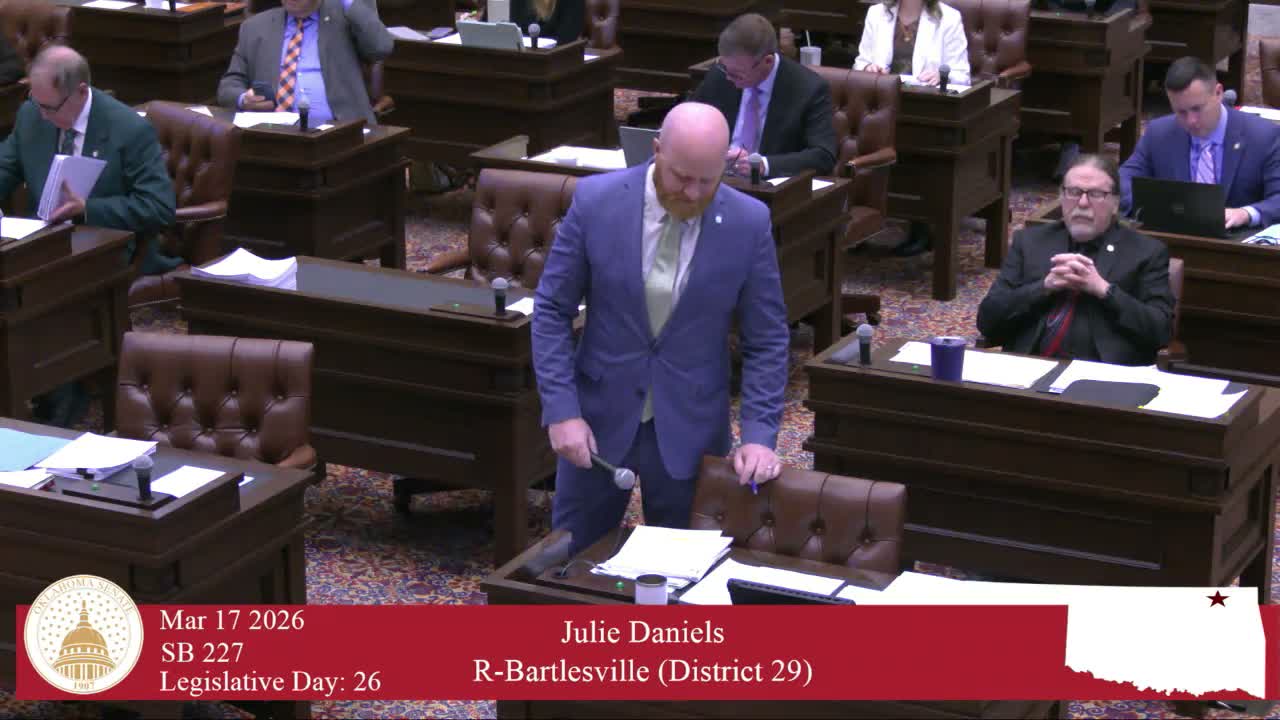
The Oklahoma Senate on Wednesday approved SB 2-27 on third reading after an extended floor debate about whether items associated with oil and gas wells should be taxed under the state gross production tax (GPT) rather than local ad valorem taxation.
Senator Daniels, the bill’s author, told colleagues the measure clarifies statutory exemptions and aims to prevent local assessors from applying ad valorem to “means of production” such as flow lines and gathering lines that the industry views as GPT-taxable. “We’re trying to make sure that we have consistency across the state,” Daniels said during floor remarks, explaining the bill does not create a new tax but clarifies which property is taxed under which statute.
Opponents said the change could reduce local property tax receipts. Senator Boren warned the bill removes a tool counties and school districts use to capture local revenue tied to equipment and other on-site property. “We have a bill here that the industry really, really likes,” Boren said, adding that local communities could lose a lever to moderate industry behavior.
Senator Peterson pressed the author for fiscal details on how GPT revenue is apportioned and whether local schools would lose sinking-fund revenue; Daniels answered that GPT apportionment does not generally flow directly back to counties and that the bill’s immediate purpose is statutory clarity rather than restructuring tax policy.
Several senators, including Senator Goodwin, said the fiscal impact remains under review and urged a broader, systematic review of ad valorem versus GPT across classes of production. Daniels said the fiscal estimate some members cited relates to a different bill and that the current language is narrowly targeted.
After debate the roll-call tally showed 37 ayes and 9 nays; the presiding officer declared SB 2-27 passed and advanced. The author requested and received unanimous consent to treat the vote as the emergency vote, per the Senate’s practice.
What happens next: With passage on third reading in the Senate, the measure moves to the other chamber for concurrence on any differences. The vote was legislative, not administrative; no additional procedural steps were recorded on the floor.
Senator Daniels, the bill’s author, told colleagues the measure clarifies statutory exemptions and aims to prevent local assessors from applying ad valorem to “means of production” such as flow lines and gathering lines that the industry views as GPT-taxable. “We’re trying to make sure that we have consistency across the state,” Daniels said during floor remarks, explaining the bill does not create a new tax but clarifies which property is taxed under which statute.
Opponents said the change could reduce local property tax receipts. Senator Boren warned the bill removes a tool counties and school districts use to capture local revenue tied to equipment and other on-site property. “We have a bill here that the industry really, really likes,” Boren said, adding that local communities could lose a lever to moderate industry behavior.
Senator Peterson pressed the author for fiscal details on how GPT revenue is apportioned and whether local schools would lose sinking-fund revenue; Daniels answered that GPT apportionment does not generally flow directly back to counties and that the bill’s immediate purpose is statutory clarity rather than restructuring tax policy.
Several senators, including Senator Goodwin, said the fiscal impact remains under review and urged a broader, systematic review of ad valorem versus GPT across classes of production. Daniels said the fiscal estimate some members cited relates to a different bill and that the current language is narrowly targeted.
After debate the roll-call tally showed 37 ayes and 9 nays; the presiding officer declared SB 2-27 passed and advanced. The author requested and received unanimous consent to treat the vote as the emergency vote, per the Senate’s practice.
What happens next: With passage on third reading in the Senate, the measure moves to the other chamber for concurrence on any differences. The vote was legislative, not administrative; no additional procedural steps were recorded on the floor.
View the Full Meeting & All Its Details
This article offers just a summary. Unlock complete video, transcripts, and insights as a Founder Member.
✓
Watch full, unedited meeting videos
✓
Search every word spoken in unlimited transcripts
✓
AI summaries & real-time alerts (all government levels)
✓
Permanent access to expanding government content
30-day money-back guarantee
