Senate passes a cluster of bills on education, transparency, public safety and administrative reforms
March 17, 2026 | 2026 Legislature OK, Oklahoma
This article was created by AI summarizing key points discussed. AI makes mistakes, so for full details and context, please refer to the video of the full meeting. Please report any errors so we can fix them. Report an error »
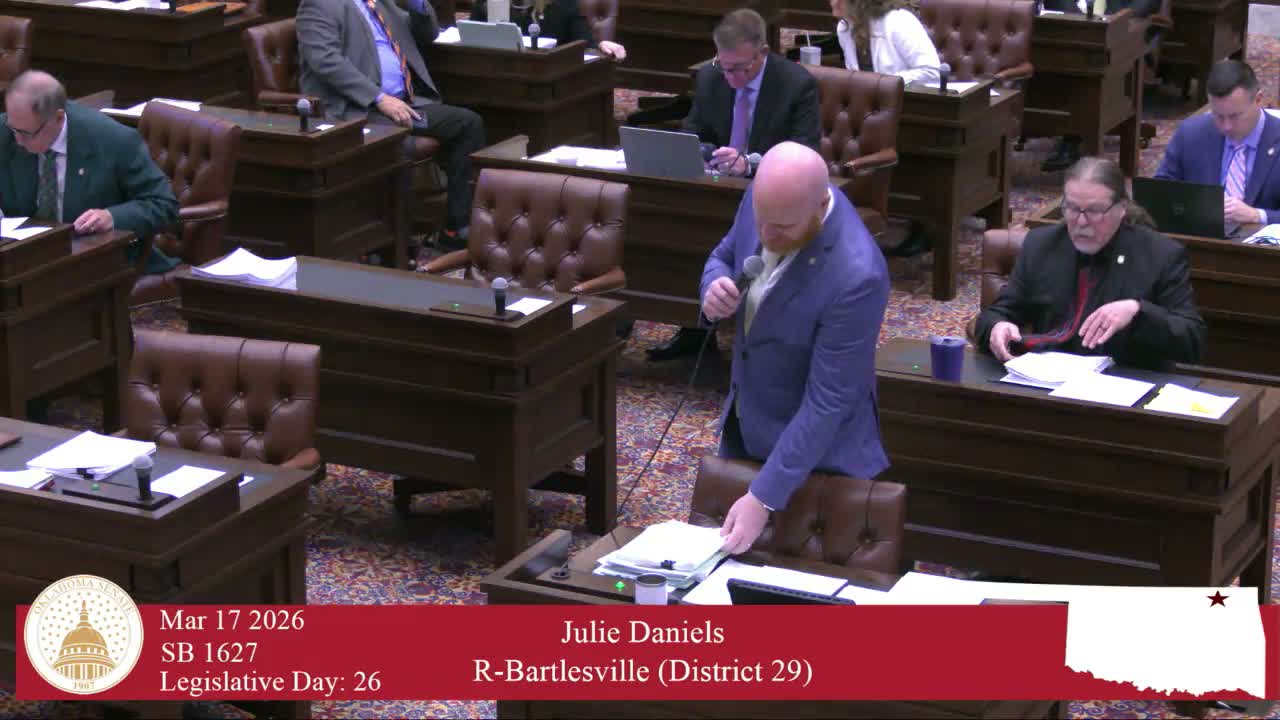
The Oklahoma Senate’s floor session on March 18 produced a steady stream of third-reading actions. Lawmakers advanced and passed multiple bills that affect education, administrative transparency, public safety and agency processes.
Key outcomes included:
- SB 16-27 (criminal code cleanup): advanced and declared passed (45-0); advanced as an emergency measure.
- SB 2-27 (tax clarification for oil and gas means of production): passed 37-9 after extended floor debate about local revenue impacts.
- SB 366 (charter schools: first right of refusal): passed 40-6 and advanced as an emergency measure.
- SB 11-93 (remove general-fund carryover caps for school districts): passed 46-0 and advanced as an emergency measure.
- SB 14-33 (guidance transparency act): passed 37-7; requires agencies to post guidance documents in a searchable database and excludes privileged materials.
- SB 18-10 (expert testimony in human trafficking cases): passed 45-0.
- SB 18-12 (benchmark testing access for parents): passed 46-0.
- SB 19-21 (OSBI fee increases for background checks): passed 39-7.
- SB 19-48 (fireworks law updates): passed 39-5 after questions about safety and preemption; author said the measure is intended to allow consumer displays on private property while preserving burn-ban exceptions.
- SB 12-66 (increase penalty for fraudulent immigration assistance, "anti-notario"): passed 45-0.
Several other bills (broadly listed on the agenda) were advanced or passed by recorded vote; leadership also moved and the Senate approved a short adjournment to March 23, 2026.
Why it matters: The cluster of votes streamlines statutory language, clarifies administrative practice, alters education finance rules and updates a range of regulatory and public-safety provisions. Several measures were advanced as emergency measures, accelerating their potential effect if the other chamber concurs.
What to watch next: Bills that passed the Senate will move to the House for consideration; stakeholders in education, county government and the oil-and-gas sector may seek further clarification or amendments in the other chamber.
Key outcomes included:
- SB 16-27 (criminal code cleanup): advanced and declared passed (45-0); advanced as an emergency measure.
- SB 2-27 (tax clarification for oil and gas means of production): passed 37-9 after extended floor debate about local revenue impacts.
- SB 366 (charter schools: first right of refusal): passed 40-6 and advanced as an emergency measure.
- SB 11-93 (remove general-fund carryover caps for school districts): passed 46-0 and advanced as an emergency measure.
- SB 14-33 (guidance transparency act): passed 37-7; requires agencies to post guidance documents in a searchable database and excludes privileged materials.
- SB 18-10 (expert testimony in human trafficking cases): passed 45-0.
- SB 18-12 (benchmark testing access for parents): passed 46-0.
- SB 19-21 (OSBI fee increases for background checks): passed 39-7.
- SB 19-48 (fireworks law updates): passed 39-5 after questions about safety and preemption; author said the measure is intended to allow consumer displays on private property while preserving burn-ban exceptions.
- SB 12-66 (increase penalty for fraudulent immigration assistance, "anti-notario"): passed 45-0.
Several other bills (broadly listed on the agenda) were advanced or passed by recorded vote; leadership also moved and the Senate approved a short adjournment to March 23, 2026.
Why it matters: The cluster of votes streamlines statutory language, clarifies administrative practice, alters education finance rules and updates a range of regulatory and public-safety provisions. Several measures were advanced as emergency measures, accelerating their potential effect if the other chamber concurs.
What to watch next: Bills that passed the Senate will move to the House for consideration; stakeholders in education, county government and the oil-and-gas sector may seek further clarification or amendments in the other chamber.
View the Full Meeting & All Its Details
This article offers just a summary. Unlock complete video, transcripts, and insights as a Founder Member.
✓
Watch full, unedited meeting videos
✓
Search every word spoken in unlimited transcripts
✓
AI summaries & real-time alerts (all government levels)
✓
Permanent access to expanding government content
30-day money-back guarantee
