Committee advances industrialized‑housing incentive bill, approves grants‑only approach
March 17, 2026 | 2026 Legislature ME, Maine
This article was created by AI summarizing key points discussed. AI makes mistakes, so for full details and context, please refer to the video of the full meeting. Please report any errors so we can fix them. Report an error »
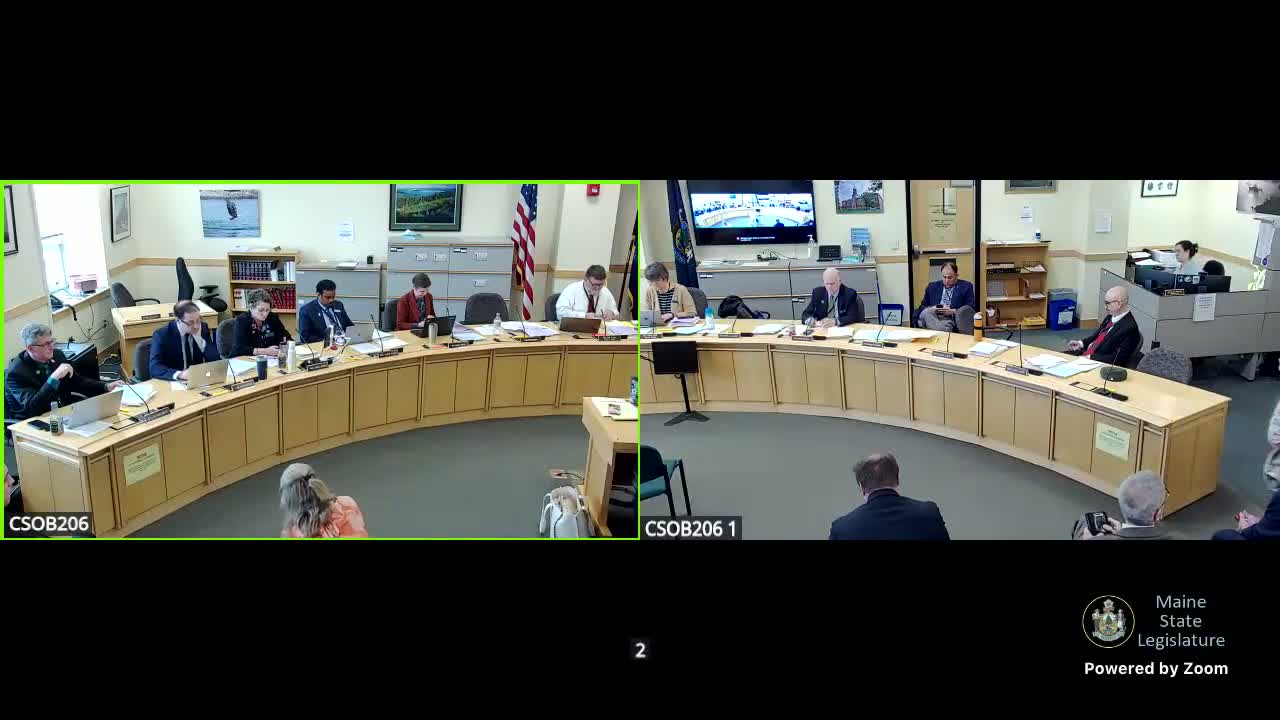
The Committee on Housing and Economic Development moved LD 2230 forward after adopting an amendment package that removes loans from the industrialized housing incentive program and establishes grant tiers tied to unit affordability and energy performance.
Analyst Lynn Westfall described the change at the outset: the industrialized housing incentive program remains under the Department of Economic and Community Development and would provide grants (not loans) in specific amounts depending on unit type and energy features. Westfall also noted a construction extension partnership provision and recommended including building‑trades representation on program advisory groups.
Representative Amanda Collomore and others urged careful consideration of grant vs. revolving‑loan approaches. "I really just wish we'd stop using more of Maine taxpayer dollars to pay for grants," Collomore said, arguing revolving funds can stretch public dollars. Senator Rick Bennett said he would support the amended bill to send it to Appropriations, calling it a partial but necessary measure to leverage private sector capacity and stimulate factory‑built housing.
Representative Mark Mallon moved the committee report 'ought to pass as amended.' The clerk called the roll: Representative Mingo (nay); Mark Mallon (yea); Cheryl Golic (yea); Youssef Fusef (yea); Senator Donna Bailey (yea); Senator Rick Bennett (yea); Senator Chip Curry (yea); Representative Tracy Geer (yea); Representative Amanda Collomore (nay); Representative Walker (nay); Representative Luckner (yea); Representative John Eder (nay). The motion passed 8–4.
Committee members asked that the bill be transmitted to the Appropriations Committee for fiscal review and possible bond planning; supporters and skeptics both said the bill is an incomplete but useful step toward expanding affordable housing supply through industrialized construction.
The committee closed the work session on LD 2230 and advanced the measure for further executive branch and fiscal consideration.
Analyst Lynn Westfall described the change at the outset: the industrialized housing incentive program remains under the Department of Economic and Community Development and would provide grants (not loans) in specific amounts depending on unit type and energy features. Westfall also noted a construction extension partnership provision and recommended including building‑trades representation on program advisory groups.
Representative Amanda Collomore and others urged careful consideration of grant vs. revolving‑loan approaches. "I really just wish we'd stop using more of Maine taxpayer dollars to pay for grants," Collomore said, arguing revolving funds can stretch public dollars. Senator Rick Bennett said he would support the amended bill to send it to Appropriations, calling it a partial but necessary measure to leverage private sector capacity and stimulate factory‑built housing.
Representative Mark Mallon moved the committee report 'ought to pass as amended.' The clerk called the roll: Representative Mingo (nay); Mark Mallon (yea); Cheryl Golic (yea); Youssef Fusef (yea); Senator Donna Bailey (yea); Senator Rick Bennett (yea); Senator Chip Curry (yea); Representative Tracy Geer (yea); Representative Amanda Collomore (nay); Representative Walker (nay); Representative Luckner (yea); Representative John Eder (nay). The motion passed 8–4.
Committee members asked that the bill be transmitted to the Appropriations Committee for fiscal review and possible bond planning; supporters and skeptics both said the bill is an incomplete but useful step toward expanding affordable housing supply through industrialized construction.
The committee closed the work session on LD 2230 and advanced the measure for further executive branch and fiscal consideration.
View the Full Meeting & All Its Details
This article offers just a summary. Unlock complete video, transcripts, and insights as a Founder Member.
✓
Watch full, unedited meeting videos
✓
Search every word spoken in unlimited transcripts
✓
AI summaries & real-time alerts (all government levels)
✓
Permanent access to expanding government content
30-day money-back guarantee
