Senator Campbell’s caseload-cap bill for DCS fails after tense hearing
March 17, 2026 | 2026 Legislature TN, Tennessee
This article was created by AI summarizing key points discussed. AI makes mistakes, so for full details and context, please refer to the video of the full meeting. Please report any errors so we can fix them. Report an error »
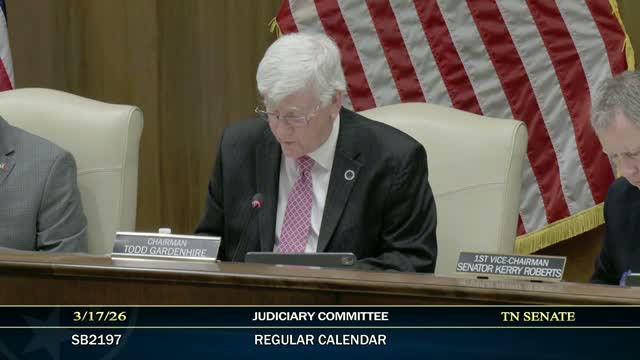
Senator Campbell pushed for a bill aimed at capping caseloads at the Department of Children’s Services (DCS), saying excessive workloads—sometimes as high as 50 cases—are forcing children into transitional placements and pulling caseworkers away from casework.
DCS legislative director Jim Layman told the committee the department opposes the bill on both philosophical and fiscal grounds, citing a roughly $16 million estimate to hire sufficient staff and arguing that embedding a strict cap in law would not itself reduce caseloads. “Hiring the staff, keeping the staff … is what will lower caseloads,” Layman said, adding that a one-size-fits-all 12‑month closure limit would not account for the many case-specific factors courts and families face.
The bill would have created evidence-based caseload standards—12 active cases for initial assessments and 20 for ongoing services—and required cases to be resolved within 12 months or placed under judicial oversight. Campbell described the measure as primarily a message about the urgency of manageable workloads and pointed to prior periods (the “Brian A.” requirements) when caseloads were lower.
Committee members pressed DCS on placement numbers and staffing. Layman said roughly 7,800 children were in custody statewide and that, on any given night, some 30 to 40 children might be in transitional placements—down from more than 100 in prior years. He described a current vacancy rate for case managers of about 13 percent and estimated first‑year turnover around 30 percent.
Several senators expressed sympathy for the bill’s intent but practical concerns. One member urged a broader rethinking of DCS structure and delivery rather than statutory caps; others warned that a 12‑month timeline could be impossible in many permanency cases and would risk unintended outcomes.
Senator Campbell moved the bill and it was seconded; after debate the committee recorded 4 ayes, 2 nays and 1 present-not-voting, and the bill failed to pass out of the committee.
The committee did not adopt any substitute or amendment that would send the bill forward; committee members encouraged continued work with DCS and indicated many of the bill’s concerns require more detailed operational and fiscal planning.
Outcome: bill failed in committee; sponsor and members signaled an interest in further work but did not advance a revised measure this session.
DCS legislative director Jim Layman told the committee the department opposes the bill on both philosophical and fiscal grounds, citing a roughly $16 million estimate to hire sufficient staff and arguing that embedding a strict cap in law would not itself reduce caseloads. “Hiring the staff, keeping the staff … is what will lower caseloads,” Layman said, adding that a one-size-fits-all 12‑month closure limit would not account for the many case-specific factors courts and families face.
The bill would have created evidence-based caseload standards—12 active cases for initial assessments and 20 for ongoing services—and required cases to be resolved within 12 months or placed under judicial oversight. Campbell described the measure as primarily a message about the urgency of manageable workloads and pointed to prior periods (the “Brian A.” requirements) when caseloads were lower.
Committee members pressed DCS on placement numbers and staffing. Layman said roughly 7,800 children were in custody statewide and that, on any given night, some 30 to 40 children might be in transitional placements—down from more than 100 in prior years. He described a current vacancy rate for case managers of about 13 percent and estimated first‑year turnover around 30 percent.
Several senators expressed sympathy for the bill’s intent but practical concerns. One member urged a broader rethinking of DCS structure and delivery rather than statutory caps; others warned that a 12‑month timeline could be impossible in many permanency cases and would risk unintended outcomes.
Senator Campbell moved the bill and it was seconded; after debate the committee recorded 4 ayes, 2 nays and 1 present-not-voting, and the bill failed to pass out of the committee.
The committee did not adopt any substitute or amendment that would send the bill forward; committee members encouraged continued work with DCS and indicated many of the bill’s concerns require more detailed operational and fiscal planning.
Outcome: bill failed in committee; sponsor and members signaled an interest in further work but did not advance a revised measure this session.
View the Full Meeting & All Its Details
This article offers just a summary. Unlock complete video, transcripts, and insights as a Founder Member.
✓
Watch full, unedited meeting videos
✓
Search every word spoken in unlimited transcripts
✓
AI summaries & real-time alerts (all government levels)
✓
Permanent access to expanding government content
30-day money-back guarantee
