Maine judiciary committee approves task force to pursue federal ‘beneficial laws’ for Wabanaki nations
March 17, 2026 | 2026 Legislature ME, Maine
This article was created by AI summarizing key points discussed. AI makes mistakes, so for full details and context, please refer to the video of the full meeting. Please report any errors so we can fix them. Report an error »
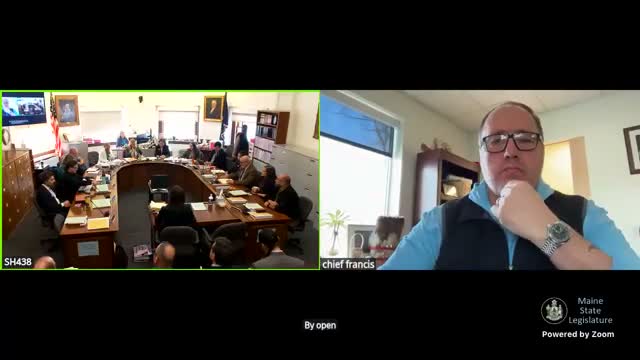
The Joint Standing Committee on the Judiciary on Wednesday voted in work session to advance LD 395 as amended, a resolve that would convene a task force to study how federal "beneficial laws" could apply to the Wabanaki nations.
Senator Rachel Talbot Ross, the bill sponsor, said the amendment converts the original bill into a resolve modeled on an earlier 2019 joint task force and would form a nine‑member voting panel composed of four legislators and five tribal chiefs or their designees, plus three nonvoting ex‑officio members from the governor’s office, the attorney general’s office and the Maine Indian Tribal‑State Commission. "It's a fairly simple but important step forward for this work around federal beneficial laws," Talbot Ross said.
Analyst Janet Stocco told the committee the proposal carries forward the earlier task force’s consensus‑recommendation approach and suggested timing parameters for appointments and reporting. Under the amendment the Legislature would direct appointments to be made within 15 days following the bill’s effective date, and committee members discussed a reporting deadline in the late fall of 2026 — the joint rules target is Nov. 4, 2026, with a possible extension to Dec. 2.
Tribal leaders and counsel who addressed the committee expressed support. Chief Sabatas said the change "lets everybody have a conversation and then we can come together with recommendations," and William Nicholas of the Passamaquoddy leadership said the measure helps keep sovereignty and access issues moving forward. Craig Sanborn, attorney for the Mi'kmaq Nation, described the proposal as a reasonable way to buy more time to explore technical and jurisdictional issues.
Representative Erin Dana moved the committee recommendation as "ought to pass as amended" and Talbot Ross seconded. The clerk reported the work‑session vote as unanimous among members present (30 yes, 0 no, 1 absent). The committee closed the LD 395 work session and directed staff to carry the amendment language forward for drafting and language review.
Why it matters: The task force is intended to produce a concrete pathway for restoring application of federal laws that tribes identify as beneficial — a step tribal leaders and some legislators say is important for tribal governance and services. Next steps include drafting the resolve language, filing the official amendment text and returning to the committee for language review and floor action.
Senator Rachel Talbot Ross, the bill sponsor, said the amendment converts the original bill into a resolve modeled on an earlier 2019 joint task force and would form a nine‑member voting panel composed of four legislators and five tribal chiefs or their designees, plus three nonvoting ex‑officio members from the governor’s office, the attorney general’s office and the Maine Indian Tribal‑State Commission. "It's a fairly simple but important step forward for this work around federal beneficial laws," Talbot Ross said.
Analyst Janet Stocco told the committee the proposal carries forward the earlier task force’s consensus‑recommendation approach and suggested timing parameters for appointments and reporting. Under the amendment the Legislature would direct appointments to be made within 15 days following the bill’s effective date, and committee members discussed a reporting deadline in the late fall of 2026 — the joint rules target is Nov. 4, 2026, with a possible extension to Dec. 2.
Tribal leaders and counsel who addressed the committee expressed support. Chief Sabatas said the change "lets everybody have a conversation and then we can come together with recommendations," and William Nicholas of the Passamaquoddy leadership said the measure helps keep sovereignty and access issues moving forward. Craig Sanborn, attorney for the Mi'kmaq Nation, described the proposal as a reasonable way to buy more time to explore technical and jurisdictional issues.
Representative Erin Dana moved the committee recommendation as "ought to pass as amended" and Talbot Ross seconded. The clerk reported the work‑session vote as unanimous among members present (30 yes, 0 no, 1 absent). The committee closed the LD 395 work session and directed staff to carry the amendment language forward for drafting and language review.
Why it matters: The task force is intended to produce a concrete pathway for restoring application of federal laws that tribes identify as beneficial — a step tribal leaders and some legislators say is important for tribal governance and services. Next steps include drafting the resolve language, filing the official amendment text and returning to the committee for language review and floor action.
View the Full Meeting & All Its Details
This article offers just a summary. Unlock complete video, transcripts, and insights as a Founder Member.
✓
Watch full, unedited meeting videos
✓
Search every word spoken in unlimited transcripts
✓
AI summaries & real-time alerts (all government levels)
✓
Permanent access to expanding government content
30-day money-back guarantee
