Senate adopts compromise amendment to veterinary telemedicine bill, extending some electronic prescription allowances
March 16, 2026 | 2026 Legislature Arizona, Arizona
This article was created by AI summarizing key points discussed. AI makes mistakes, so for full details and context, please refer to the video of the full meeting. Please report any errors so we can fix them. Report an error »
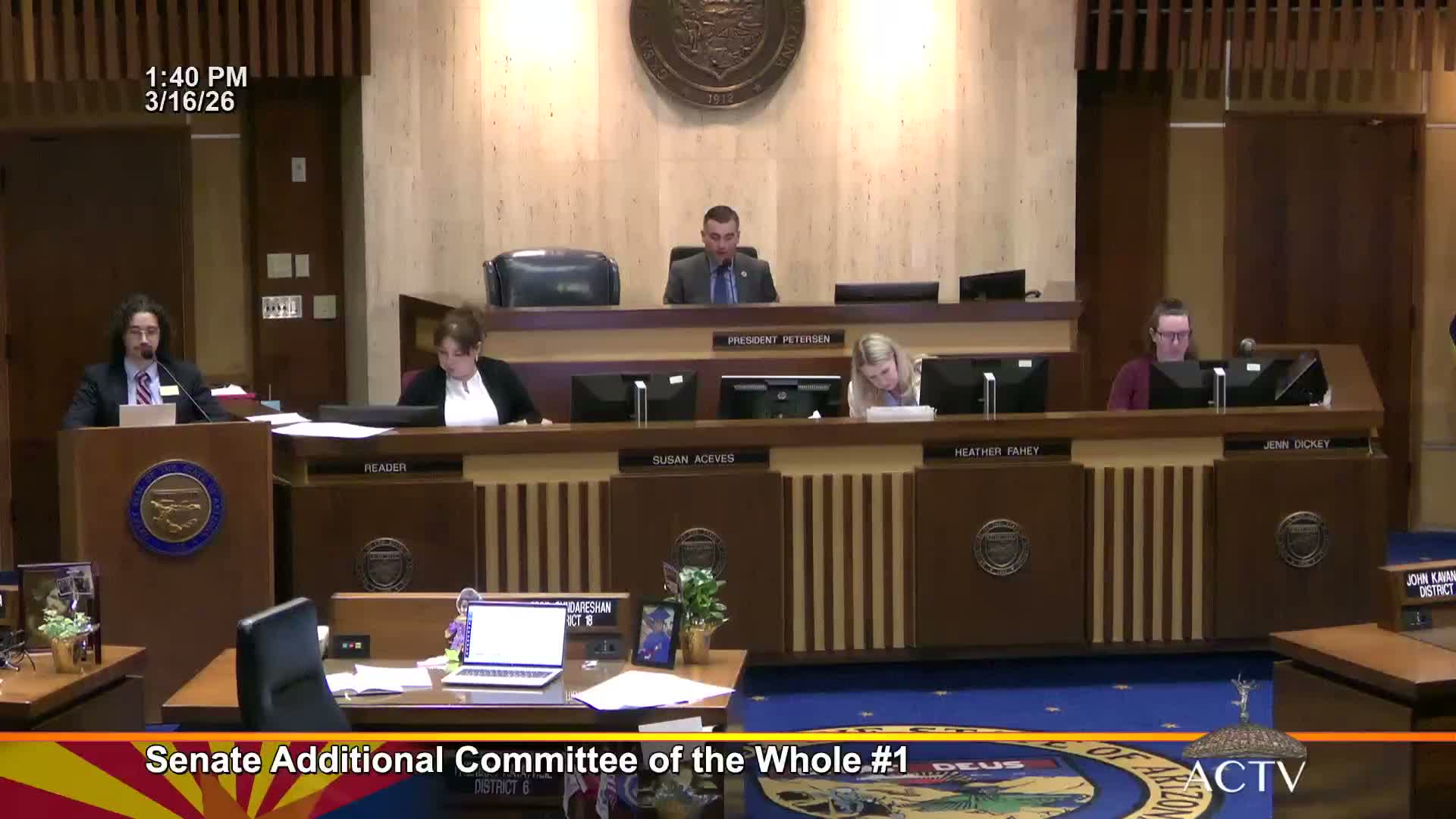
Senate Bill 12-86, a measure about veterinary prescription authority and electronic issuance, was amended on March 16, 2026, and reported by the Committee of the Whole with a do-pass recommendation.
Sen. Kavanaugh explained a negotiated floor amendment that, among other changes, allows veterinary prescriptions issued electronically for non–flea-and-tick drugs to be initially issued and renewed one time for 30 days (rather than 14), permits a period of up to three months for flea-and-tick product prescriptions via electronic means with a single renewal, and limits electronic antimicrobial prescriptions to a single period of up to 14 days without an in-person exam. "I basically, locked the lobbyists from both sides into a cage for 48 hours, and they have resolved the issue by specifying that veterinary prescriptions based on electronic means for non tick and flea drugs may be initially issued and renewed 1 time for 30 days..." Sen. Kavanaugh said, summarizing the compromise recorded in the amendment.
Sen. Epstein commended the sponsor and stakeholders for reaching a compromise that he said will work for many parties. The amendment was adopted on a voice vote; the committee then reported the bill do-pass as amended. A subsequent third-reading vote recorded in the transcript shows SB 12-86 passing on the Senate floor by a recorded vote of 24 ayes, 2 nays, 0 abstentions (as reported by the clerk during the March 16 session).
Why it matters: The amendment clarifies the conditions under which veterinarians may use electronic examinations to issue and renew prescriptions, restricts repeated electronic antimicrobial prescribing without an in-person exam, and extends limited telemedicine flexibility for select products. Supporters framed the changes as stakeholder-driven compromise intended to balance access and clinical safeguards.
Next steps: The clerk recorded the Senate action and the bill was transmitted to the House for further consideration.
Sen. Kavanaugh explained a negotiated floor amendment that, among other changes, allows veterinary prescriptions issued electronically for non–flea-and-tick drugs to be initially issued and renewed one time for 30 days (rather than 14), permits a period of up to three months for flea-and-tick product prescriptions via electronic means with a single renewal, and limits electronic antimicrobial prescriptions to a single period of up to 14 days without an in-person exam. "I basically, locked the lobbyists from both sides into a cage for 48 hours, and they have resolved the issue by specifying that veterinary prescriptions based on electronic means for non tick and flea drugs may be initially issued and renewed 1 time for 30 days..." Sen. Kavanaugh said, summarizing the compromise recorded in the amendment.
Sen. Epstein commended the sponsor and stakeholders for reaching a compromise that he said will work for many parties. The amendment was adopted on a voice vote; the committee then reported the bill do-pass as amended. A subsequent third-reading vote recorded in the transcript shows SB 12-86 passing on the Senate floor by a recorded vote of 24 ayes, 2 nays, 0 abstentions (as reported by the clerk during the March 16 session).
Why it matters: The amendment clarifies the conditions under which veterinarians may use electronic examinations to issue and renew prescriptions, restricts repeated electronic antimicrobial prescribing without an in-person exam, and extends limited telemedicine flexibility for select products. Supporters framed the changes as stakeholder-driven compromise intended to balance access and clinical safeguards.
Next steps: The clerk recorded the Senate action and the bill was transmitted to the House for further consideration.
Don't Miss a Word: See the Full Meeting!
Go beyond summaries. Unlock every video, transcript, and key insight with a Founder Membership.
✓
Get instant access to full meeting videos
✓
Search and clip any phrase from complete transcripts
✓
Receive AI-powered summaries & custom alerts
✓
Enjoy lifetime, unrestricted access to government data
30-day money-back guarantee
