Judicial officials say early Prop 36 cases are creating new court workload, urge continued funding
March 16, 2026 | California State Assembly, House, Legislative, California
This article was created by AI summarizing key points discussed. AI makes mistakes, so for full details and context, please refer to the video of the full meeting. Please report any errors so we can fix them. Report an error »
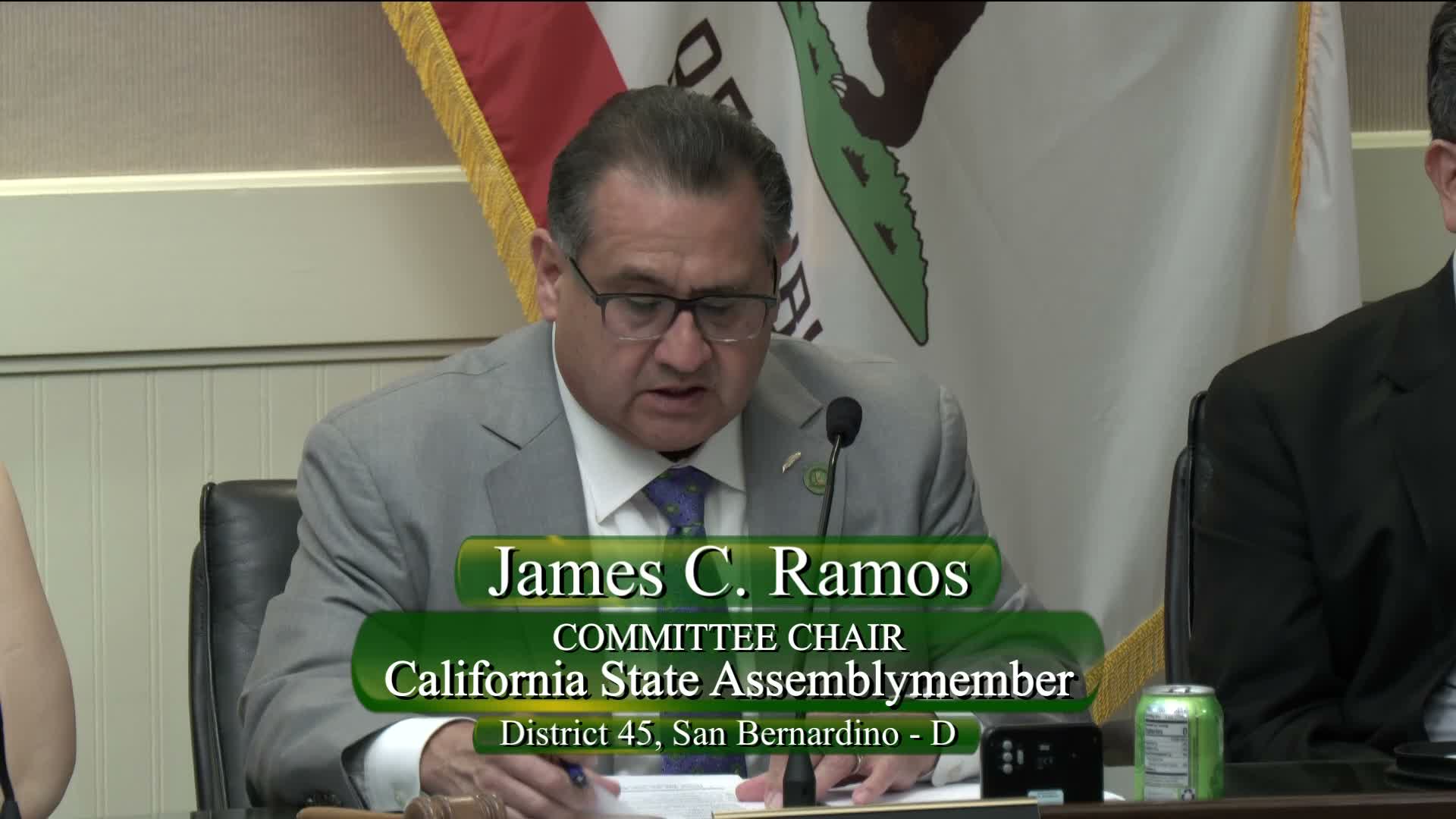
Judicial Council officials and court executives told the California State Assembly Subcommittee on Public Safety that initial implementation of Proposition 36 has already increased workload across trial courts and will require ongoing resources to operate effectively. Michelle Curran, Administrative Director of the Judicial Council, told the committee the branch supports the governor's budget but needs continued investment to avoid delays in case processing.
Curran and Francine Byrne, Director of Criminal Justice Services at the Judicial Council, said courts received nearly 35,000 felony filings related to Prop 36 in 2025, with roughly 55% involving felony drug charges and 45% involving felony theft. Byrne said about 12% of treatment-mandated felonies involved defendants who opted into treatment during the reporting period and only about 3% had their cases dismissed in that same period, but she cautioned the committee that the reporting window is short and many cases remain in progress. "It's a little early to assess now," Byrne said, noting courts lack consistent, individual-level data and that many treatment enrollments occur months after filing.
Kate Becker, Court Executive Officer for Ventura County, described operational pressures at the local level and said the $70,000,000 in ongoing trial-court operational funding proposed in the governor's budget is important for retention and to cover increased clerk time and case processing. "When courts are not adequately funded, cases may be delayed," Becker said, citing impacts on child custody, estate and wage-recovery matters.
Members questioned gaps in the data and whether the current one-time and multiyear funding arrangements will meet treatment and pretrial needs. Legislative Analyst Office staff urged refinement of fiscal interactions between propositions when estimating statewide savings. Committee members including Assemblymember Lackey and Assemblymember Schulz pressed for more precise metrics on treatment outcomes, behavioral-health capacity and pretrial caseload trends; Judicial Council witnesses urged use of the research community and local evaluations to supplement aggregate court data.
The subcommittee did not take votes but directed staff to follow up ahead of the May budget revision on updated Prop 36, Prop 47, and pretrial services estimates and on options for improving case-level outcome tracking. The Judicial Council and Finance representatives said they will continue to supply updated figures to the committee.
Curran and Francine Byrne, Director of Criminal Justice Services at the Judicial Council, said courts received nearly 35,000 felony filings related to Prop 36 in 2025, with roughly 55% involving felony drug charges and 45% involving felony theft. Byrne said about 12% of treatment-mandated felonies involved defendants who opted into treatment during the reporting period and only about 3% had their cases dismissed in that same period, but she cautioned the committee that the reporting window is short and many cases remain in progress. "It's a little early to assess now," Byrne said, noting courts lack consistent, individual-level data and that many treatment enrollments occur months after filing.
Kate Becker, Court Executive Officer for Ventura County, described operational pressures at the local level and said the $70,000,000 in ongoing trial-court operational funding proposed in the governor's budget is important for retention and to cover increased clerk time and case processing. "When courts are not adequately funded, cases may be delayed," Becker said, citing impacts on child custody, estate and wage-recovery matters.
Members questioned gaps in the data and whether the current one-time and multiyear funding arrangements will meet treatment and pretrial needs. Legislative Analyst Office staff urged refinement of fiscal interactions between propositions when estimating statewide savings. Committee members including Assemblymember Lackey and Assemblymember Schulz pressed for more precise metrics on treatment outcomes, behavioral-health capacity and pretrial caseload trends; Judicial Council witnesses urged use of the research community and local evaluations to supplement aggregate court data.
The subcommittee did not take votes but directed staff to follow up ahead of the May budget revision on updated Prop 36, Prop 47, and pretrial services estimates and on options for improving case-level outcome tracking. The Judicial Council and Finance representatives said they will continue to supply updated figures to the committee.
Don't Miss a Word: See the Full Meeting!
Go beyond summaries. Unlock every video, transcript, and key insight with a Founder Membership.
✓
Get instant access to full meeting videos
✓
Search and clip any phrase from complete transcripts
✓
Receive AI-powered summaries & custom alerts
✓
Enjoy lifetime, unrestricted access to government data
30-day money-back guarantee
