Committee advances bill to require SAVE checks for agencies despite ACLU warning of voter disenfranchisement
March 16, 2026 | 2026 Legislature Arizona, Arizona
This article was created by AI summarizing key points discussed. AI makes mistakes, so for full details and context, please refer to the video of the full meeting. Please report any errors so we can fix them. Report an error »
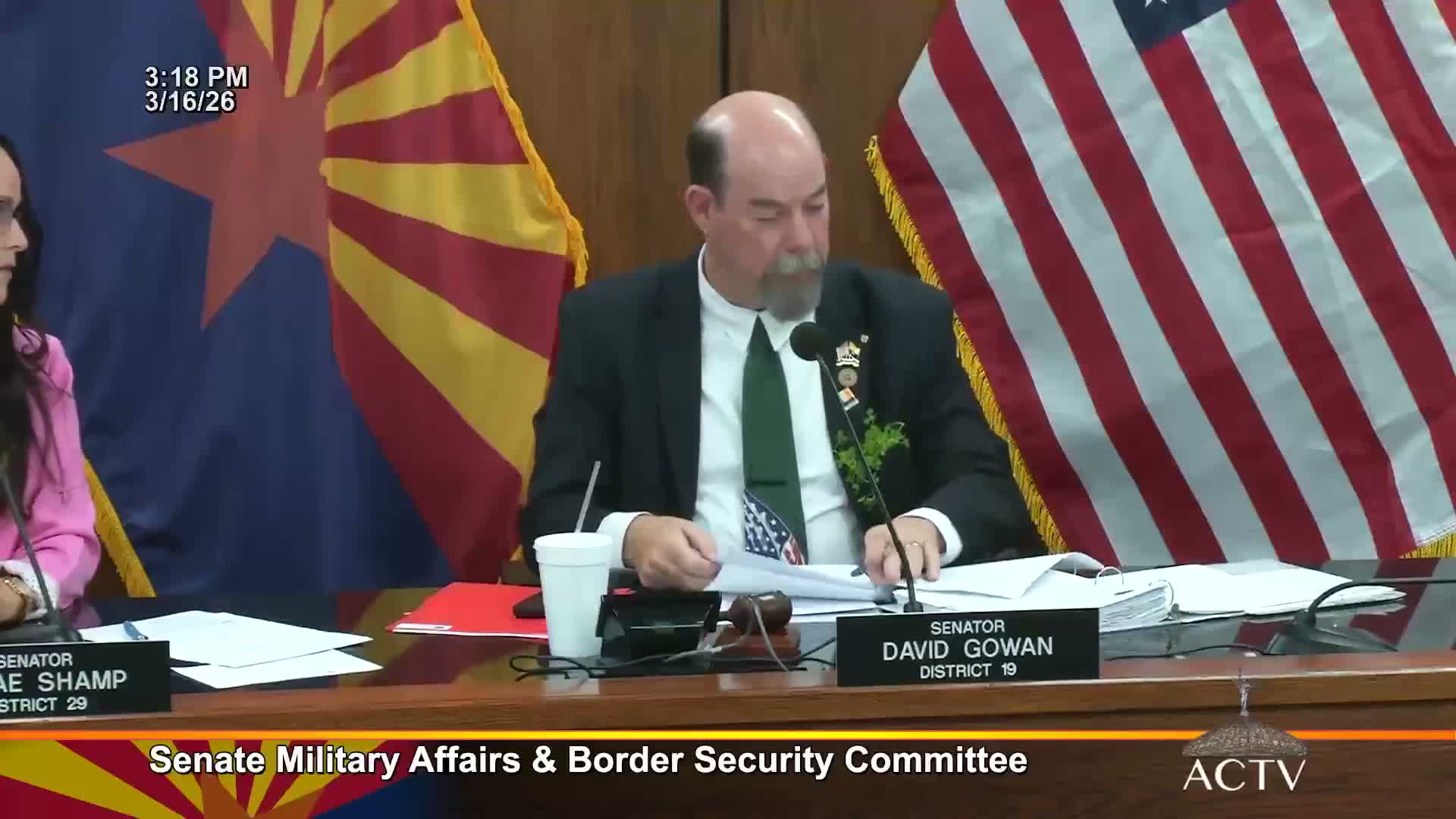
House Bill 2806 would require county recorders, the Arizona Department of Transportation and the Arizona Health Care Cost Containment System to provide the Joint Legislative Budget Committee evidence of fully executed MOUs with DHS to use the Systematic Alien Verification for Entitlements (SAVE) program, and to report SAVE queries, approvals, denials and discrepancies quarterly to the auditor general.
Caitlyn/Kaitlyn Contreras of the ACLU of Arizona testified in opposition, arguing SAVE was designed to verify immigration status for public benefits and ‘‘was never designed to determine voter eligibility.’’ Contreras told the committee that using SAVE for voter rolls risks misidentifying eligible citizens, will place the burden on voters to correct government errors, and will likely prompt litigation. She cited prior court rulings rejecting state attempts to impose additional citizenship-verification requirements and pointed to examples in other states where flagged voters were temporarily prevented from casting ballots.
Committee members pressed the witness on practical impacts and fiscal implications. Several members asked for clarity on why the bill is necessary when ADOT and other agencies already use SAVE in some contexts; others said the measure risks creating confusion for election administrators and that a fiscal note is needed to assess implementation costs. Supporters of using SAVE framed the proposal as a tool to ensure compliance and protect citizens, while opponents emphasized the program’s design limitations and the distinct legal standards governing voter eligibility, including NVRA-related requirements and court precedents.
After debate and explanations of votes, the committee recorded 4 ayes and 3 noes and advanced the bill with a due-pass recommendation. Members signaled the likely need for additional legal review and a fiscal note before floor consideration.
Next steps: HB 2806 moves forward with committee recommendation; members requested further fiscal and legal analysis.
Caitlyn/Kaitlyn Contreras of the ACLU of Arizona testified in opposition, arguing SAVE was designed to verify immigration status for public benefits and ‘‘was never designed to determine voter eligibility.’’ Contreras told the committee that using SAVE for voter rolls risks misidentifying eligible citizens, will place the burden on voters to correct government errors, and will likely prompt litigation. She cited prior court rulings rejecting state attempts to impose additional citizenship-verification requirements and pointed to examples in other states where flagged voters were temporarily prevented from casting ballots.
Committee members pressed the witness on practical impacts and fiscal implications. Several members asked for clarity on why the bill is necessary when ADOT and other agencies already use SAVE in some contexts; others said the measure risks creating confusion for election administrators and that a fiscal note is needed to assess implementation costs. Supporters of using SAVE framed the proposal as a tool to ensure compliance and protect citizens, while opponents emphasized the program’s design limitations and the distinct legal standards governing voter eligibility, including NVRA-related requirements and court precedents.
After debate and explanations of votes, the committee recorded 4 ayes and 3 noes and advanced the bill with a due-pass recommendation. Members signaled the likely need for additional legal review and a fiscal note before floor consideration.
Next steps: HB 2806 moves forward with committee recommendation; members requested further fiscal and legal analysis.
Don't Miss a Word: See the Full Meeting!
Go beyond summaries. Unlock every video, transcript, and key insight with a Founder Membership.
✓
Get instant access to full meeting videos
✓
Search and clip any phrase from complete transcripts
✓
Receive AI-powered summaries & custom alerts
✓
Enjoy lifetime, unrestricted access to government data
30-day money-back guarantee
