Rules attorney flags vagueness and First Amendment risks in bill restricting explicit materials in schools and libraries
March 16, 2026 | 2026 Legislature Arizona, Arizona
This article was created by AI summarizing key points discussed. AI makes mistakes, so for full details and context, please refer to the video of the full meeting. Please report any errors so we can fix them. Report an error »
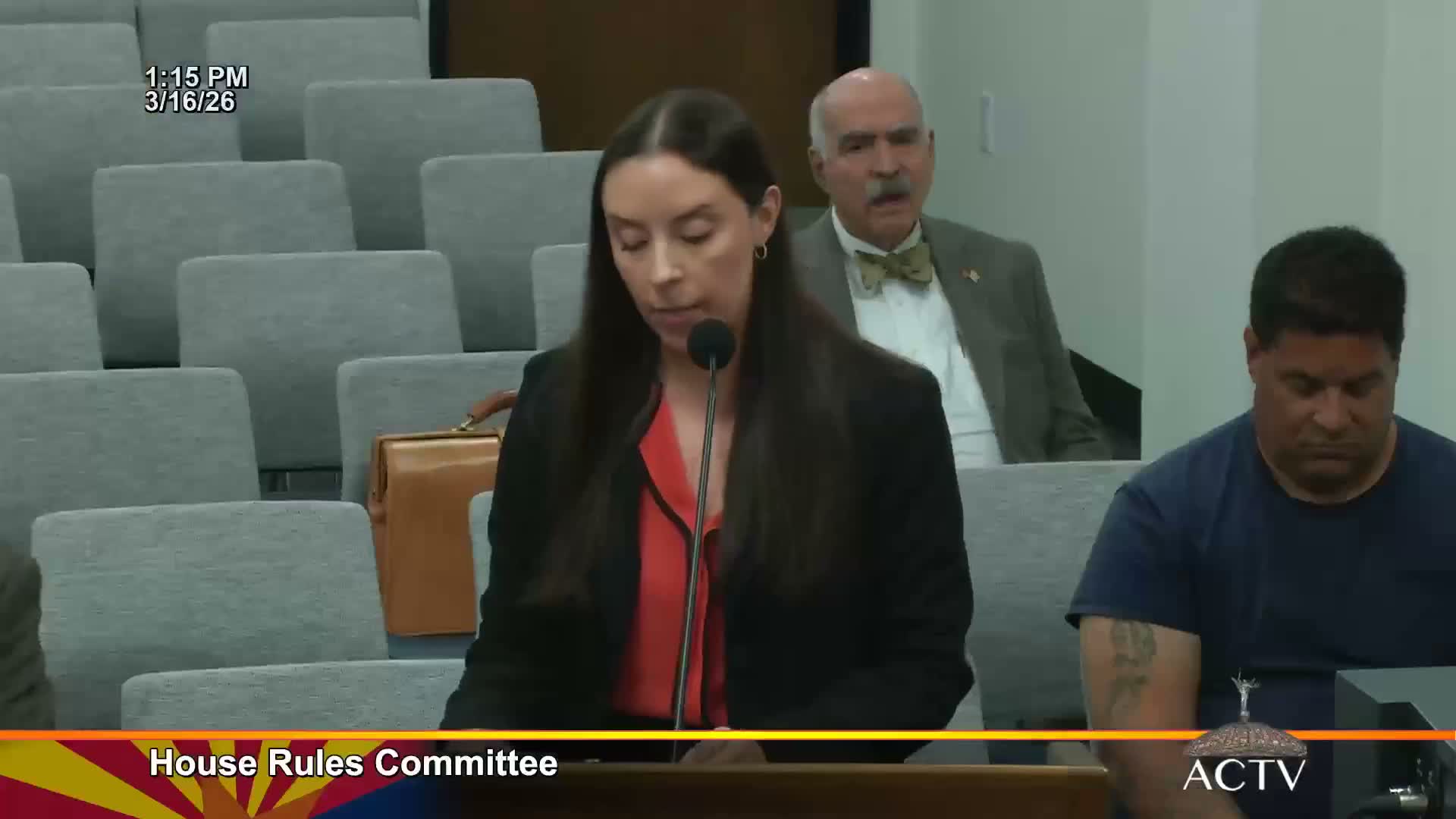
The Rules Committee voted to recommend Senate Bill 1435 after the rules attorney told members the measure could present due‑process and First Amendment concerns as currently written.
The rules attorney said SB 1435 would add a criminal penalty to laws that prohibit schools from referring students to or using certain explicit materials and would extend a prohibition to public libraries and their contractors. She warned that the bill's broad prohibition on "facilitating" access is potentially vague and that the bill's expansive definition of "explicit material" could sweep in works protected by the First Amendment.
To illustrate the breadth of the draft definition, the rules attorney offered examples the committee should consider: materials such as a "romance novel that has a textual depiction of physical contact," or resources on breastfeeding, could fall within the bill's current language. She noted that the bill omits the exception for material with "serious literary, artistic, political, and scientific value" that exists in other statutes and suggested amendments to add a narrower definition of "facilitating" and tighten the definition of explicit material.
During Q&A, members asked whether the state has a legitimate interest in protecting minors; the rules attorney cited recent case law in other jurisdictions and the U.S. Supreme Court's discussion (as described in the hearing) as supportive of a state interest but stressed that the limits of any regulation must be carefully crafted to avoid constitutional violation.
The committee recommended the bill as constitutional and in proper form by roll call (announced as five ayes, two nays, one absent). The rules attorney said targeted amendments could likely relieve the office's flagged concerns.
What happens next: Sponsors may choose to pursue clarifying amendments to narrow definitions and reduce litigation risk before later floor consideration.
The rules attorney said SB 1435 would add a criminal penalty to laws that prohibit schools from referring students to or using certain explicit materials and would extend a prohibition to public libraries and their contractors. She warned that the bill's broad prohibition on "facilitating" access is potentially vague and that the bill's expansive definition of "explicit material" could sweep in works protected by the First Amendment.
To illustrate the breadth of the draft definition, the rules attorney offered examples the committee should consider: materials such as a "romance novel that has a textual depiction of physical contact," or resources on breastfeeding, could fall within the bill's current language. She noted that the bill omits the exception for material with "serious literary, artistic, political, and scientific value" that exists in other statutes and suggested amendments to add a narrower definition of "facilitating" and tighten the definition of explicit material.
During Q&A, members asked whether the state has a legitimate interest in protecting minors; the rules attorney cited recent case law in other jurisdictions and the U.S. Supreme Court's discussion (as described in the hearing) as supportive of a state interest but stressed that the limits of any regulation must be carefully crafted to avoid constitutional violation.
The committee recommended the bill as constitutional and in proper form by roll call (announced as five ayes, two nays, one absent). The rules attorney said targeted amendments could likely relieve the office's flagged concerns.
What happens next: Sponsors may choose to pursue clarifying amendments to narrow definitions and reduce litigation risk before later floor consideration.
Don't Miss a Word: See the Full Meeting!
Go beyond summaries. Unlock every video, transcript, and key insight with a Founder Membership.
✓
Get instant access to full meeting videos
✓
Search and clip any phrase from complete transcripts
✓
Receive AI-powered summaries & custom alerts
✓
Enjoy lifetime, unrestricted access to government data
30-day money-back guarantee
