Lawmakers press state to show costs and trade-offs after NextGen 9-1-1 rollout problems; LAO urges pause and oversight
March 16, 2026 | California State Assembly, House, Legislative, California
This article was created by AI summarizing key points discussed. AI makes mistakes, so for full details and context, please refer to the video of the full meeting. Please report any errors so we can fix them. Report an error »
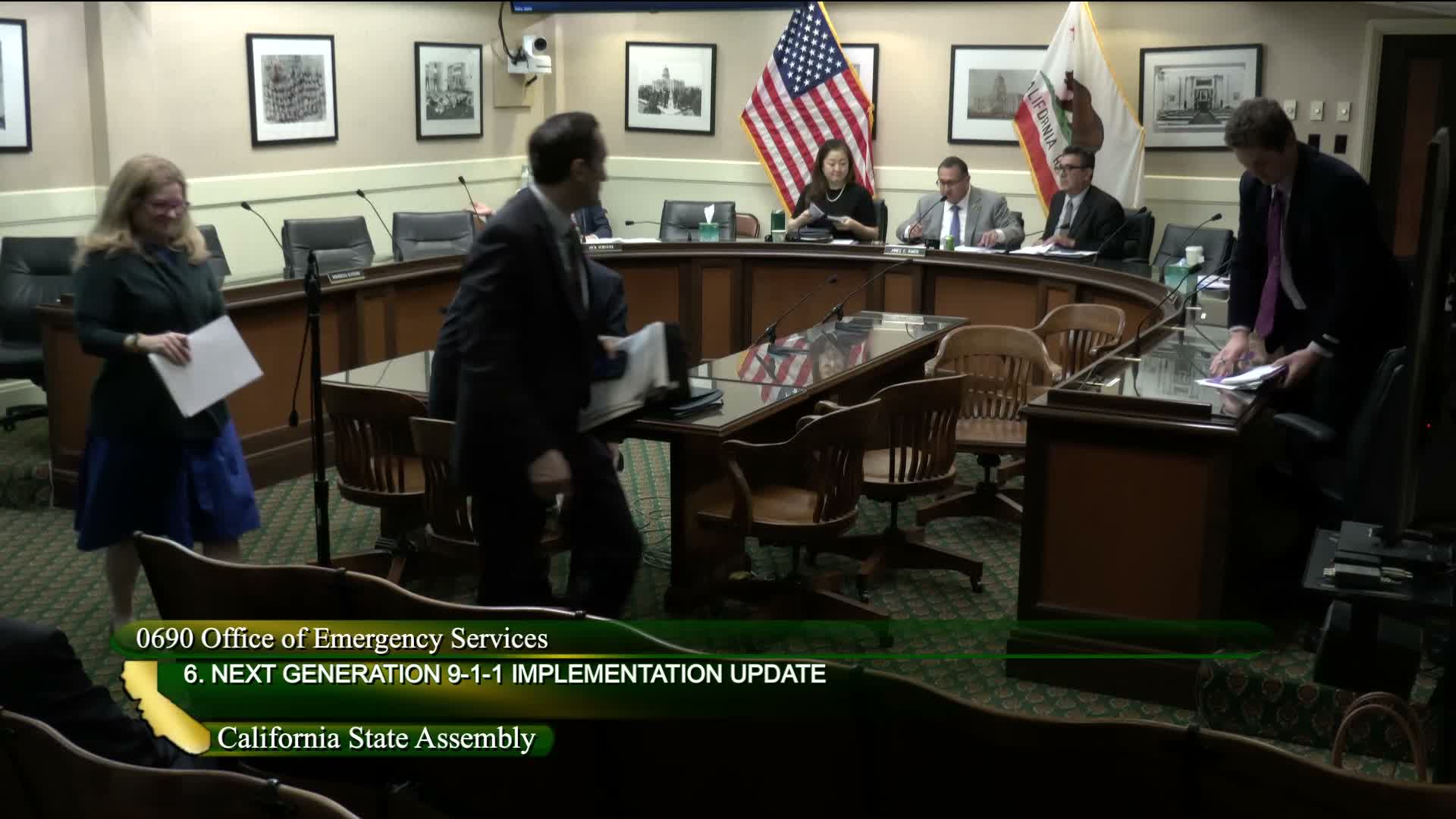
Officials from the Office of Emergency Services told the Assembly subcommittee that early deployment of California's NextGen 9-1-1 regional architecture revealed significant interoperability and call-routing problems and that a simplified statewide architecture aligned with national standards would reduce custom interfaces and points of failure. Cal OES described misrouted and dropped calls during transfers and degraded audio in some handoffs as the principal technical issues prompting a reassessment.
Heather Gonzales of the Legislative Analyst's Office urged caution, recommending the Legislature briefly pause major forward movement until it receives a comparative analysis of options, cost estimates, and improved oversight. "Changes of this magnitude to a system this important are best accomplished under close oversight," Gonzales said, and proposed oversight hearings and, if necessary, an independent technical review before the May revise.
Vendor and public-safety witnesses offered sharply different views. Don Ferguson, CEO of NGA 9-1-1, and fire chiefs including San Bernardino County Fire Chief Daniel Muncie defended the regional approach, said most early problems were ecosystem-wide (carriers, legacy alignment, PSAP processes) rather than single-vendor failures, and warned a single statewide vendor could create vendor-lock and a statewide single-point-of-failure. Chief Muncie added that legacy 9-1-1 equipment is aging and failing in places and that modernization is urgent to avoid outages.
Committee members repeatedly asked for clear cost accounting for the $400M+ already spent in deployment and for the fiscal consequences of both options. Cal OES said it intends to release a statement of work and run a solicitation for a statewide provider with an award targeted for fall 2026 while also agreeing to provide additional reports and to work with legislative staff on oversight metrics and cost estimates ahead of the May revise.
Heather Gonzales of the Legislative Analyst's Office urged caution, recommending the Legislature briefly pause major forward movement until it receives a comparative analysis of options, cost estimates, and improved oversight. "Changes of this magnitude to a system this important are best accomplished under close oversight," Gonzales said, and proposed oversight hearings and, if necessary, an independent technical review before the May revise.
Vendor and public-safety witnesses offered sharply different views. Don Ferguson, CEO of NGA 9-1-1, and fire chiefs including San Bernardino County Fire Chief Daniel Muncie defended the regional approach, said most early problems were ecosystem-wide (carriers, legacy alignment, PSAP processes) rather than single-vendor failures, and warned a single statewide vendor could create vendor-lock and a statewide single-point-of-failure. Chief Muncie added that legacy 9-1-1 equipment is aging and failing in places and that modernization is urgent to avoid outages.
Committee members repeatedly asked for clear cost accounting for the $400M+ already spent in deployment and for the fiscal consequences of both options. Cal OES said it intends to release a statement of work and run a solicitation for a statewide provider with an award targeted for fall 2026 while also agreeing to provide additional reports and to work with legislative staff on oversight metrics and cost estimates ahead of the May revise.
Don't Miss a Word: See the Full Meeting!
Go beyond summaries. Unlock every video, transcript, and key insight with a Founder Membership.
✓
Get instant access to full meeting videos
✓
Search and clip any phrase from complete transcripts
✓
Receive AI-powered summaries & custom alerts
✓
Enjoy lifetime, unrestricted access to government data
30-day money-back guarantee
