Rockdale County board approves environmental health fee increase to shift costs to businesses
March 10, 2026 | Rockdale County, Georgia
This article was created by AI summarizing key points discussed. AI makes mistakes, so for full details and context, please refer to the video of the full meeting. Please report any errors so we can fix them. Report an error »
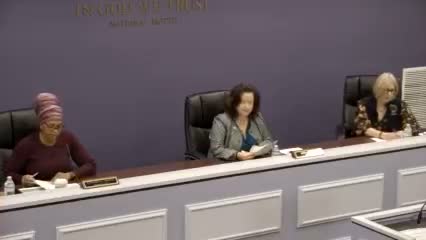
Rockdale County commissioners voted March 10 to approve a resolution adopting increased environmental health fees recommended by the Board of Health.
Joseph Sternberg, speaking for the Board of Health, told commissioners that, “Under Georgia state law the board of commissioners has to approve environmental health fees, not clinical fees — just environmental health fees,” and that the fee adjustments follow time studies meant to better align charges with the actual cost of inspections and permitting. He said the intent is to move more of the cost burden from county subsidies to the businesses that receive inspections and permits.
The presentation outlined the scope of environmental health services — inspections and permits for restaurants, hotels, swimming pools, septic systems, body‑art operations and complaint investigations — and described a recent initiative to help new restaurants improve scores by offering a free, mock inspection and on-site training. Sternberg said the increases are “fairly significant from a percentage standpoint” but are based on studies and are intended to reduce, not eliminate, the subsidy environmental health currently receives.
Commissioners asked for clarification about what types of services carry fees and why some activities (such as complaint-driven foodborne illness investigations) remain unfunded. Sternberg said enforcement and complaint investigations remain county responsibilities and that those activities are generally not feasible to fee-fund.
A motion to approve the resolution as presented was made and carried by voice vote. The board did not provide a roll-call tally in the meeting record; the chair announced the motion carried following the voice vote.
The action implements the fee schedule adopted by the Board of Health and directs county staff to apply the new fees; Sternberg stated the increases will not return environmental health to break-even but will reduce the subsidy needed from county funds. The county did not provide specific percentage increases in the meeting record; the presenter described the change qualitatively as a meaningful increase based on time-study results.
The board moved on to other agenda items; no litigation or legal challenges to the new schedule were raised on the record at this meeting.
Joseph Sternberg, speaking for the Board of Health, told commissioners that, “Under Georgia state law the board of commissioners has to approve environmental health fees, not clinical fees — just environmental health fees,” and that the fee adjustments follow time studies meant to better align charges with the actual cost of inspections and permitting. He said the intent is to move more of the cost burden from county subsidies to the businesses that receive inspections and permits.
The presentation outlined the scope of environmental health services — inspections and permits for restaurants, hotels, swimming pools, septic systems, body‑art operations and complaint investigations — and described a recent initiative to help new restaurants improve scores by offering a free, mock inspection and on-site training. Sternberg said the increases are “fairly significant from a percentage standpoint” but are based on studies and are intended to reduce, not eliminate, the subsidy environmental health currently receives.
Commissioners asked for clarification about what types of services carry fees and why some activities (such as complaint-driven foodborne illness investigations) remain unfunded. Sternberg said enforcement and complaint investigations remain county responsibilities and that those activities are generally not feasible to fee-fund.
A motion to approve the resolution as presented was made and carried by voice vote. The board did not provide a roll-call tally in the meeting record; the chair announced the motion carried following the voice vote.
The action implements the fee schedule adopted by the Board of Health and directs county staff to apply the new fees; Sternberg stated the increases will not return environmental health to break-even but will reduce the subsidy needed from county funds. The county did not provide specific percentage increases in the meeting record; the presenter described the change qualitatively as a meaningful increase based on time-study results.
The board moved on to other agenda items; no litigation or legal challenges to the new schedule were raised on the record at this meeting.
Don't Miss a Word: See the Full Meeting!
Go beyond summaries. Unlock every video, transcript, and key insight with a Founder Membership.
✓
Get instant access to full meeting videos
✓
Search and clip any phrase from complete transcripts
✓
Receive AI-powered summaries & custom alerts
✓
Enjoy lifetime, unrestricted access to government data
30-day money-back guarantee
